
Adaptive recreation and sport: a practical starting guide
Where to find programs, what to ask when you call, how equipment loans and grants work, and what each major sport category actually requires to start, without the inspirational detour.
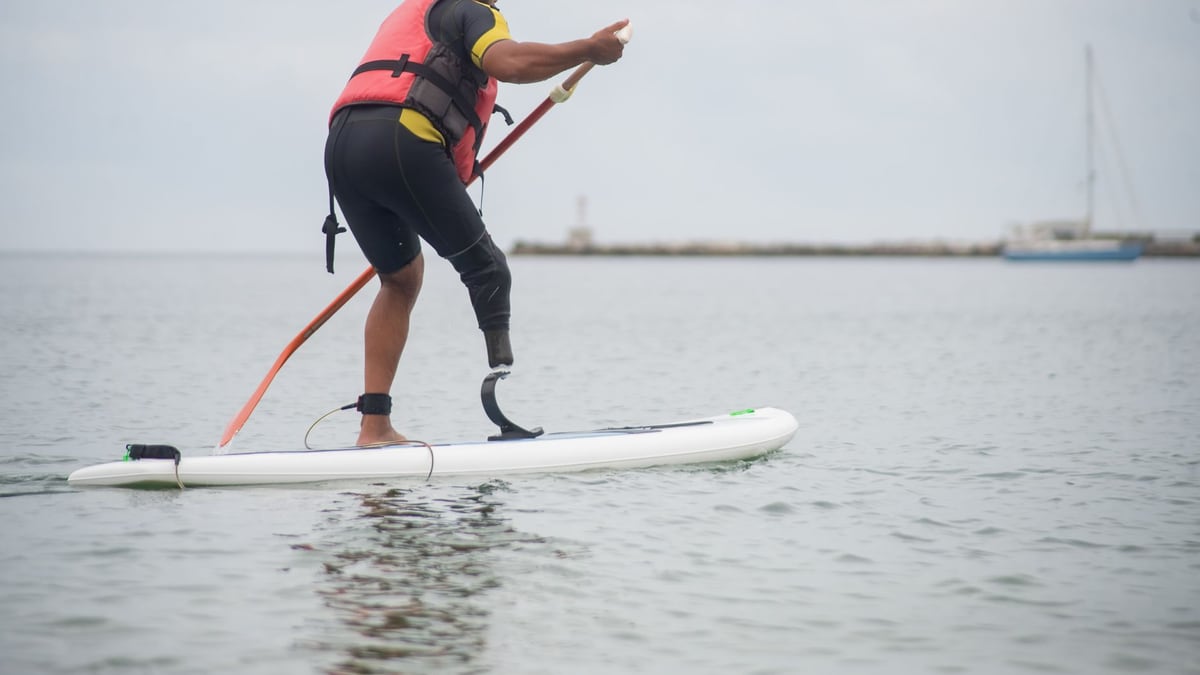
Adaptive sport can mean a Tuesday-night pickup basketball game, a first time on skis since a limb loss, a community swim program where your device situation doesn’t require explanation, or training toward a para triathlon. What these have in common: programs exist, most of them are actively looking for participants, and the barrier to a first try is almost always lower than it looks from the outside.
What the programs are not always good at advertising: that you usually don’t need specialized equipment to start, that “athletic” is not a prerequisite, and that wanting to try something is sufficient reason to make the call.
This is a practical map. Not a motivation speech.
Start with a program locator, not a purchase
The most direct route to finding local adaptive sport and recreation programs in the United States is Move United, the national nonprofit that functions as the primary hub for community adaptive sport programs. Their chapter-and-affiliate locator lets you search by sport and location. The chapters vary considerably in what they offer and how active they are: a large urban affiliate may run ten programs year-round, while a smaller one may organize one or two. But it is the closest thing to a national directory that exists for most adaptive sport categories.
The Amputee Coalition maintains resources on adaptive sport and recreation and can sometimes connect you to peer networks that run or know of programs not listed in national directories. Peer visitors in their network often include people who are currently active in adaptive sport in your region, and they know the local landscape in a way a website cannot.
Challenged Athletes Foundation is primarily known for equipment grants, but their athlete network and affiliated programs are also a useful referral channel for finding programs, especially in cycling and running.
If you are a veteran, Move United’s veterans program and the VA Adaptive Sports Grant Program run clinics and programs at VA medical centers and in coordination with local communities. Ask your VA primary care team or social worker about local adaptive sports coordinators; many VA facilities have one.
One thing that helps: call or email before you show up. Program schedules, intake processes, and what they need from you on day one vary considerably. An email that says “I have a below-knee amputation and I’m interested in trying cycling. What should I know before I come?” will get you a faster, more useful answer than any amount of time reading the website. If the program doesn’t respond within a week, try another one.
Equipment is not the first problem
The most common misconception about adaptive sport is that you need an activity-specific prosthesis before you can participate. For many sports, and at the entry level for most sports, this is not true.
Swimming pools are the obvious case: most amputees swim without any device and find the water removes most of the usual accessibility complications. But it is also true of cycling (handcycles, recumbent trikes, and tandem bikes are all available in adaptive programs without anyone needing a sport-specific prosthesis), track and field (shot put, discus, and field events are accessible in a daily-use prosthesis or without a prosthesis at all), and all seated sports where prosthetics are not a factor.
Programs that regularly work with newer amputees typically have loaner equipment or will tell you exactly what to bring before you arrive. When you make first contact, ask directly: What do I need to bring? Is there equipment available for me to try? If the answer is “just yourself and athletic clothing,” take them at their word.
Activity-specific prostheses (running blades, waterproof legs, sport-specific sockets, handcycles, adaptive bikes) are a real category of equipment that can expand what is accessible as your participation deepens. They are also expensive, frequently not covered by insurance, and not how most people start. Equipment grants are covered below.
Equipment grants: what exists and how to use them
If you reach a point where activity-specific equipment would meaningfully change your participation and cost is the real barrier, funding programs exist.
Challenged Athletes Foundation runs grant programs specifically for adaptive sports equipment, funded through race and event fundraising. Grants fund individual equipment purchases, such as running blades, handbikes, and sport wheelchairs, and are open to US applicants with physical impairments. Applications require documentation of the impairment and a description of how the equipment supports athletic participation. CAF runs competitive grant cycles with defined application windows; current information is on their website. The grants are competitive and take time, so do not count on grant funding to start participating. Start participating, then apply.
Amputee Coalition maintains a resource list that includes some equipment funding programs. Worth checking as a secondary source, particularly for smaller or more regional programs.
State Vocational Rehabilitation agencies and the VA (for veterans) sometimes fund activity-specific prostheses under a broader functional-goal framework. This is not standard, but it is not impossible. The framing that tends to work: what activity or functional goal does this device support that your current device does not? Ask your VR counselor or VA prosthetist directly; they cannot say yes to a question they are not asked.
Sports programs themselves sometimes maintain equipment loan pools or know of donated or used equipment sources. Ask the program coordinator before spending significant time on a grant application: the program may already have what you need.
One honest note on grant programs: they are competitive, cycles are limited, and not every applicant receives funding. Apply early. Document your current participation level, since grant programs generally fund people who are already active or are demonstrably ready to start, not aspirational intentions.
Sport-by-sport notes
This is not a comprehensive directory. It is a starting point with the major categories, enough to know who to call.
Running and track. Para athletics organizes competitive running, jumping, and throwing events under classification codes matched to functional capacity. But most adaptive running programs are community-level, and you do not need to understand classification systems to show up to one. Move United affiliates run recreational running programs in many regions. Achilles International also operates chapters that accommodate adaptive runners. A sport-specific running prosthesis (a blade) is useful for distance running but not required to start; many programs have loaners. Ask.
Cycling. Adaptive cycling covers handcycles, recumbent trikes, tandem bikes, and standard cycling with prosthetics. USA Cycling’s para program covers competitive pathways and classification. Community-level programs through Move United affiliates and adaptive bike programs at larger recreation centers are common starting points, with equipment often available on-site. No sport-specific prosthesis needed to start in most program settings.
Swimming. Adaptive swimming is among the most accessible entry points: most pools, most programs, and most swim instructors can accommodate amputees without significant modification. USA Swimming’s Para program covers competitive pathways. Local masters swim groups are often welcoming to adaptive swimmers without Paralympic aspirations and tend to be lower-key than dedicated adaptive programs if that is what you prefer.
Alpine skiing and snowboarding. Move United chapters at ski resorts represent one of the oldest and best-resourced networks in adaptive sport in the US. Programs typically run clinics for new adaptive skiers, have specialized adaptive equipment on-site, and work regularly with people who have limb loss. If skiing is on your list, this is one of the easier entry points in adaptive sport: program infrastructure is solid, and many major ski areas have an affiliated program. Budget for the trip; this is one area where upfront cost is a real factor for some people.
Basketball. National Wheelchair Basketball Association (NWBA) programs are the most organized competitive pathway. Many Move United affiliates also run standing amputee basketball programs, a separate category that accommodates athletes with lower-limb amputations who compete without a wheelchair. Pickup game culture in adaptive basketball is real; it is not only elite or semi-competitive.
Golf. The US Adaptive Golf Alliance and USGA’s adaptive golf resources cover programs and facilities. Adaptive golf frequently accommodates amputees with minimal equipment modification: in many cases a prosthetic cover is sufficient, and some arm amputees find standard golf approaches work with minor adaptations. Clinics for new adaptive golfers are a good entry point.
Sitting volleyball. Sitting volleyball is a Paralympic sport played on a smaller court with a lower net, and it accommodates athletes with a range of physical impairments including limb differences. No standing or prosthetic use required during play. USA Volleyball’s Para Volleyball program covers competitive structure; community programs run through Move United affiliates in some regions.
Amputee football (soccer). Amputee football is played seven-a-side, with outfield players on forearm crutches and a goalkeeper with an upper-limb difference, and no prosthesis worn during the match. The sport has a real international structure and is growing in the US, though domestic program infrastructure is thinner than in some other adaptive sports. The governance situation in Ghana we covered earlier is a reminder that even well-established adaptive sports can run into institutional problems that trickle down to players. US programs exist; searching for “amputee soccer” or “amputee football” in your region, or contacting Move United for a referral, is the starting point.
Paddling, archery, and others. Move United’s program locator includes kayaking, canoeing, archery, equestrian, and other adaptive sports that don’t fit the major categories above. These tend to have smaller program networks but exist in more regions than people expect.
What makes a program worth your time
Not all programs are equally useful to participate in. Some signals worth attending to from the first contact:
You are treated as a participant who showed up to do a thing, not as a project. The first impression is joining the group, not being oriented into inspiration.
The program can tell you clearly what to expect on day one and answer practical questions about equipment. “We’ll figure it out when you get here” is not an answer; it is a deflection.
You can have a bad session, arrive in a complicated mood, or need a week off without it becoming a problem. Good programs are not motivational performances.
You are allowed to decide the program is not for you. Community fit is part of the fit. Trying something and leaving is information, not failure.
If competitive para sport is what you actually want
If your interest is sanctioned competition, meaning classification, national events, and potentially a Paralympic development pathway, the process is distinct from community adaptive sport.
Each international federation uses a classification system matched to functional capacity. Classification by a certified classifier is required to compete at sanctioned events; it is not something you arrange yourself. The relevant national governing body for your sport (USA Track & Field, USA Cycling, USA Swimming, USA Volleyball, etc.) handles classification for US athletes. Contact them directly and ask how classification works for your sport and impairment type.
You will be assigned a sport class, which determines which athletes you compete against. This is not a judgment of general ability; it is a functional categorization for competitive equity. The Paralympic structure is also not the only competitive outlet; many adaptive sports have national and regional competition structures that operate without Paralympic pathway involvement.
If competitive para sport is not what you are looking for, the vast majority of adaptive sport programming has no connection to that system. Community adaptive sport exists on its own terms.
Amputee News does not provide individualized medical or clinical advice. Before starting a new physical activity, particularly if you are in early post-amputation recovery or managing other health conditions, consult with your care team. Program availability, equipment, and funding cycles change; verify current information directly with the organizations listed.