
Travel with a prosthesis: the planning layer nobody puts in the brochure
Practical preparation for any trip — road, rail, or air — covering supplies, documentation, comfort management, and the variables most travel guides skip.
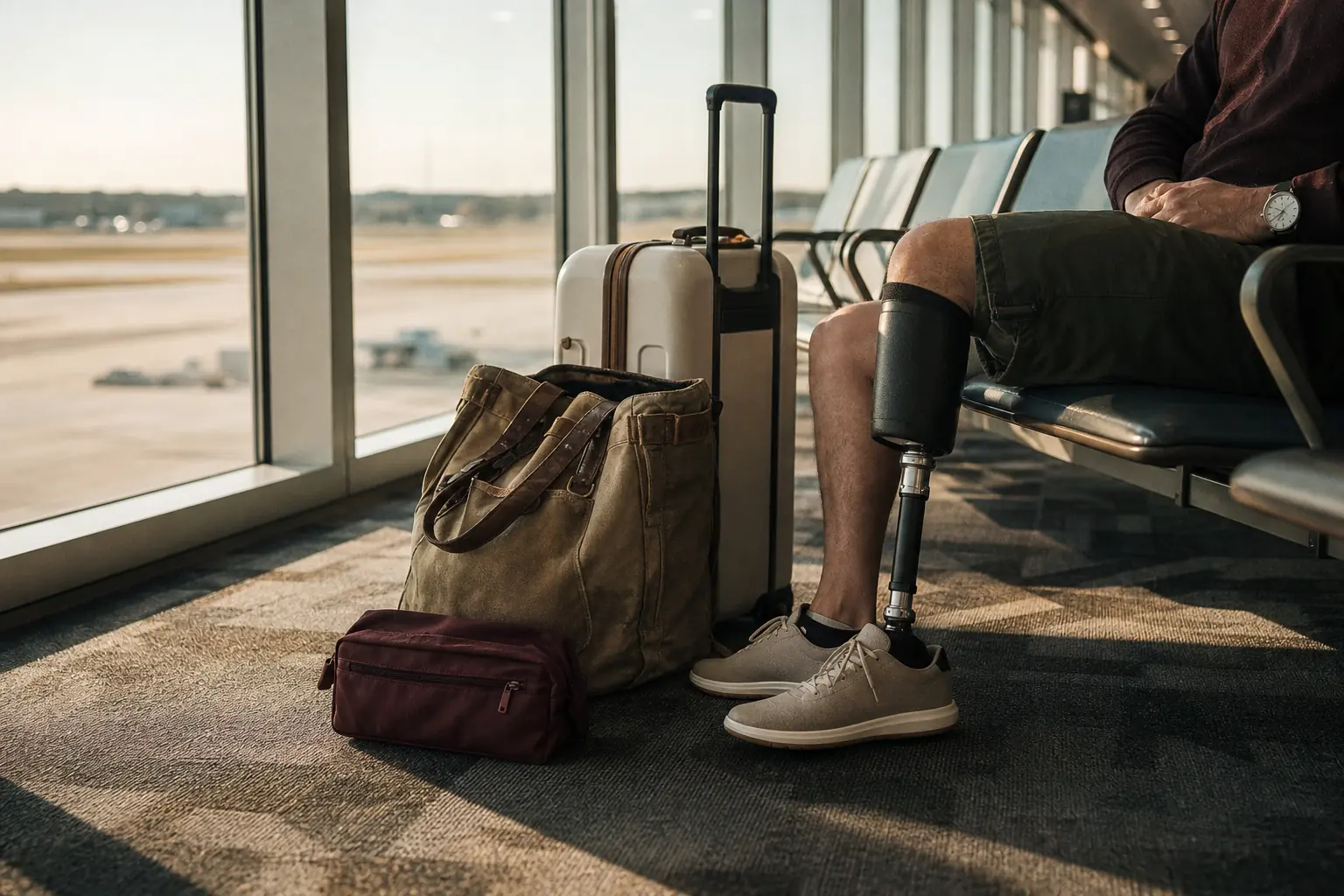
Travel is a logistics puzzle with bad lighting. Add a prosthetic device, a residual limb that responds to heat, cold, and sitting, and a supply chain that assumes you can pick up what you need at the next pharmacy, and the puzzle gets more interesting.
The fix is not avoiding travel. It is building the planning layer that most travel guides skip: supplies, documentation, comfort management, and contingency. Most of what follows is once-and-done setup that becomes habit after the second trip.
For air travel specifically — TSA screening, ACAA rights, in-flight positioning — see the dedicated guide on flying with a prosthesis. For international flights, battery rules, and screening outside the US, see flying internationally with a prosthesis. This guide covers the planning layer that applies to every trip, plus road and rail specifics.
The supply question: build margin
The single most common travel problem with a prosthesis is running out of something replaceable — liners, socks, sleeve suspension, skin care supplies — in a place where you cannot get it quickly. The answer is not to pack for every possible scenario; it is to pack with a buffer.
The restock calculation: Look at your normal weekly use of each consumable. Liners, socks, gel, cleanser, suspension sleeves, anything with a daily wear cycle. Multiply by the length of your trip. Then add 30–50% for delays, increased activity (trips often involve more walking than your normal week), and the reality that hotel sinks are not your bathroom.
Keep essentials in carry-on or immediate reach. For road trips, that means a day bag rather than the trunk. For flights, keep your primary liner, one sock change, and any device tools in your carry-on. If your checked bag gets delayed, you need enough to function for 24–48 hours without it.
What is hard to replace on the road:
- Custom liners and suspension sleeves (ordered from a clinic or distributor, not available retail)
- Your prosthetist’s contact information (not just a number — who specifically covers urgent calls)
- Device serial numbers and warranty information, in case you need to contact the manufacturer
- Prescription documentation for powered components that contain lithium batteries
What is easier to replace than you might think:
- Prosthetic socks (some surgical supply and durable medical equipment stores carry basic ply)
- Standard skin care products
- Common hardware (some prosthetics-adjacent hardware stores can fabricate simple adapters; your prosthetist may also know regional contacts)
Documentation worth carrying
For any trip: A brief letter from your prosthetist on clinic letterhead describing your device, its components, and that it is a medically prescribed device. This is not legally required domestically but it accelerates any situation where someone questions what you are wearing — security, customs, emergency medical personnel. Keep a digital copy and a printed copy.
For powered devices: Battery specifications and watt-hour ratings are on the device or in the manual. Document these and carry them. Airlines are the primary reason, but customs officials occasionally ask. Having the spec in hand is faster than digging through the manual.
For medication: If you use anything that relates to prosthetic use — topical medications for skin care, pain management — carry it in original labeled containers. This matters more at international borders but is good practice everywhere.
Managing your residual limb through the trip
Your limb does not stay the same across a travel day. Volume changes from sitting, standing, temperature shifts, and different activity levels. Most prosthesis users who travel regularly develop a management routine specific to travel.
Long-haul sitting (car, train, long flights): Extended sitting changes residual limb volume in ways that shorter periods do not. Take it off when you can — rest stops, layovers, any break where it is practical and comfortable. Check your skin and liner during these breaks. Redness that would resolve in 20 minutes at home may persist longer when you are not moving normally.
Heat: Heat increases perspiration and can affect liner adhesion and suspension. Destinations with high humidity compound this. If heat is a factor, pack extra liners and suspension sleeves, have a plan for drying liner overnight (a microfiber towel works; a hotel hair dryer on low heat does not damage most silicone, but check your liner manufacturer’s guidance), and consider whether your suspension system has known heat vulnerabilities worth planning around.
Cold: Cold affects hydraulic and pneumatic components. Microprocessor knees and powered systems may respond differently in cold ambient temperatures. If you are going somewhere cold, review your device manual’s temperature operating range. For skiing or other cold-weather activities, your prosthetist may have specific recommendations.
Road trips
Road travel gives you more flexibility than flying — there is no security screening, no baggage restrictions, and you can load the car with more than you would carry on a plane.
Car positioning: If you drive, confirm your prosthesis setup works for the specific vehicle before you are three hours from home. Pedal access, seat position, and clearance under the wheel vary. If you have an adaptive driving setup, ensure it is properly configured and that you know the adjustment range.
Rest stops and breaks: Plan them more deliberately than you might otherwise. A break every 90 minutes to two hours is not excessive; it is how you arrive without a fit problem from extended sitting. Rest stop facilities vary widely on accessibility — Google Maps and apps like Roadtrippers often show accessibility ratings, though they are inconsistent.
Mobility aids as backup: If you use a wheelchair, crutches, or other mobility equipment as a backup when you are not wearing your prosthesis, plan that equipment specifically. Traveling for a week without your backup mobility equipment is the kind of thing that seems fine until you need it.
Hotels and accommodations
Before you book: Call the hotel directly and ask specifically about the accessibility of your room, not just whether the property is “ADA accessible.” That designation covers a range of accommodations from genuinely accessible to a grab bar in a standard bathroom. Ask about: roll-in shower vs. tub only, shower seat availability, flooring type near the shower (wet tile and a prosthesis not designed for water is a falling risk), and whether the accessible room is actually in an accessible part of the building (some hotels put accessible rooms on upper floors accessible only by stairs).
At check-in: Confirm the accessibility features of your specific room before you unpack. If something was described to you at booking that is not present, ask to move before you are committed.
The nightly routine: Your normal limb care routine may need adjustment in a hotel context. If you use a drying routine for your liner, plan for the space to do it. A small portable hook or suction hook can solve the “nowhere to hang anything” problem in many hotel bathrooms.
Emergency contact for device problems
Before you travel, confirm who you call if something goes wrong with your device. Your prosthetist’s clinic has normal hours; what is the after-hours protocol? For microprocessor or powered devices, manufacturers typically have technical support lines that can diagnose issues remotely and, in some cases, overnight parts to your location.
If you are traveling internationally, your manufacturer’s regional distributor is the relevant contact. Most major manufacturers have service networks in Europe and many other regions; it is worth knowing the contact before you need it.
Save these in your phone before you leave:
- Your prosthetist’s main line and after-hours contact
- Your device manufacturer’s technical support line
- Serial numbers for your device (a photo of the device label works)
This guide is general orientation. The right preparation for your trip depends on your specific device, your clinical situation, and where you are going. Your prosthetist is the right resource for device-specific travel recommendations.