
UNIDO picks a Nigerian 3D-printed prosthetics startup. What institutional backing actually does, and doesn't, for access.
The UN's industrial development agency selected IfeanHealth for Nigeria's 3D-printed prosthetics innovation programme. The selection is meaningful. So is the distance between a programme announcement and a fitted device on a person's body.
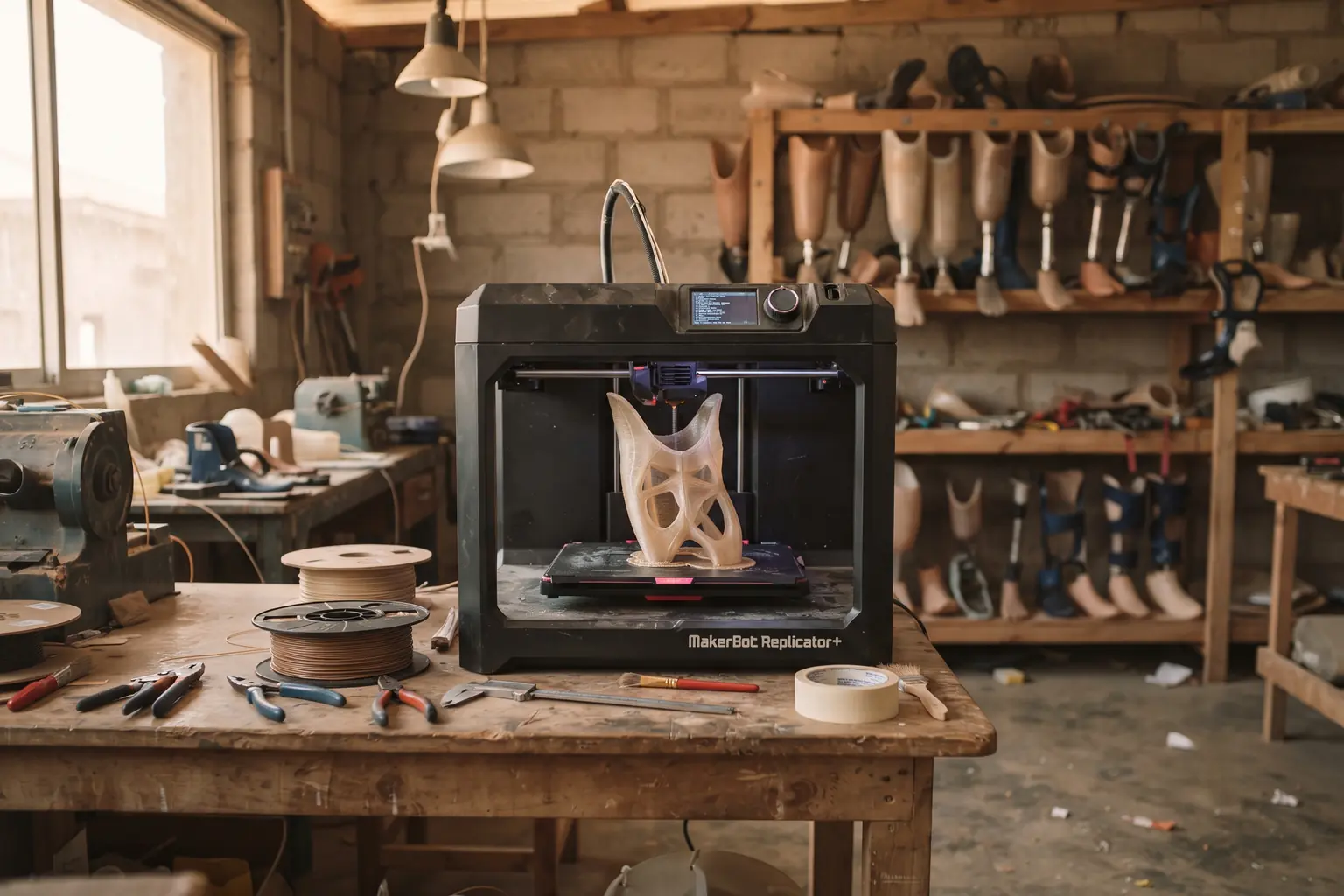
The United Nations Industrial Development Organization (UNIDO) has selected IfeanHealth, a Nigerian health-technology company focused on 3D-printed prosthetics, for its prosthetics innovation programme in Nigeria, according to reporting by Business News Nigeria on August 6.
UNIDO’s selection of a domestic manufacturer for this programme is worth pausing on, not because it solves the problem, but because of where it positions the problem to be solved.
Who UNIDO is in this context
UNIDO is the UN agency with a mandate to promote industrial development in low- and middle-income countries. What that means in practice is that when UNIDO selects a company for an innovation programme, the company typically receives a combination of technical assistance, market development support, potential introductions to regulatory pathways, and the institutional credibility that comes from being associated with a UN body.
That last part is not nothing. In a country like Nigeria, where the medical device regulatory environment is still developing and where government procurement of assistive technology has historically been inconsistent, being recognized by an international body creates a different kind of standing than a startup can generate independently. It doesn’t guarantee procurement contracts or regulatory approval, but it changes the conversation about whether the technology deserves serious institutional attention.
The full scope of this programme (its timeline, funding mechanism, clinical integration plan, and targets) was not detailed in the report. Those are the questions to watch.
The scale of the access problem
The background against which this matters is large. The World Health Organization estimates that roughly 40 million people worldwide need a prosthesis or orthosis but cannot access one, with the overwhelming majority of that unmet need concentrated in low- and middle-income countries. Sub-Saharan Africa accounts for a disproportionate share.
Nigeria’s situation specifically is shaped by a combination of factors. Road traffic crashes are among the leading causes of traumatic limb loss in the country. Diabetic complications and vascular disease are rising causes. The country’s certified O&P workforce, prosthetists and orthotists who have the clinical training to evaluate, fit, and follow up with patients, is extremely thin by population. By WHO estimates, many sub-Saharan African countries have fewer than one certified O&P practitioner per million people. A country of 220 million with a workforce of that density cannot provide timely, individualized prosthetic care through the clinical pipeline alone.
That gap is the actual target. 3D printing, to the extent it works in this context, is a proposed answer to one constraint, manufacturing cost and centralization, not all of them.
What additive manufacturing can and can’t do here
3D-printed prosthetics have been field-tested in low-resource settings for over a decade, mostly through NGO-driven initiatives and academic research partnerships. The picture that has emerged is specific.
What additive manufacturing can do: reduce the per-unit material cost of certain prosthetic components significantly, allow distributed fabrication without centralized factory infrastructure, and enable faster iteration on device geometries. For upper limb prostheses in particular, hands and partial-hand devices, 3D-printed designs have demonstrated functional utility in contexts where a conventional prosthesis would cost many times what a family can afford.
What it does not change: the need for clinical assessment to determine the right device for a given person, the ongoing requirement for fit checks and adjustments as a residual limb changes over time, the supply chain for printing materials and components, and the training infrastructure to operate fabrication equipment reliably in the field. Durability under sustained use, particularly in outdoor working environments with dust, heat, and physical load, remains an active research question, not a resolved one.
A programme that includes IfeanHealth’s manufacturing model but does not address clinical workforce and follow-up is a programme that will produce devices. Whether those devices are fitted appropriately, whether patients are supported through early rehabilitation, and whether devices are replaced or adjusted when needed: those outcomes depend on the rest of the chain.
What UNIDO selection doesn’t tell you
The programme announcement establishes that IfeanHealth has institutional backing and a mandate to operate at a larger scale. It doesn’t tell you what the clinical pathway looks like, how the programme handles patients who need a clinician’s judgment rather than a catalogued device, or how sustainability is structured once UNIDO’s programme period ends.
Those are not criticisms of IfeanHealth or of UNIDO. Innovation programmes at this stage are designed to prove feasibility and build the infrastructure for scale; they are not the scale itself. But the distance between a selected programme and a system that reliably fits prosthetic devices to the people who need them in Nigeria is long, and most of the remaining distance involves workforce, infrastructure, reimbursement, and continuity of care, not manufacturing.
What this means
The selection is a signal that additive manufacturing for prosthetics in Nigeria has moved from proof-of-concept territory into institutional development. That is a meaningful step in the trajectory of access, even if it is not access itself.
For people tracking prosthetics access globally: the useful next questions are whether UNIDO’s involvement opens regulatory or procurement pathways, whether the programme model includes clinical training alongside manufacturing, and whether there is a sustainability plan that does not depend on continued grant or programme funding. Those answers will determine how much distance this selection actually closes.
Amputee News does not provide individualized medical or fitting advice. The programme details described here are based on available reporting as of August 6, 2026; scope, timeline, and outcomes are subject to programme updates.
Source notebook: This reporting draws on Business News Nigeria: UNIDO Selects IfeanHealth for Nigeria's 3D-Printed Prosthetics Innovation Programme, August 6, 2026 ↗. We link out so you can follow the receipts.