
UNO is building a dedicated 3D innovation research center. Here is what a research center is actually set up to do.
The University of Nebraska at Omaha announced NE3D, a hub for advanced 3D-printed healthcare technology including prosthetics. Research centers and clinical deployment are different things, and understanding the gap between them is useful.
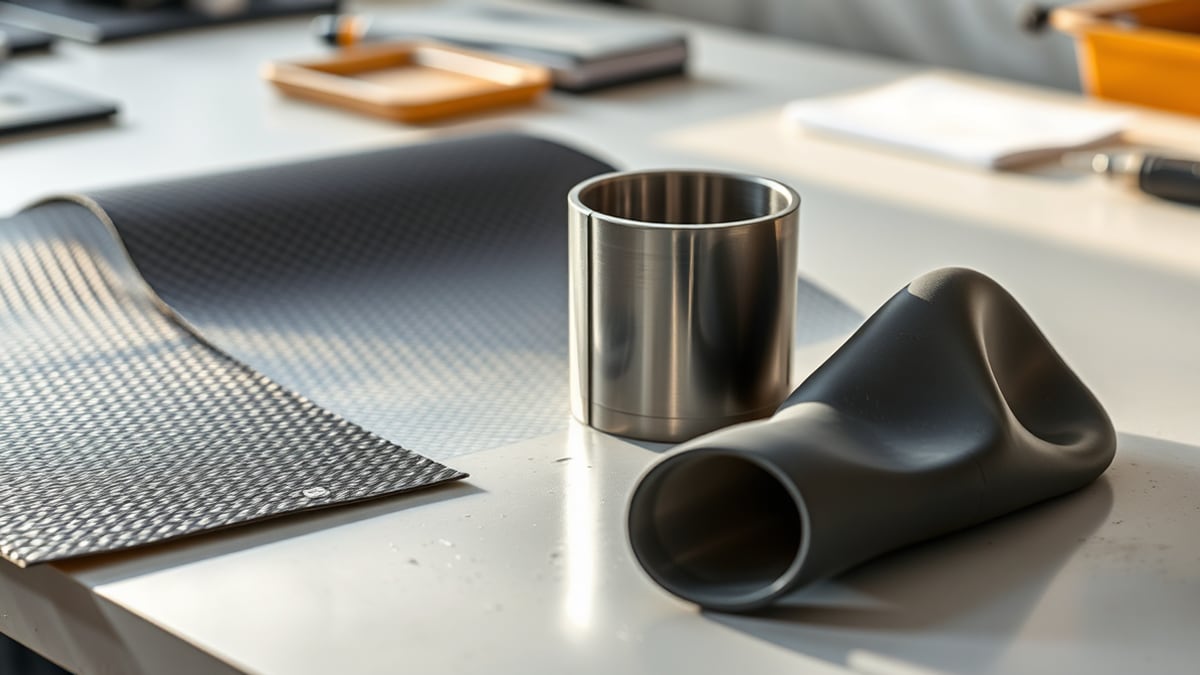
The University of Nebraska at Omaha is establishing the Nebraska Center for 3D Innovation (NE3D), a research hub organized around developing advanced 3D-printed technology for healthcare applications, including prosthetics. The O&P EDGE reported on the announcement on August 25.
It is the kind of announcement that tends to generate two responses at once: excitement about what the technology might eventually do, and genuine uncertainty about what the announcement means in the near term for people who need a prosthesis now. Both reactions are reasonable. They are also about different things.
What a research center is built to do
Research centers in academic medical settings exist to concentrate capacity (equipment, faculty, graduate students, industry partnerships, grant infrastructure) around a defined set of questions. NE3D’s focus on 3D-printed technology for healthcare positions it to pursue things clinical practice settings typically cannot: controlled material science studies, iterative design testing outside the time constraints of patient appointments, publication of findings that inform the broader field, and training researchers who will work on these problems across institutions for the next two decades.
That is not a small contribution. The clinical application of 3D printing in prosthetics is still working through substantive open questions about material durability under sustained functional load, interface design between printed components and suspension systems, fit accuracy over a residual limb’s volume changes, and long-term performance relative to conventional fabrication methods. A facility specifically equipped and staffed to study those questions is useful in ways that a practitioner fitting patients on a daily schedule cannot be.
What a research center is not built to do is translate its findings into patient access quickly, automatically, or uniformly. Research precedes clinical implementation by years. Findings have to be published, reviewed, replicated, and eventually incorporated into clinical protocols, a process that looks nothing like an announcement timeline.
Where 3D-printed prosthetics research stands
The field is neither nascent nor settled. Research on additive manufacturing for prosthetic components has been accumulating since roughly the early 2010s, with a significant spike in publications following the availability of lower-cost desktop FDM printers and the growth of open-source prosthetic hand designs. What that decade-plus of work has established is that 3D printing is technically capable of producing functional prosthetic components in certain categories, and that the performance envelope varies considerably by application.
Upper limb partial-hand and transradial devices have seen the most development and deployment, particularly in low-resource and humanitarian settings where the cost differential between a printed device and a conventionally fabricated one is decisive. For lower limb prosthetics, where structural loading, fatigue resistance, and the consequences of device failure are more severe, the research picture is more cautious. Printed materials and print geometries that work adequately in a controlled lab setting do not always hold up to the demands of a person walking on varied terrain for years. The gap between “this worked in testing” and “this is appropriate to prescribe broadly” is where a lot of the interesting and unresolved research lives.
NE3D enters a field with substantial prior literature, active competitors in both academia and the private sector, and specific open problems that have resisted easy resolution. That context matters for evaluating what the center might accomplish.
The UNO context
UNO is a mid-sized public research university in Omaha, Nebraska. Its health sciences programs have been building applied research capacity over the past decade, and Nebraska’s broader state university system has made deliberate investments in research infrastructure. Situating NE3D there rather than at a large academic medical center with an attached hospital is a meaningful institutional choice: it signals a focus on the engineering and materials science side of the pipeline rather than the clinical integration side.
What that means in practice depends heavily on how NE3D structures its partnerships. A materials-and-design research center that maintains strong clinical relationships (with prosthetists, rehabilitation physicians, and patients) is positioned differently than one that operates primarily within the engineering faculty. The announcement as reported does not detail the clinical collaboration model, and that is one of the substantive questions to track.
The other is funding durability. Research centers frequently launch with a combination of institutional commitment, startup grants, and the expectation of sustained external funding that must then be competed for. The timeline of a center’s work, and the survival of that work when initial funding cycles end, shapes what it can actually complete and disseminate.
What this means
For people tracking prosthetics access and technology: NE3D represents institutional investment in a research problem that has real downstream consequences for what gets built, at what cost, and eventually what gets prescribed. The direct connection from this announcement to someone receiving a better-fitting device is long and involves a lot of intermediate steps. That is what research centers are: an investment in the pipeline, not the pipeline’s output.
The useful questions to ask in the coming months are what NE3D’s initial research priorities are, what clinical and industry partnerships it is forming, and how it plans to disseminate findings to practitioners and to the O&P community at large. A center’s research agenda, what it actually decides to study, tells you more about its eventual impact than the announcement of its existence.
Amputee News does not provide individualized medical or fitting advice. Details about NE3D are based on reporting available as of August 25, 2026; the center’s scope, partnerships, and research agenda are subject to further announcement.
Source notebook: This reporting draws on The O&P EDGE: New Research Center Addressing 3D-Printed Prostheses, August 25, 2026 ↗. We link out so you can follow the receipts.