
Researchers tested using preoperative MRI to size breast prostheses. The accuracy was within 0.5 percent.
A small feasibility study in Clinical Imaging found that open-source 3D segmentation of preoperative breast MRI can produce volumetric measurements accurate enough to guide prosthesis selection, without any post-surgical physical fitting exposure.
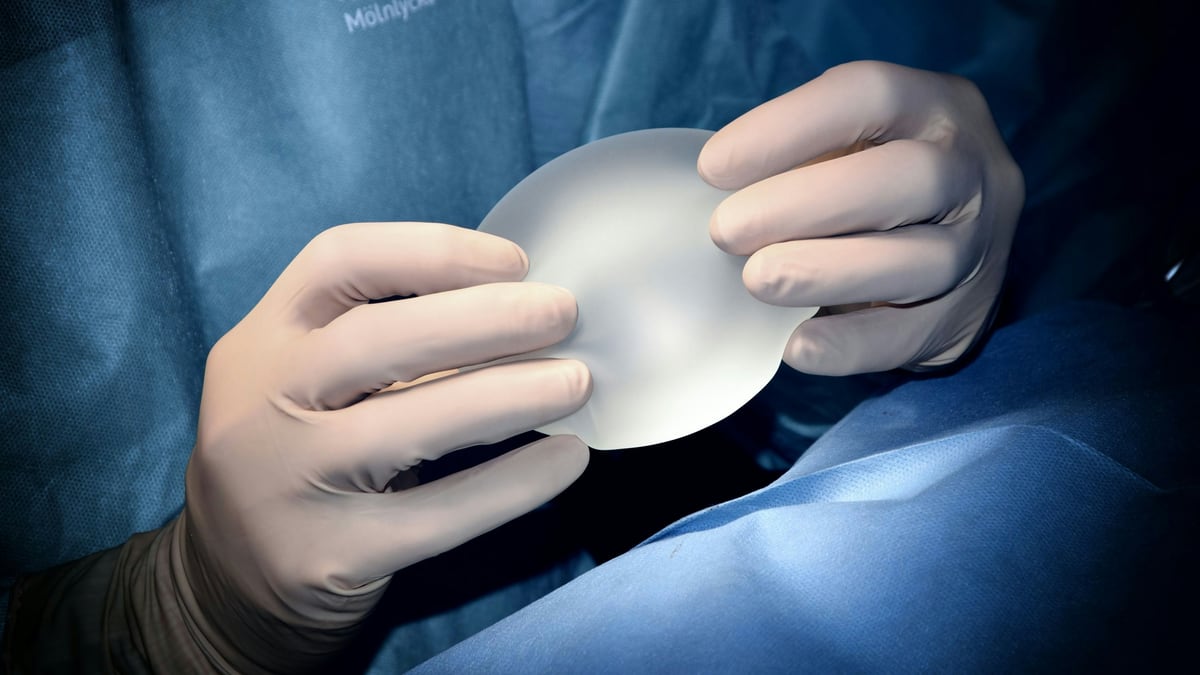
Conventional breast prosthesis fitting after mastectomy typically involves measuring the remaining breast or the contralateral side in person, sometimes repeatedly, through a process that patients frequently describe as uncomfortable and exposing at a time when they are already navigating a difficult recovery. A small feasibility study published in Clinical Imaging describes a different approach: use the preoperative MRI that most patients already have.
The method uses open-source 3D Slicer software to segment breast tissue from existing pre-surgery imaging, reconstruct the volume digitally, and calculate a precise starting measurement for prosthesis selection. Nothing new is scanned. No in-person measurement session is required.
What the study actually did
Researchers analyzed three cases drawn from the public Duke-Breast-Cancer-MRI dataset. The cases were chosen to represent meaningfully different anatomical starting points: volumes ranged from approximately 507 mL to 1,228 mL per breast, and the three cases had distinct bilateral symmetry characteristics. The team segmented each scan in 3D Slicer, ran voxel-based volumetric measurements, and compared results across repeated measurements of the same cases.
The measurements differed by less than 0.5 percent across all three cases. The researchers conclude that the method is reproducible at a level useful for prosthesis selection.
Three cases is a very small sample. The paper describes this as a feasibility study, not a clinical validation, and the authors call explicitly for validation in larger cohorts before the method is used in practice. That caveat belongs up front.
Why fitting remains difficult
The accuracy question is not the only one. Current fitting practice presents two separate difficulties.
The first is logistical: a prosthesis is typically selected after surgery, during a period when the body is still changing from surgical swelling and healing. Getting the volume right on the first fitting is hard, and refinements require follow-up appointments.
The second is the exposure itself. Fitting requires physical measurement, often with a fitter the patient has just met. The study notes that psychological discomfort associated with conventional fitting is a documented problem. Using imaging data from before surgery sidesteps that moment entirely. The patient does not need to be physically present for the measurement; it comes from data already in the clinical record.
The study also found that volume measurements from MRI are posture-independent in a way that physical measurement is not, which removes one variable from the fitting process.
The open-source piece
The method uses only 3D Slicer, which is open-source and publicly available, and the Duke-Breast-Cancer-MRI dataset used for validation is also public. A clinic with access to standard MRI data and a practitioner willing to learn the software could, in principle, implement this without purchasing additional systems.
The study is open-access in Clinical Imaging, so clinicians can read the full methodology.
What this means now
This does not change how breast prosthesis fitting works today. It describes a method that produced accurate volumetric measurements in three test cases and needs larger study before it could be ready for clinical use. The path from feasibility study to standard practice involves validation studies, clinical workflow integration, and typically a reimbursement pathway if it requires additional practitioner time.
What the study adds to the existing literature is a reproducibility number (under 0.5 percent error), a privacy argument (no postoperative physical exposure), and an open-source implementation pathway. Those are useful details for clinicians and researchers assessing whether this line of work merits further investment.
This article covers published research findings. It does not constitute medical advice. Patients should discuss prosthesis fitting options with their care team.
Source notebook: This reporting draws on The O&P EDGE: MRI Method Could Personalize Breast Prostheses, September 2026 ↗. We link out so you can follow the receipts.