
Mark Geil retired from Kennesaw State after 28 years. Adjacent-discipline faculty are a quiet part of how O&P research infrastructure works.
Mark Geil, PhD, professor of biomechanics at Kennesaw State University's Wellstar College of Health and Human Services, retired after more than 28 years in the University System of Georgia. What the departure of senior biomechanics faculty means for the O&P field's research infrastructure, and why it doesn't show up in O&P workforce counts.
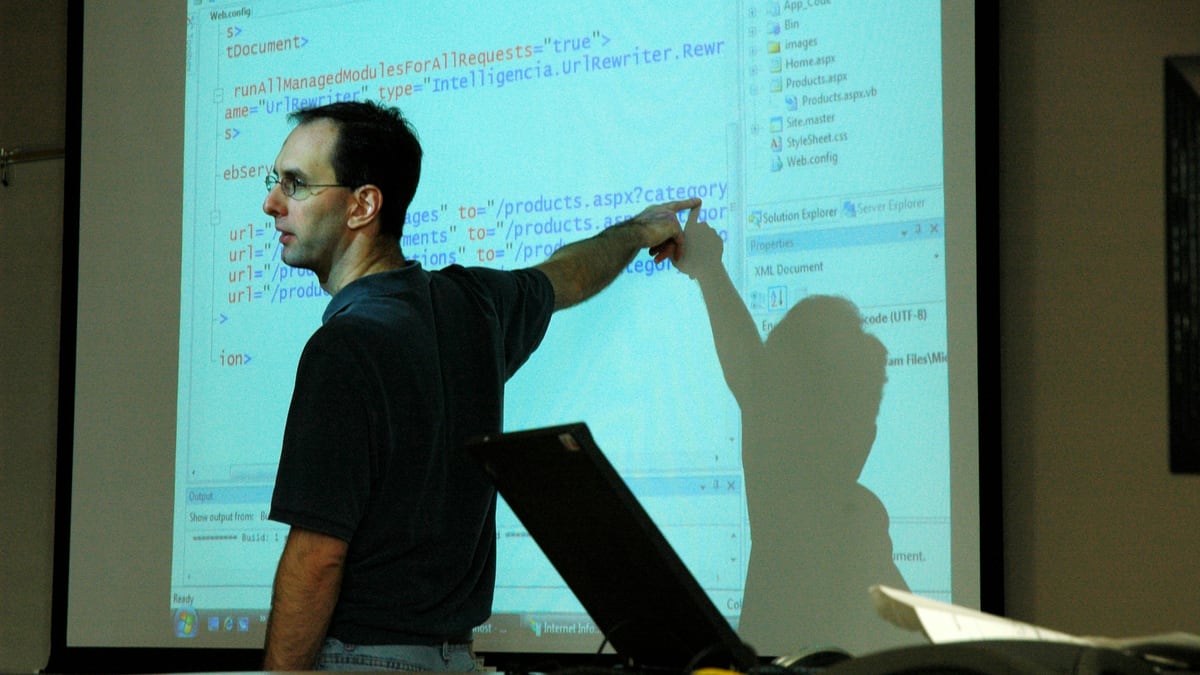
Mark Geil, PhD, professor of biomechanics at Kennesaw State University’s Wellstar College of Health and Human Services, retired after more than 28 years in the University System of Georgia, per the O&P EDGE.
That is the announcement. The context worth adding is about what biomechanics faculty contribute to O&P research, and why a retirement like this one doesn’t register in any of the field’s standard workforce reports.
What biomechanics faculty do for O&P research
The O&P field is a clinical and engineering discipline. Its clinical side trains and credentials practitioners through NCOPE-accredited programs. Its engineering and evidence side depends heavily on adjacent academic infrastructure: motion capture labs, instrumented walkways, force platforms, and the researchers who know how to use them.
Biomechanics faculty supply that infrastructure. They run the gait analysis studies that help clinicians understand how a prosthetic foot responds under dynamic loading. They co-author the peer-reviewed work that builds the evidence base for socket designs, alignment protocols, and outcome measures. They train graduate students in measurement methods that O&P clinical programs do not have the faculty or equipment to teach alone. When a biomechanics lab at a nearby health sciences university is productive and collaborative, O&P programs draw on it. When it is not, there is no backup.
Geil’s work in biomechanics has been directly applicable to lower-extremity function and gait analysis. Over a 28-year career, that kind of specialization produces something harder to quantify than a publication list: institutional familiarity. The grant pipelines, the clinical partnerships, the shared IRB relationships, the departmental commitments that keep a lab funded and staffed. These do not transfer automatically when a faculty member retires.
Adjacent fields are not counted in O&P workforce numbers
The O&P field has a documented faculty shortage within its own accredited programs. NCOPE-accredited programs require faculty who hold clinical credentials and academic qualifications, and not enough credentialed clinicians make the transition into academic roles to keep pace with workforce demand. That problem is real and has been covered here in the context of both the Live in Motion Foundation’s educator scholarship work and Northwestern’s new MPO research training program.
What those counts miss is the adjacent layer: the biomechanics professors, biomedical engineers, and rehabilitation scientists whose research and teaching support O&P programs without being credentialed in the field themselves. Geil is that kind of figure. His retirement is covered by O&P EDGE because the O&P field knows that his work mattered to it. But there is no NCOPE census that captures him. He won’t appear in any O&P workforce shortage report as a gap.
That is both structurally accurate and a limitation of how the field measures itself. O&P’s dependence on adjacent academic disciplines is real. The research infrastructure that makes clinical evidence possible doesn’t come only from inside the field.
What tends to happen next
When a senior biomechanics researcher retires after nearly three decades in one institution, what persists is what was formalized: publications, methodologies documented in papers, students who are now faculty or researchers elsewhere. What requires active management to preserve is everything informal: the departmental momentum, the collaborative agreements with clinical partners, the lab’s orientation toward O&P-relevant problems rather than the dozens of other problems biomechanics can address.
KSU’s Wellstar College will replace Geil or it won’t, depending on budget, priorities, and the applicant pool. Whether a replacement maintains the same research orientation toward O&P-adjacent questions is a question for the department, not for the broader field to answer. But it is a question worth tracking, particularly as O&P programs continue to look outside their own faculty ranks for the research infrastructure their clinicians need.
Amputee News does not provide individualized medical, legal, or career advice. This article reflects publicly available information about personnel and research programs in the O&P field.
Source notebook: This reporting draws on The O&P EDGE: Kennesaw Professor Retires, September 2026 ↗. We link out so you can follow the receipts.