
The only maker of injection-moulded prosthetic leg covers just cut production time by 22 hours
LIMB-art, a small North Wales company founded by former Paralympian Dr Mark Williams, reduced cover production from two days to two hours with laser-cutting equipment. It is the only company in the world doing what it does.
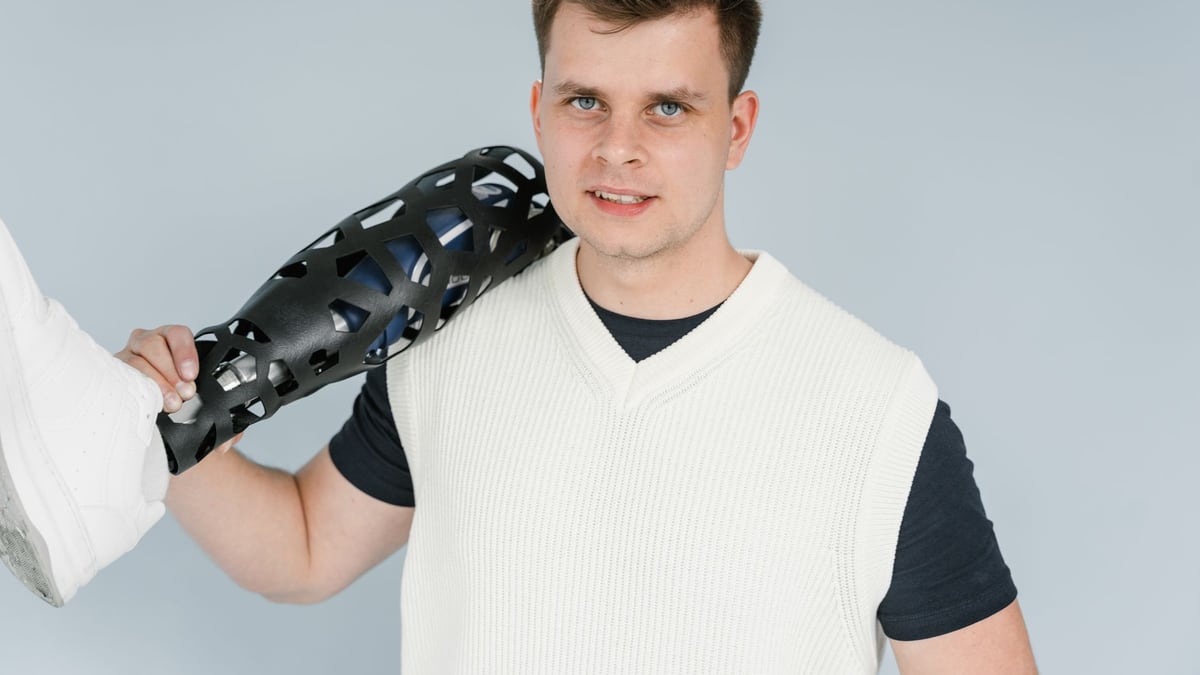
Prosthetic covers are the part of a prosthetic leg that goes over the structural components: the socket, the pylon, the foot. For most of prosthetics history, the default was a flesh-coloured foam cosmesis that approximated the shape of a leg. It was a practical solution. It was not always something people were proud to wear.
LIMB-art makes something different. Based in Bylchau, in the Conwy area of North Wales, the company produces personalised prosthetic leg covers. Not a generic shape in a skin-tone catalogue, but covers designed to be individual: patterned, coloured, finished to what the person wants. Founded by former Paralympian Dr Mark Williams and his wife Rachael, the company is the only manufacturer of injection-moulded prosthetic covers in the world, and the only company in Europe making prosthetic leg covers at all.
That second fact is worth pausing on. The entire global supply of injection-moulded covers comes from one small operation in rural North Wales.
This month, LIMB-art announced it had invested in laser-cutting equipment, bringing cover production time from two days per cover down to roughly two hours. The investment came through Conwy County Borough Council’s Supporting Local Business Key Fund, part of the UK Shared Prosperity Fund.
What changed in production
The covers LIMB-art makes are personalised, which means each one differs from the last. Under the previous process, cutting material for each design by hand took time precisely because the designs varied. Laser cutting automates that step: the machine follows the digital pattern directly and produces cleaner edges with fewer errors. Adding design variants no longer multiplies cutting time the way it once did, which is how the company can also introduce a wider range of designs alongside the speed gain.
Dr Williams described the approach plainly. “Every cover we make is unique because every customer is different and we want people to have something they’re proud to wear. The new equipment allows us to work much more efficiently without losing the attention to detail that our customers expect.”
The efficiency gain feeds directly into the company’s actual pipeline. LIMB-art holds NHS contracts as well as international distributor relationships. Faster production means it can respond to NHS orders more quickly and build stock for international demand without the two-day-per-unit bottleneck. The company is forecasting revenue growth of up to 20% in the first year of operating the new equipment, with lead times coming down by up to 30%.
Who doesn’t easily get a bespoke cover
Most people who use prosthetics never hear about LIMB-art. A cover is an optional add-on, not a structural component. Whether a clinic routinely offers one depends on the clinic, and whether funding covers it depends on the individual pathway. The NHS funds prosthetic components; cosmetic covers exist in a more variable place.
People who do want a cover they chose rather than a cover they were handed have been, until recently, almost entirely dependent on this one company. That’s not a metaphor: if LIMB-art closes or can’t keep pace with orders, there is no obvious structural alternative for injection-moulded covers. Dr Williams has said manufacturing in North Wales is intentional, and the new equipment doesn’t change that. What it changes is the pace.
The Supporting Local Business Key Fund that helped pay for the equipment officially closed at the end of its 2023-2026 run. The investment is already in place.
Source notebook: This reporting draws on Denbighshire Free Press: Conwy-based prosthetics firm boosts production with new technology, September 23, 2026 ↗. We link out so you can follow the receipts.