
Humotech is launching a mobile clinic to let patients try different prosthetic feet before picking one. Here is what that changes about how foot selection works.
Most prosthetic foot prescriptions are written from a catalogue, not from experience. Humotech's new mobile clinic in Pittsburgh gives patients a way to test-drive options before committing. Here is what the service involves, why trialing is harder to run than it sounds, and what the model means for how O&P care gets delivered.
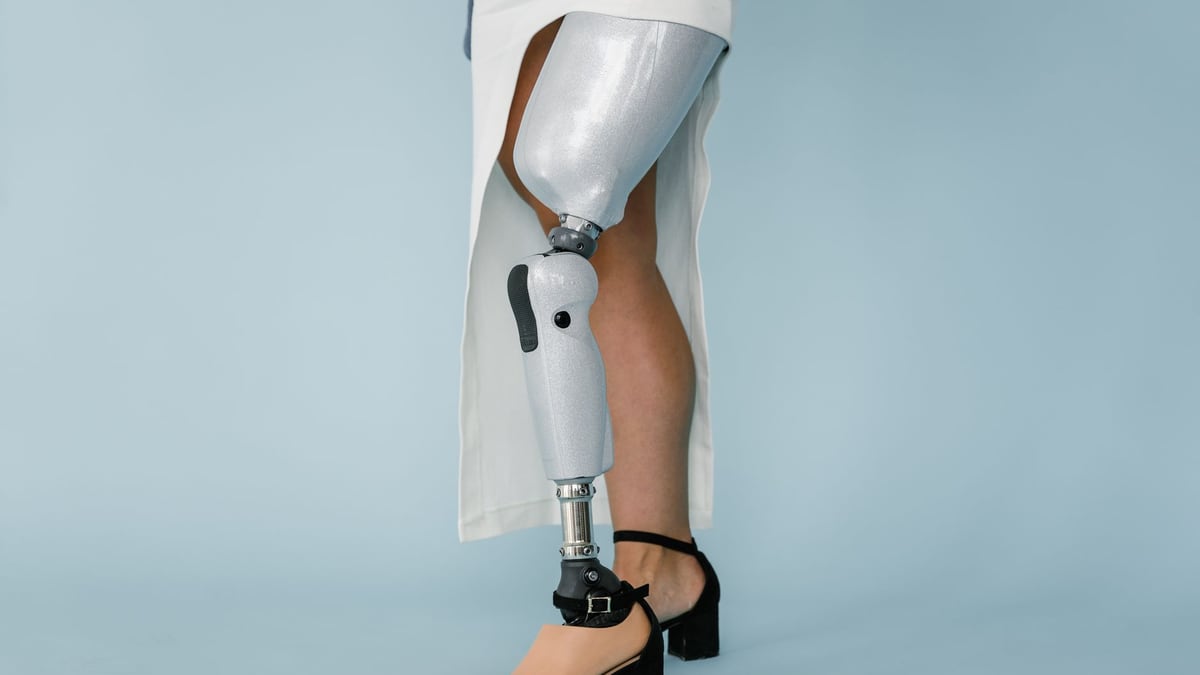
Humotech, a developer of wearable device platforms for prosthetics, orthotics, and exoskeletons, is launching a mobile clinic this month in Pittsburgh that will let lower-limb amputees try out different prosthetic feet before committing to one. The service will be staffed by Kierra Falbo, PhD, MPO, CPO, as the clinical prosthetist.
“After several years of development, we’re excited to offer patients the opportunity to test-drive different prosthetic foot options through our new mobile clinic,” said Humotech CEO Caputo. “We’ve found that patients are eager to explore what’s possible and play an active role in the decision-making process. By helping individuals identify the foot that best matches their goals and lifestyle, we believe this approach can deliver lasting improvements in quality of life while creating value for providers and payers.”
Falbo’s background spans engineering and clinical rehabilitation science. She holds a biomedical engineering degree from the University of North Carolina at Chapel Hill, a master’s in O&P from Northwestern University, and a doctorate in rehabilitation science from the University of Minnesota and the Minnesota VA.
Why foot selection without trialing is a real problem
Prosthetic feet cover a wide range of designs, from simple solid-ankle cushioned-heel feet to dynamic carbon-fiber blades to powered ankles with active push-off. The right choice for a given patient depends on activity level, walking speed, body weight, terrain, lifestyle, and alignment preferences. These factors interact in ways that are genuinely hard to predict without the patient actually walking in a device.
Medicare’s K-level system is supposed to capture functional potential and tie it to coverage categories. But K-levels are assigned before a patient has extended experience with different hardware. A prosthetist with good clinical instincts can make a reasonable call, but it is still a judgment based on observation and a conversation, not field data.
Once a prescription is written and approved, changing it is its own administrative process. A patient who ends up in a foot that works but does not match how they actually move through their day faces the choice of living with it or starting over. Many live with it.
Trialing shifts some of that uncertainty earlier in the process. If a patient can walk in several different feet under clinical supervision before anything is prescribed, the prescription can be grounded in observed function. That is a better input than informed guessing.
What “value for providers and payers” actually means
Caputo’s phrase about “value for providers and payers” is doing some work worth unpacking.
When a prosthetic prescription is a poor match, the downstream costs include abandoned devices, revision prescriptions, additional fitting appointments, and, in some cases, a full second authorization process with the insurer. None of that is cheap, and all of it falls somewhere in the coverage and billing chain.
A trialing service that catches mismatches before a prescription is written can reduce those events. One clinical visit upfront to test several options may cost less than processing a prescription change after the fact. That math is attractive to payers, which is probably why Humotech framed the service that way. Whether payers will actively reimburse for the trial visit itself is a separate question. Humotech has not announced a billing or coverage structure for the mobile clinic.
What this means
If you are in the Pittsburgh area and are entering a prosthetic foot selection process or considering whether your current foot still fits your life, it is worth asking your prosthetist whether Humotech’s mobile trialing service is available and whether it fits your coverage situation. The service is new, the logistics around who pays for the trial visit are not yet public, and access will be limited to the Pittsburgh geography for now.
The mobile format matters separately from the trialing model. Coming to the patient rather than requiring the patient to come to a clinic is a different approach to O&P access, and for people who have transportation barriers or who find clinic visits logistically difficult, that matters. Whether Humotech intends to expand the mobile model beyond Pittsburgh is not addressed in the announcement.
For everyone else, the service is not yet reachable. But the foot-selection problem it is addressing is not specific to Pittsburgh.
Amputee News does not provide individualized medical or device-fitting advice. Consult a licensed prosthetist and your insurance plan before changing your device or initiating a prescription.
Source notebook: This reporting draws on The O&P EDGE: Humotech Launching Mobile O&P Clinic, September 2026 ↗. We link out so you can follow the receipts.