
Fifty-nine percent of healthcare workers plan to leave. The practices keeping theirs tend to offer one thing most don't.
A summer 2026 Harris Poll of 1,514 healthcare workers and 304 healthcare employers found that 81 percent of workers want employer-sponsored education, while only 48 percent of employers offer it. In O&P, where losing one certified prosthetist can reshape patient access across a region, the gap has a specific shape.
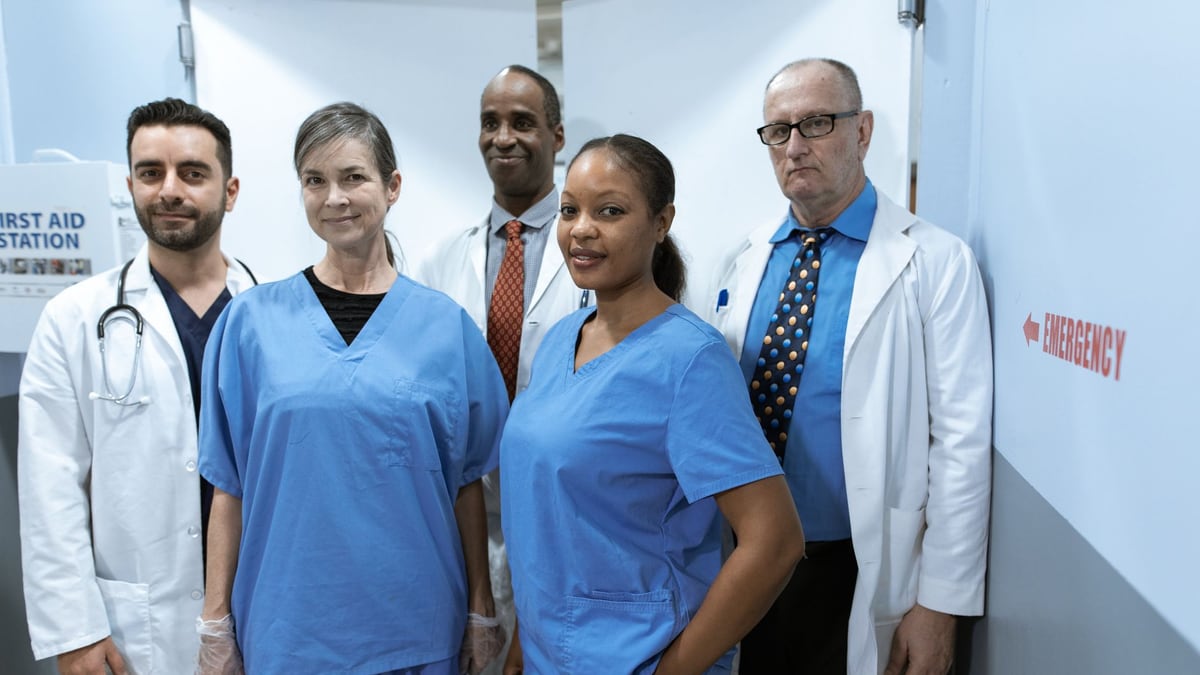
The summer 2026 Harris Poll, commissioned by Strategic Education and Workforce Edge, surveyed 1,514 U.S. healthcare workers and 304 healthcare employers. The topline: 59 percent of the workforce said they plan to seek a new role. Among Gen Z healthcare workers specifically, that number hit 70 percent. The same respondents, however, said 95 percent of them value long-term job security. Mobility and the desire to stay are not opposites. They coexist when the current employer isn’t offering what workers say they need.
What workers say they need, according to the data, is a career path. Eighty percent of employees said clear advancement opportunities are important. Forty-seven percent of employers acknowledged that a lack of career advancement, professional development, or education options is the main reason workers leave. And 81 percent of workers said they would want employer-sponsored education benefits if offered.
Only 48 percent of employers have a comprehensive workforce education program.
That’s the gap. Eighty-nine percent of employers said such programs improve retention and career mobility. Just under half don’t have one.
Why this matters in a small field
The Harris Poll covers healthcare broadly. O&P is not named in the findings. But the dynamics it describes run through O&P practices with particular force.
O&P is a small profession. Both the American Board for Certification in Orthotics, Prosthetics and Pedorthics (ABC) and the Board of Certification/Accreditation (BOC) require continuing education credits for license renewal, so a baseline of CE is already built into the credential. The survey is pointing at something different: structured career pathways, advancement tracks, and employer investment beyond the minimum required to keep a license current.
That distinction matters in a clinical setting. A required CEU is typically taken to maintain standing. A practice that pays for a staff member to attend a specialty training, pursue additional credentials, or develop expertise in microprocessor systems or myoelectric fitting is doing something structurally different. The Harris Poll data suggests workers notice, and respond to, that difference.
Research published earlier this year found elevated burnout rates among O&P clinicians and concluded that in a small field, losing one certified practitioner can reshape patient access across a geographic area. We covered that finding here. Practices that don’t invest in staff development may lose people to burnout, to better-resourced competitors, or to adjacent healthcare roles before a formal exit ever gets attributed to the underlying cause.
What this means for patients
For people with prosthetic or orthotic needs, the continuity of a clinical team has direct implications. The details of your residual limb, your gait history, your prior devices, and how your body has changed over time are things a new practitioner starts from zero on. Fitting relationships are not transferable.
Whether a specific practice invests in its staff’s professional development is not easy to verify from the outside. The survey suggests asking the question is fair. A practice that can describe what career growth looks like for its clinical and technical staff is a different institution from one that cannot answer the question. It is not a guarantee of stability, but it is a more honest signal than a website.
The full 2026 Healthcare Workforce Barometer is available through Strategic Education and Workforce Edge. The O&P EDGE summarized the findings in its October 2026 coverage.
This article describes a general healthcare workforce survey. Nothing here constitutes advice about a specific practice, provider, or employment decision.
Source notebook: This reporting draws on The O&P EDGE: 'Continuing Education Increases Retention, Survey Finds,' October 2026 ↗. We link out so you can follow the receipts.