
EMU's Dale Berry O&P scholarship grows by 250 percent, and that connects to whether care exists in your area
The Eastern Michigan University Foundation has increased the Dale Berry Orthotics and Prosthetics Endowed Scholarship by 250 percent. The number matters less than what it points toward: a workforce pipeline that shapes whether prosthetic care is available at all.
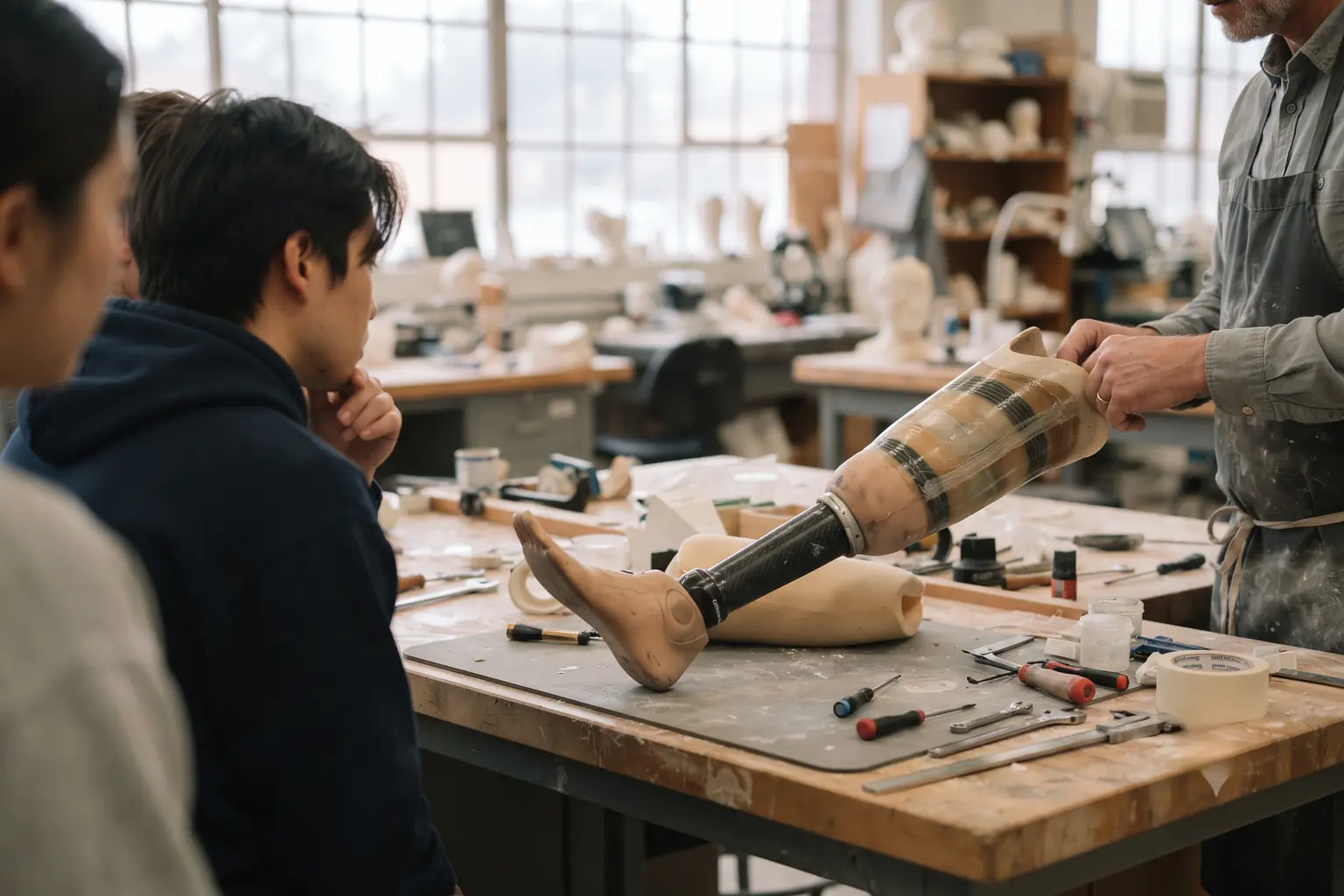
The Eastern Michigan University Foundation has announced a 250 percent increase to the Dale Berry Orthotics and Prosthetics Endowed Scholarship, awarded annually to students in EMU’s O&P program. The O&P EDGE reported the announcement on August 6.
The announcement sits in the industry-news category that often reads like a filing obligation: endowment updated, carry on. But workforce funding in orthotics and prosthetics connects to something more concrete than institutional housekeeping: whether enough practitioners exist to staff the care that people need.
What a 250 percent endowment increase actually changes
An endowment works differently from a one-time gift. The fund’s principal is invested and preserved; a percentage of the fund’s value (often 4 to 5 percent annually) is paid out to fund the scholarship on a recurring basis. A 250 percent increase to the principal roughly triples the annual payout available from this source.
For students in EMU’s O&P program, that can mean a larger individual award, more students receiving support, or both, depending on how the program structures its distributions. What it means durably is that this scholarship is harder to deplete and less dependent on annual fundraising cycles. Endowed scholarships are structural funding commitments, not one-time contributions.
The O&P training pipeline is narrower than most people realize
Orthotics and prosthetics is a specialized field with a small number of accredited training programs. Entry-level practice now typically requires completion of a master’s-level program accredited by the Commission on Accreditation of Allied Health Education Programs (CAAHEP), followed by a residency and board certification through the American Board for Certification in Orthotics, Prosthetics and Pedorthics (ABC) or the Board of Certification/Accreditation (BOC).
That is a substantial time and cost commitment. Graduate tuition across two to three years, before any residency income, creates real debt pressure. That pressure shapes who can complete the training and, down the line, where graduates choose to practice.
Practitioners carrying high educational debt tend to concentrate in urban and suburban markets with stronger commercial insurance coverage and more favorable reimbursement rates. Rural areas and markets heavily dependent on Medicare and Medicaid face chronic shortages of O&P practitioners. The field has documented this pattern for years. There is no single structural fix, but scholarship funding that reduces the debt load at program entry is one lever: not a solution, but a precondition for practitioners who can take lower-reimbursement positions without financial ruin.
Who this specifically reaches
EMU’s O&P program is located in Ypsilanti, Michigan. The state includes well-served metropolitan markets and meaningful rural and semi-rural areas, particularly in the Upper Peninsula and parts of mid-Michigan, where O&P access is thinner on the ground.
Whether a scholarship increase produces practitioners who ultimately go to underserved areas is not guaranteed. A scholarship does not carry a geographic or practice-setting requirement. But it removes one barrier at the front of the training pipeline, and practitioners who begin their careers with less debt have more financial flexibility in where they land.
What the announcement doesn’t answer
A 250 percent increase to a named endowed scholarship is a significant capital commitment, and the short announcement leaves some useful data points unpublished: the original endowment value, the new annual award amount, the donor’s identity, and whether EMU tracks where graduates practice after completing the program.
Those are the data points that would connect this announcement to a downstream access outcome rather than leaving it as a self-contained good news item. A program that monitors its graduates’ practice locations can use that data to calibrate what incentives, if any, might steer them toward underserved markets. That’s a longer-term question worth asking, and it’s not unique to EMU.
The larger workforce context
This scholarship increase comes during a period of compounding access pressure for people who use prosthetics and orthotics. The ongoing CMS moratorium on new DMEPOS supplier enrollment, the activation of the updated Medicare lower-limb prosthesis policy article, and the ongoing documentation and billing complexity in the field all put pressure on existing practices, particularly smaller and rural ones.
More students entering and completing O&P training is a necessary condition for long-term access. It is not sufficient on its own, and the effects will be measured in years, not months. But the pipeline has to be funded somewhere for practitioners to exist at all. A scholarship endowment increase is one place that happens.
Amputee News does not provide individualized medical, legal, benefits, or insurance advice. Coverage and care decisions depend on individual circumstances, applicable Medicare and Medicaid rules, and the policies of the providers and plans involved.
Source notebook: This reporting draws on The O&P EDGE: O&P Student Scholarship Endowment Increased, August 6, 2026 ↗. We link out so you can follow the receipts.