
Your prosthetic just broke: what to do in the next 72 hours
Component failure happens. The gap between broken and repaired has predictable steps, and knowing them ahead of time makes the experience considerably less chaotic. A practical guide to emergency contacts, Medicare repair coverage, backup mobility, and what to document.
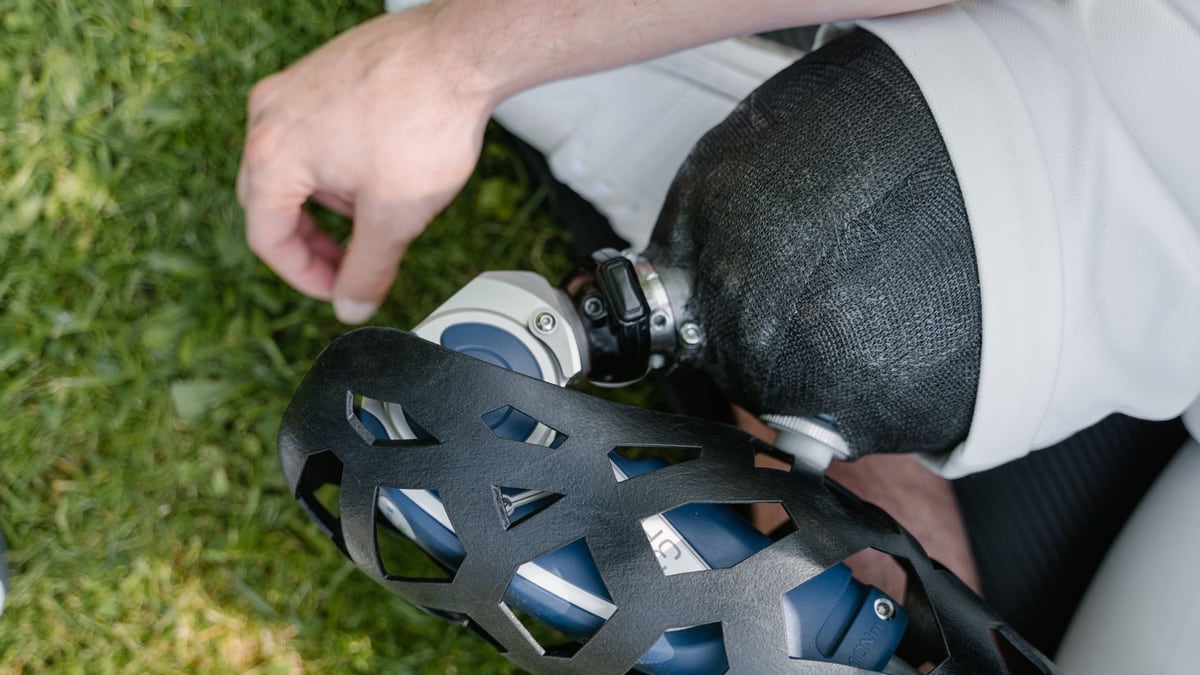
A component on your prosthesis just failed. Maybe a pin fell out of the suspension system. Maybe the ankle cracked. Maybe the liner tore mid-shift. Whatever it is, you now have a problem with a predictable structure, and knowing the plan makes the next 72 hours considerably less chaotic than improvising it.
This guide is for people who use a prosthesis and haven’t had a device fail yet, and for people who have and want a clearer framework for next time. The steps aren’t complicated. The part that catches people off guard is not knowing them.
Assess the safety question first
Before anything else: is this failure a load-bearing risk right now?
A cracked pylon, a loose ankle joint, or a broken coupling can turn a functional device into a dangerous one. If you are not confident the device will bear weight safely, don’t bear weight on it. That means crutches, a wheelchair, sitting until you can get clarity: whichever is actually available and practical.
Some failures are more annoying than hazardous. A torn liner, a worn socket sock, or a pin that pulls out cleanly are real problems but not necessarily fall risks. If you know your device well enough to recognize which failure you’re looking at, you can make a reasonable call. If you’re not sure, treat it as a load-bearing risk until you get a clinical opinion.
Document what you see before you do anything else. Take a photo if there’s visible damage. Write down when you first noticed it, whether it came on suddenly or had been building, and whether anything specific preceded it. You will want this information when you call the clinic and potentially when dealing with a warranty or insurance question later.
Call your clinic
Most O&P clinics have an after-hours line, an on-call practitioner, or at minimum an emergency voicemail. If you don’t know your clinic’s after-hours number, find it before you need it. Add it to your phone under something obvious.
When you call, be specific. “It broke” does not help the person on the other end triage your call. “The ankle joint has a crack on the anterior side and the device is making a popping noise under load” helps them decide whether to have you come in that day, order a part, or walk you through an interim fix. You don’t need clinical vocabulary. You do need:
- What you can see or feel
- When you noticed it
- Whether it came on gradually or suddenly
- Whether you can currently bear weight safely
Some failures have quick solutions: a component the clinic has in stock, a straightforward adjustment, a repair that takes under an hour. Others require ordering parts. Knowing what you’re dealing with determines what comes next.
What the repair timeline realistically looks like
Simple repairs (replacing a worn component that the clinic stocks, reseating a connection, patching a liner) can often be done same-day or within a few days if you can get in.
Complex repairs take longer. Cracked structural components, failed microprocessor units, socket damage requiring fabrication, or parts that need to come from the manufacturer can push the timeline to one to two weeks or more. Backorder status, shipping time, and technician availability all affect the actual number.
If the timeline matters for work, caregiving, or anything else in your life, say so when you call. Clinics sometimes have flexibility on scheduling that doesn’t get offered until it’s asked for. And if a part is being ordered, ask whether expedited shipping is an option: manufacturers sometimes have this available for urgent repairs, and your clinic deals with the logistics.
Does Medicare cover repairs?
Under Medicare Part B, prosthetic repairs are a covered benefit when the device remains medically necessary for you and the repair is less expensive than replacement. A few things to know:
Routine repairs generally do not require a new prescription. Getting a new prosthetic device requires a physician prescription and supporting documentation of medical necessity. Repairing an existing covered device typically doesn’t. Your clinic handles the documentation for repairs and knows what Medicare requires for the specific work being done.
Prior authorization is generally not required for repairs. This is different from the expanded prior authorization requirements that now apply to certain new device authorizations. The clinic bills the repair after it’s completed, not before.
The device needs to remain medically necessary. For someone actively using their prosthesis daily, this is not a complex question. If your situation has changed significantly since the device was last authorized, it could become relevant, but for most repairs in normal circumstances, it isn’t.
If you’re not on Medicare, the rules differ. Commercial insurance, Medicaid, Tricare, and VA coverage each have their own repair coverage provisions and processes. Call your plan’s member services and ask specifically about durable medical equipment repair. The core questions are: what documentation is required, is prior authorization needed for repairs, and what is your cost share.
Loaner devices: sometimes available, not universal
Some O&P clinics maintain loaner prosthetics: a device in a common configuration that can be fitted temporarily while yours is being repaired. Some practices don’t have this capacity, particularly smaller clinics without fabrication labs. VA facilities are more likely to have loaners than small private practices, though this varies.
Ask when you call. If your clinic doesn’t have a loaner, ask if they can refer you to a colleague practice that might. Not every call will produce a loaner, but it’s worth asking directly rather than assuming the answer.
Medicare does not generally cover a separately billed loaner prosthesis during a repair period. The coverage is for the repair, not for a parallel device. If a clinic offers you a loaner and raises the question of billing it to your insurer, understand what you’d be expected to pay before agreeing to anything.
Backup mobility while you wait
If the repair takes several days, you need a practical plan for moving through your life in the gap. The options depend on your situation, your living environment, and what you have access to.
Crutches. Axillary (under-arm) or forearm (Lofstrand) crutches are covered by Medicare Part B as durable medical equipment when medically necessary and prescribed. If you don’t have a set and need one during the repair, your physician can write a prescription. Note that extended crutch use, especially if you’re not recently practiced with them, affects gait differently than you might expect, and can put unusual load on the arms and shoulders. A brief check-in with your PT is worth it if the gap stretches beyond a few days.
Wheelchair. A manual wheelchair can cover distance that crutches don’t, particularly if the repair is taking longer than a week. If you have one, or can borrow one, it’s worth knowing where it is before you need it.
What you keep on hand. Many experienced prosthesis users keep a set of crutches or a backup component around for exactly this reason. If you’re early in your prosthetic use and your current setup doesn’t include any backup, ask your prosthetist what they’d recommend having accessible. The answer will depend on your device and situation, but the conversation is worth having.
If you’re traveling when it fails
A failed component far from your clinic is a harder version of this problem, but it has a structure too.
Contact the manufacturer of the main failed component. Major manufacturers (Össur, Ottobock, Fillauer, Proteor, and others) have customer service lines and can often identify a local authorized clinic or dealer with the part in stock. If you can describe your component (manufacturer, model, and serial number if you have it), this conversation goes faster.
Call your clinic even if you’re nowhere near it. They may have referral relationships with clinics in your area, or can provide documentation that helps a local practice work with you quickly. A local O&P clinic working with someone they don’t know needs your device records and prescription history to work safely and to bill your insurance. Your clinic can often transfer relevant documentation quickly if you call and ask.
If you’re traveling internationally, the manufacturer contact is the most reliable first call. Local O&P services exist in most countries but the process varies significantly. Carrying documentation (manufacturer, model, and serial numbers for your key components) makes every repair conversation faster wherever you are.
Our travel guide covers what to carry and which documentation is most useful to have accessible on the road.
Warranty claims
Manufacturers warrant their components for varying periods, typically one to three years for structural components, shorter for wear items like liners. Warranty coverage usually applies to defects in materials and workmanship, not to normal wear or external damage.
If the failure happened to a component that is still within its warranty period and wasn’t caused by an external event (impact, damage), it’s worth asking your clinic to assess whether it qualifies for a warranty claim. The clinic typically handles the claim through the manufacturer on your behalf. This doesn’t always result in a covered replacement, but it’s a reasonable thing to raise before absorbing the cost of a non-warranty repair.
Medicare Part B covers prosthetic repairs when the device remains medically necessary and the repair costs less than replacement. Documentation requirements, prior authorization rules, and coverage provisions differ across Medicare, commercial insurance, Medicaid, VA, and other payers. This guide is general information; coverage for a specific repair depends on your plan, the component involved, and your clinic’s submission. For Medicare questions, call 1-800-MEDICARE or visit medicare.gov. For private insurance, call the member services number on your card. This guide does not constitute clinical, insurance, or legal advice.
Source notebook: This guide draws on CMS Medicare: Prosthetics and Orthotics Items, coverage including repair and replacement ↗. We link out so you can follow the receipts.