
A bioinspired sensor detected socket loading problems in prosthetic users before they reported any discomfort
Researchers at Zhejiang University of Technology tested a pressure-sensing 'skin' in prosthetic sockets that mimics pain signal processing. In three transtibial amputees, it identified gait problems producing harmful loading in real time.
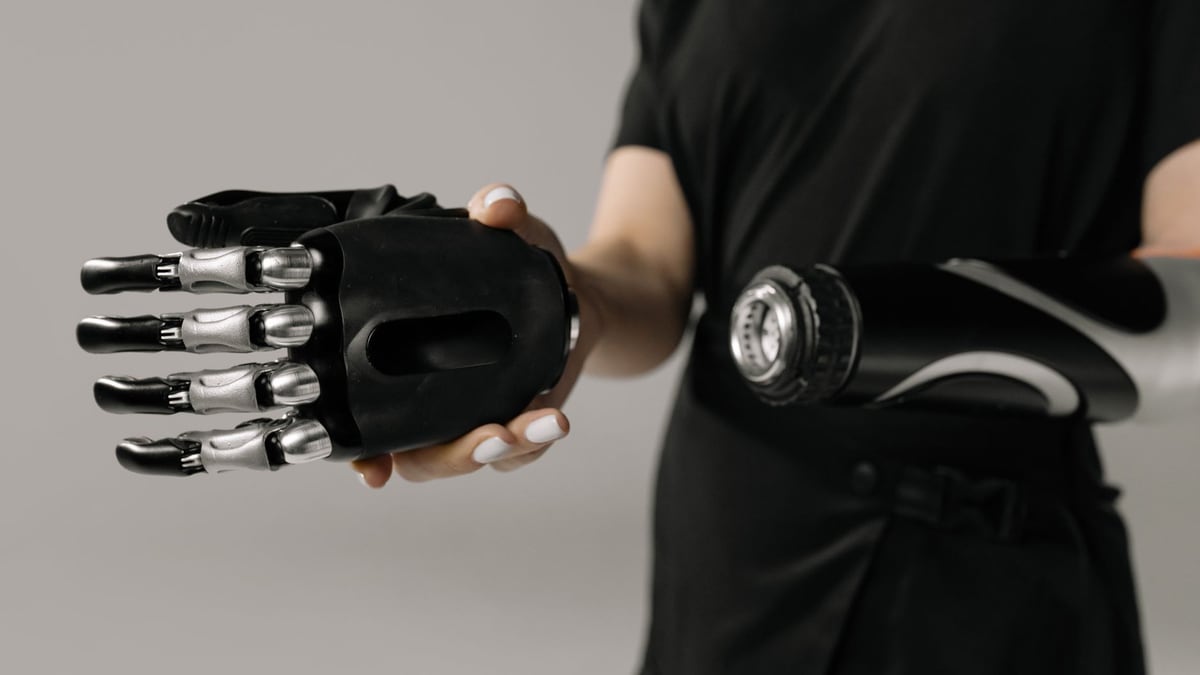
Socket-related skin breakdown is among the most common reasons prosthesis users interrupt wear. The problem is usually gradual: pressure builds, tissue responds, and by the time the discomfort is clear enough to act on, the damage is already present. The socket itself provides no warning.
A research team at Zhejiang University of Technology, led by mechanical engineer Huaping Wu, built a sensor system designed to address that gap. Their paper, published in the open-access journal Cyborg and Bionic Systems, describes a pressure-sensing material that mimics some of the signaling logic of biological nociception. The sensor does not feel pain. It processes pressure information the way pain-sensitive tissue does: detecting both intensity and duration, combining signals across time and location, and adjusting its warning threshold based on prior inputs.
How the sensor processes pressure
The system runs two parallel pathways. A haptic pathway reports pressure location and intensity quickly. A pain-inspired pathway combines signals over time and across multiple sensing points before registering a warning. This means a brief moderate pressure reads differently from the same pressure sustained longer.
The researchers demonstrated this with a robotic hand. At 10 kilopascals for 0.21 seconds, the system rated the pressure harmless. The same pressure applied for 0.49 seconds crossed the warning threshold. After experiencing an injury-like input, the system’s response threshold dropped: the same pressure later triggered a faster, stronger warning.
“The device neither feels pain nor creates pain in the user,” Wu told Science Alert. “Instead, it reproduces selected information-processing features associated with nociception, including stimulus thresholds, temporal and spatial summation, memory, and sensitization.”
The “memory” here is engineered, not conscious. The sensor’s faster response after prior loading comes from a physical change in the material’s warning threshold.
What the sensor caught during gait testing
Three people with transtibial amputations wore the sensor system during walking, stair climbing, jumping, and running. The running sessions produced the finding the researchers consider most clinically relevant.
The sensor detected that participants were using an excessive hip hike to help the prosthesis clear the ground. That compensatory movement was producing uneven loading at the front of the residual limb. Neither the participants nor a clinician observing from outside the socket would have identified this in real time. The sensor caught it through pressure distribution data and flagged it.
The feedback loop the researchers describe follows from there: the system warns the user, the user adjusts their gait or removes the socket, and a prosthetist can review the recorded data to refine the fit and guide retraining.
What this means
The gap this sensor addresses is practical. Current practice depends on users reporting discomfort and prosthetists interpreting those reports during clinic visits. Between appointments, the socket is a closed system: no one knows how it is loading the limb. Continuous pressure monitoring, if it can be made reliable and durable, would replace that uncertainty with data about how the socket performs during actual daily use.
The study is a small proof of concept. Three participants, a prototype sensor, a controlled research setting. It does not resolve questions about durability over sustained wear, performance across different limb geometries and activity levels, or what a usable clinical interface for the data would look like. Wu’s team identifies further development as needed before the system could be applied in routine prosthetic care.
The paper is open access. The full title is “A bioinspired perceptual sensor for spatiotemporal decoding of haptic and pain stimuli in prostheses,” published in Cyborg and Bionic Systems.
This article reports on published research. It is not medical, fitting, or device advice. Decisions about prosthetic equipment and socket management should be made with a certified prosthetist.
Source notebook: This reporting draws on O&P EDGE: Prosthetic Sensor Identifies Pressure Before Injury (September 2026) ↗. We link out so you can follow the receipts.