
Most healthcare workers plan to change jobs. In O&P, your fitting relationship is what's at stake.
A new Harris Poll found 59 percent of healthcare workers plan to seek new roles, and most employers still don't have a retention program. In a specialty built on long clinical relationships, patients pay the access cost.
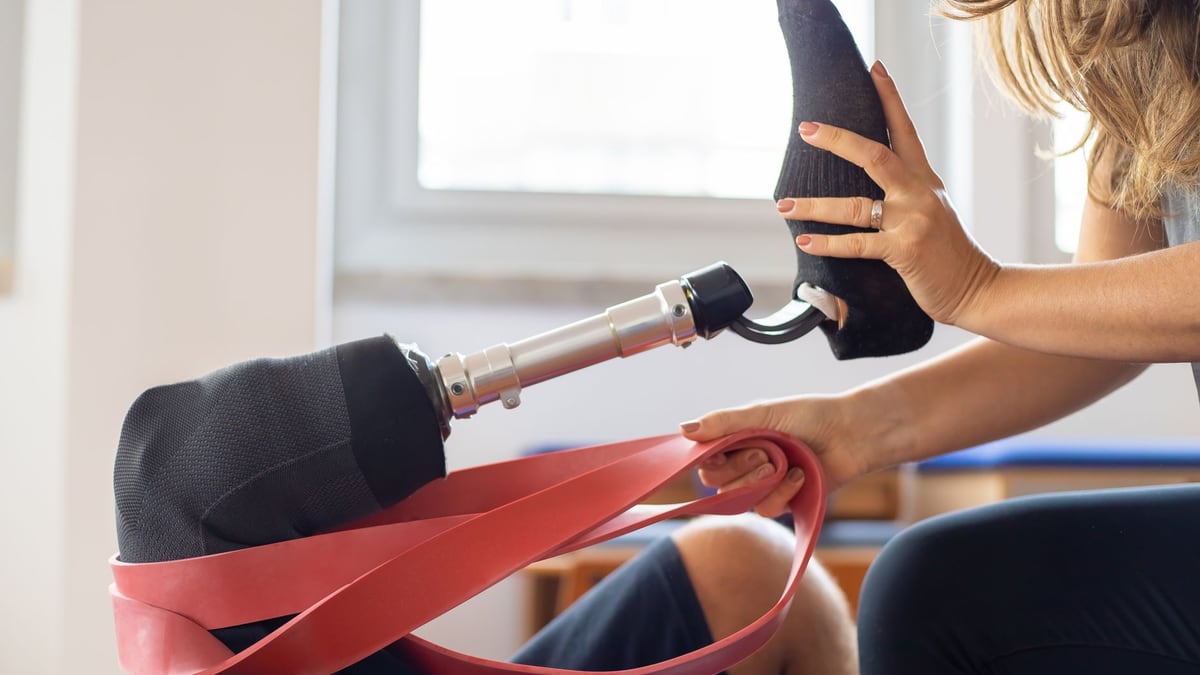
Fifty-nine percent of healthcare workers plan to seek a new role. Among Gen Z workers, that number is 70 percent.
A new Harris Poll, conducted on behalf of Strategic Education and Workforce Edge, surveyed 1,514 U.S. healthcare workers and 304 employers over three weeks this summer. The findings were published as the “2026 Healthcare Workforce Barometer: The State of Retention, Career Mobility, and Workforce Readiness in Healthcare” and cited this week in The O&P EDGE for practitioners in orthotics and prosthetics.
The survey describes a familiar pattern: workers want education and advancement, employers know that’s what drives exits, and most still haven’t built programs to address it.
What the numbers say
Forty-seven percent of employers named a lack of advancement and education opportunities as the primary reason employees leave. Workers confirmed this on their side: 80 percent said clear advancement opportunities matter to them.
Eighty-nine percent of employers agreed that education and professional development programs improve retention. Eighty-one percent of workers said they would participate in an employer-sponsored benefit if offered one.
Only 48 percent of employers have one.
“The disconnect between what healthcare workers value and what they believe their employers will provide is striking,” said Jennifer Musil, global president of research at The Harris Poll.
Why O&P patients feel this differently
O&P is a long-relationship field. A prosthetist builds clinical history over years: how your residual limb volume shifts across seasons, which socket design your skin tolerates, why the insurer’s preferred alternative failed two fittings ago, what your activity goals actually are versus what the intake form said. That knowledge doesn’t migrate automatically when a clinician changes practices.
Most O&P facilities are small. A two- or three-person practice that loses a key clinician isn’t distributing load across a large department; it’s running short-handed on a schedule that was already tight. In rural areas and smaller cities, one practice may cover a wide geography with no nearby alternative. When turnover hits, the patient impact can mean weeks without a scheduled visit.
Support staff carry continuity too. A biller who knows your prior authorization history or a lab tech who has built your last several sockets represents knowledge that patients rarely think about until it disappears. When it does, the practical effect is usually another round of intake paperwork, another set of phone calls to an insurer, another clinician who is starting from square one.
The survey covers the broader healthcare workforce, not O&P specifically. But small, specialized practices already face known access pressures, and the gap the survey identifies, between knowing what works for retention and actually doing it, has no reason to be smaller in a field where many practices run on thin margins and small staffs.
What this means for your care
You can’t make a practice retain its staff. But you can reduce the disruption when turnover happens.
Keep your own records. That means a current copy of your prescription, your device serial numbers, the HCPCS L-codes on your last prior authorization, and your insurer’s reference number. Most patients don’t have this and find out they need it during a gap in care, when getting it becomes someone else’s backlog.
Know who else in the practice is familiar with your case. If your prosthetist is the only clinician who has ever seen you, ask whether your notes are documented in enough detail for another provider to take over. Ask if there’s a coverage plan for extended absences.
Ask about practice stability directly. This isn’t an unusual question, and a stable practice will tell you. How a practice handles scheduling, staffing changes, and billing consistency also tells you something before you ever have to ask.
If a departure disrupts your care, prior authorizations and insurance coverage follow the patient, not the provider. You have the right to a copy of your records at any time. The Amputee Coalition’s peer visitor network can help connect you with others who have navigated provider transitions. The American Orthotic and Prosthetic Association has resources for finding credentialed providers in your area if you need to locate new care.
Source notebook: This reporting draws on The O&P EDGE ↗. We link out so you can follow the receipts.