
An NIH grant is funding an antimicrobial prosthetic liner that skips antibiotics entirely
A Nebraska-based O&P company received a $306,864 NIH grant to develop a prosthetic liner using chitosan nanofibers to fight residual limb infection without antibiotics. The project is in Phase I, with clinical trials the goal if the proof-of-concept succeeds.
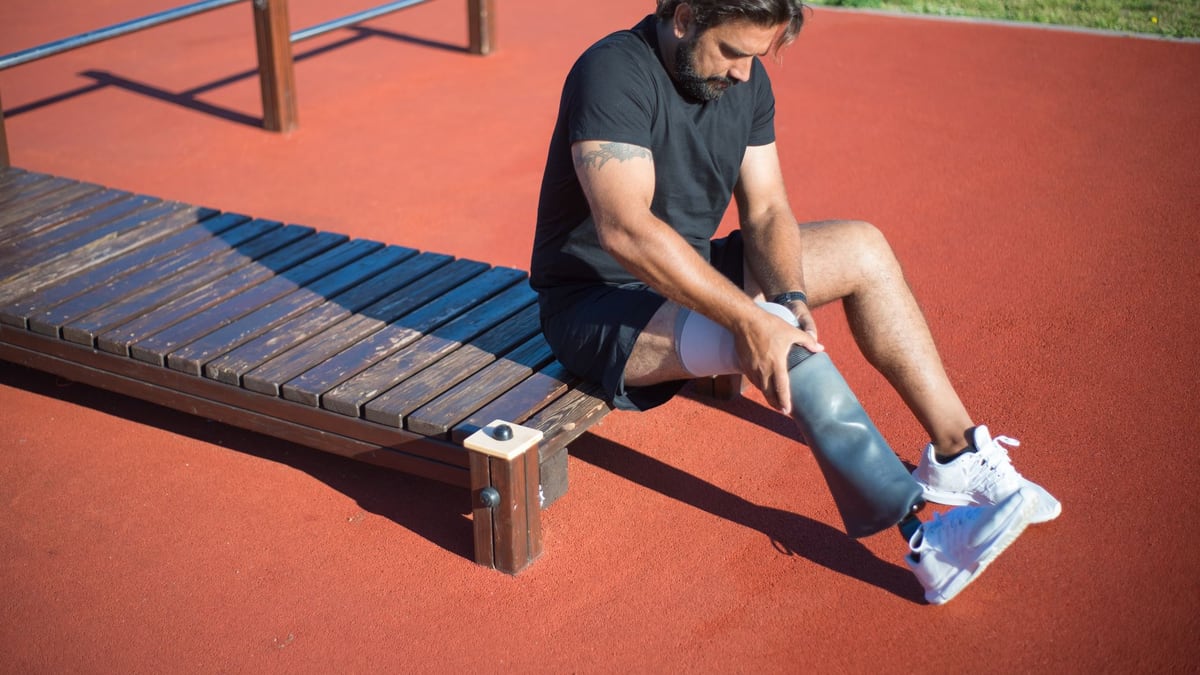
Skin problems on the residual limb are one of the most common reasons people reduce or stop wearing their prosthesis. Breakdown, blistering, and infection are not edge cases. They are routine clinical complications, and the liner is often where the problem starts: sweat, friction, and bacteria accumulate between silicone and skin across hours of daily wear.
Shabri, a research and manufacturing company based in Nebraska, has received a $306,864 Small Business Technology Transfer grant from the National Institutes of Health to develop a liner that addresses bacterial growth differently. Instead of coating a liner with an antibiotic compound, the team is engineering the fabric itself to kill bacteria.
What the grant covers
The project is titled “Antimicrobial Prosthetic Liner for Preventing Residual Limb Infection.” Phase I funding will go toward developing a proof-of-concept liner that combines two materials: chitosan nanofibers and medical-grade polyurethane nanofibers, formed into a fabric and integrated with a silicone support structure.
Phase I work includes optimizing the antimicrobial fabric, testing its ability to resist bacteria and biofilm formation, evaluating mechanical performance and biocompatibility, and confirming it holds up to perspiration, repeated wear, and routine cleaning. If Phase I produces a viable proof-of-concept, the team would pursue Phase II funding, which would move toward formal safety and efficacy clinical trials.
Why chitosan, and why not antibiotics
Chitosan is a naturally derived polysaccharide, produced from chitin found in crustacean shells. It has established antibacterial properties and a track record of biocompatibility in medical applications.
The point of using it here is not just that it works against bacteria. It’s that it does so without antibiotics. Yury Salkovskiy, PhD, assistant professor in the Department of Biomechanics at the University of Nebraska at Omaha and the project’s co-principal investigator, framed the distinction plainly: engineered polymers that actively kill harmful bacteria, rather than antibiotic compounds that carry side effect risks and contribute to resistance.
The liner is also designed with residual limb skin in mind beyond infection prevention. Salkovskiy described a goal of promoting healing of skin injuries that develop during everyday prosthetic use, which covers the minor abrasions and irritation that precede more serious breakdown.
Who is building it
Rakesh Srivastava, the CPO who founded Shabri and also runs Innovative Prosthetics and Orthotics in Nebraska, is the project’s principal investigator. He brought what is sometimes missing in materials research: he is a prosthetist and an amputee, and he described the project’s origin as trying to solve problems he recognizes from both sides of the clinical encounter.
The research team draws from Shabri, UNO, and the University of Nebraska Medical Center, combining O&P clinical expertise with biomedical engineering, materials science, polymer chemistry, microbiology, cell biology, and additive manufacturing. Jorge Zuniga, PhD, assistant chair of the UNO Department of Biomechanics, noted that this is the department’s first STTR grant.
What this means right now
This is Phase I feasibility work. There is nothing to request at a clinic, no product in production, and no timeline for commercial availability. Phase II clinical trials are the next gate, contingent on Phase I results.
What the grant does establish is that a credible, cross-disciplinary team is now funded to test whether this approach works under real conditions, including sweat, daily wear cycles, and skin contact. Residual limb infection is a barrier that affects prosthetic use and quality of life in ways that are well documented and persistently under-addressed. If the proof-of-concept holds, this research path leads toward something that could be practically useful to the people who rely on liners every day.
This article reports on published research and a federally funded grant. It does not constitute medical advice. Discuss skin health concerns and prosthetic fit with your prosthetist and care team.
Source notebook: This reporting draws on O&P EDGE: O&P Company Awarded NIH Research Grant, October 2026 ↗. We link out so you can follow the receipts.