
Researchers tested MRI-based breast prosthesis volume estimation before surgery. A three-case feasibility study shows the approach is technically workable.
A preliminary study in Clinical Imaging found that preoperative MRI, processed with open-source 3D Slicer software, can estimate breast volume within 0.5 percent across three test cases. The researchers say the method could give post-mastectomy patients a more accurate starting point for prosthesis selection without requiring physical exposure during fitting.
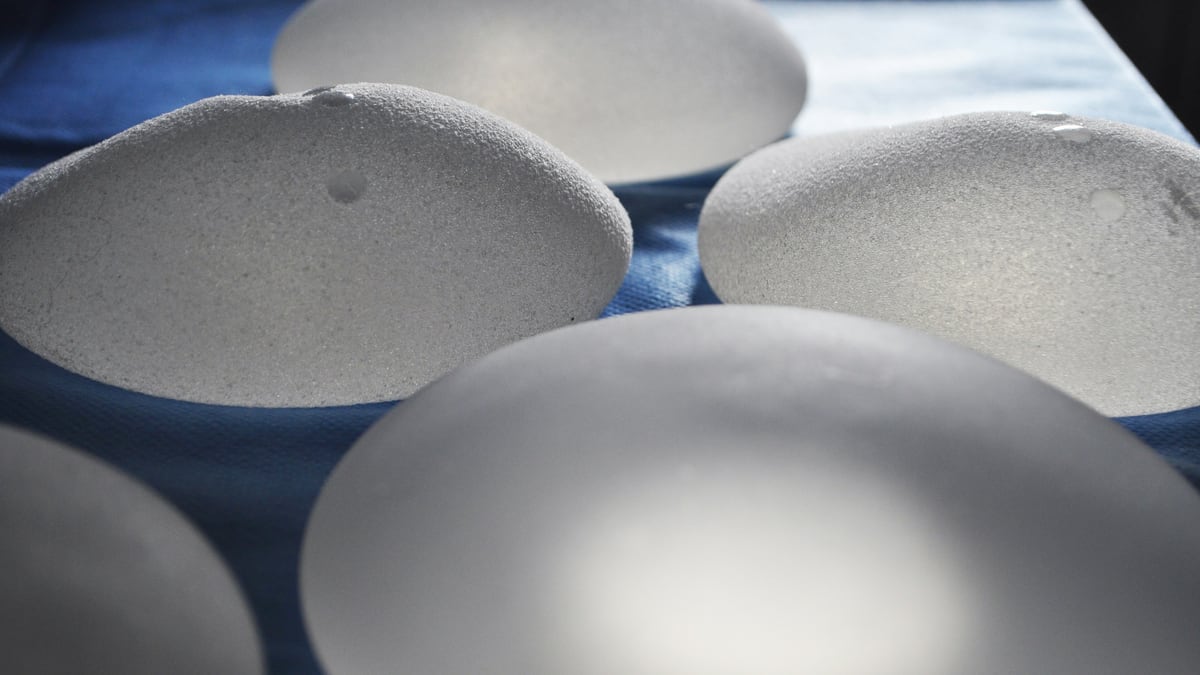
Getting fitted for an external breast prosthesis after mastectomy involves physical measurement of the surgical site. For many patients that happens while they are still adjusting to changes in their bodies. Fitting accuracy with standard methods is imperfect, and the process can require multiple visits.
A feasibility study published in the open-access journal Clinical Imaging tested whether preoperative MRI, the scans taken before surgery for surgical planning, could generate volume estimates accurate enough to serve as a starting point for prosthesis selection. Across three cases, measurements were within 0.5 percent of the reference values. The study is preliminary, but the method is workable with open-source tools and a public dataset.
How the method works
The researchers used 3D Slicer, an open-source medical imaging platform, to segment breast tissue from MRI scans and calculate volume from the resulting 3D model. Because the scan happens before surgery, it avoids postoperative physical exposure. The measurement is also posture-independent, which removes one source of variability in conventional fitting.
Test cases came from the Duke-Breast-Cancer-MRI dataset, a public research collection. The three cases covered a range of breast volumes: roughly 507 milliliters on the low end to 1,228 milliliters on the high end, with bilateral variation in at least one case. Measurement error across all cases stayed below 0.5 percent.
The authors describe the method as privacy-preserving and say it could reduce the psychological distress associated with conventional fitting, by giving patients a more individualized starting point based on data gathered before surgical changes occur.
What three cases does and does not establish
The researchers are explicit that this is a preliminary feasibility study. Three cases is enough to show the method works technically. It is not enough to show that a volume estimate from preoperative MRI reliably predicts a breast prosthesis that fits in practice, because fit is shaped by factors that emerge after surgery: changes to chest wall geometry, tissue healing, and individual variation in how external prostheses settle.
What the study does establish is reproducibility. The 3D Slicer segmentation is documented, the dataset is public, and the measurement error is very low across anatomically distinct cases. That makes the approach testable by other researchers without proprietary software or access to institutional imaging archives.
The full study, titled “A personalized breast prosthesis volume customization method based on preoperative MRI imaging for post-mastectomy breast cancer patients,” is open-access in Clinical Imaging.
What this means now
For patients getting fitted today, nothing in the current study changes the process. Clinical adoption depends on things this study does not answer: whether 0.5 percent volume error translates to a physically better-fitting prosthesis, whether the workflow integrates between diagnosis and surgery without adding burden, and whether larger cohorts replicate the accuracy across different imaging protocols and surgical approaches.
The method’s strongest argument is not precision alone. The argument is that a volume estimate from imaging already in the clinical record could reduce the number of postoperative fitting iterations for some patients, particularly those for whom repeated physical exposure is difficult. Whether that holds up in a larger study is the question the authors say needs answering next.
This article is based on published research and does not constitute medical advice. Breast prosthesis selection involves individual clinical factors that change after surgery. Speak with your surgical team, oncologist, and prosthetist about fitting options relevant to your care.
Source notebook: This reporting draws on The O&P EDGE: MRI Method Could Personalize Breast Prostheses, September 2026 ↗. We link out so you can follow the receipts.