
K-levels determine which prosthetic you can get. Researchers tested whether sensor data could make that decision more objective.
K-levels are the functional classification numbers that largely determine which prosthetic devices Medicare will pay for. A PLOS One study tested a method using inertial sensors to classify ambulatory function in real-world conditions, and found it worth pursuing further.
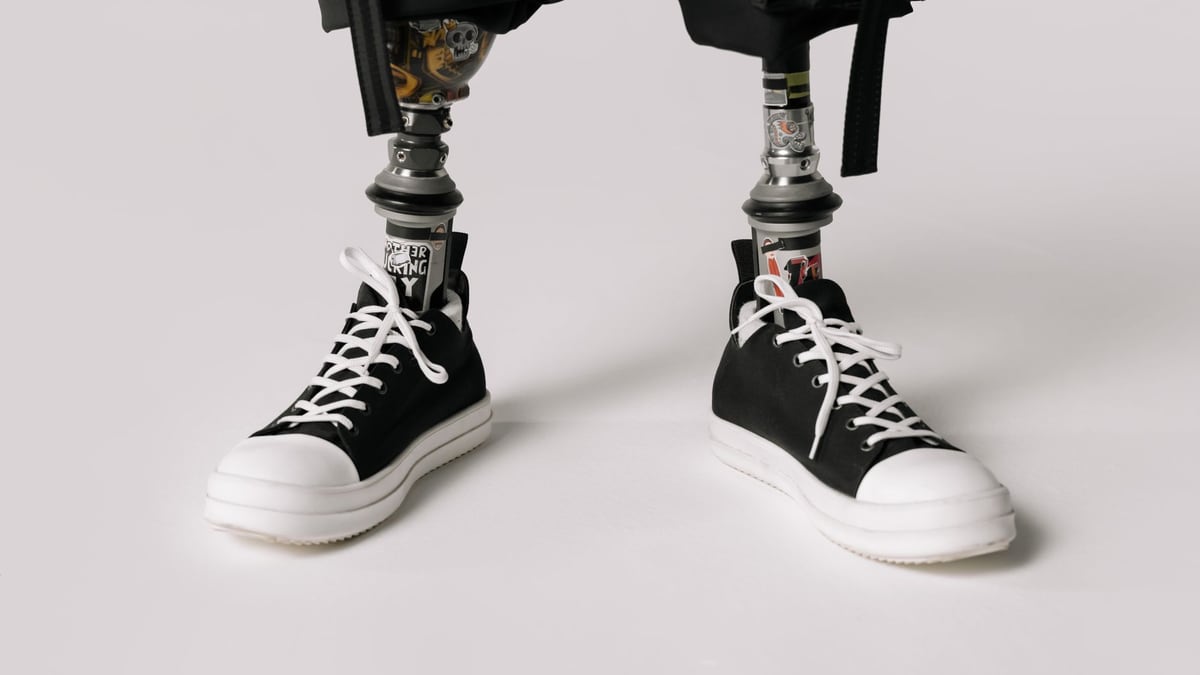
Before you get your first prosthetic leg, someone in the healthcare system assigns you a number. It runs from 0 to 4. It is called a K-level, and it determines, in large part, what prosthetic components Medicare and many private insurers will cover.
A K-2 means limited community ambulation on flat surfaces and low-variable terrain. A K-3 means community ambulation across variable terrain. A K-4 is for high-demand users. The difference between a K-2 and a K-3 can mean the difference between a basic single-axis foot and a dynamic-response carbon-fiber one. The gap between K-3 and K-4 can reach tens of thousands of dollars in device cost.
The current assessment is largely subjective.
K-levels are assigned by the prescribing clinician, typically based on a brief observation, patient interview, and in-office functional evaluation. Different clinicians observing the same patient may assign different levels. Researchers and patient advocates have documented this variability for years. The concern is that the variation tends to push people toward lower levels, limiting access to more functional devices.
A team of researchers published results in PLOS One this week testing whether inertial sensor data could classify functional levels more consistently.
What the study did
Twenty people with lower limb amputations walked on five outdoor terrain types: flat ground, stairs, ramps, grass, and uneven surfaces, with and without walking aids. Inertial sensors tracked their movement throughout. The researchers used that activity data to classify participants by functional level and compared the results against existing clinical assessments.
Three participants were also monitored in unsupervised, real-world settings as a secondary check. Four healthcare professionals who prescribe prosthetics reviewed the system’s outputs and evaluated whether the results were clinically meaningful.
The study concluded that sensor-based classification is a proof-of-concept worth developing further. The clinicians who reviewed the outputs found them to have clinical value.
What the authors said it is not
The paper states the system “should be viewed as a promising proof-of-concept rather than a definitive tool until further testing is completed.”
The study had 20 participants and a limited clinician review panel. The terrain set covered common surfaces but not every environment a person with an amputation actually navigates. The researchers tested a concept; they did not validate a tool ready to replace current assessment practice.
They established that the approach is worth pursuing. Inertial sensor hardware is inexpensive and widely available. The system runs on real-world walking data rather than a controlled clinic observation. That matters because one longstanding criticism of K-level assessment is that a brief office visit captures how someone performs in a medical setting, not how they actually move at home or in their community.
What this means
If a sensor-based K-level method eventually enters clinical practice, two things could follow.
Prescriptions might shift. A system that captures real-world function could push assessments upward for people whose daily mobility exceeds what a single office visit shows, and downward for people whose clinical presentation overstates their typical activity. The researchers do not make this claim directly; the study design does not test it. But the mechanism points that way.
Insurance appeals could also change. Disputed K-level determinations drive a significant share of prosthetic coverage denials. Objective sensor data would give both patients and clinicians something concrete to anchor a prescribing decision or a formal appeal.
Neither outcome follows automatically from a 20-person proof-of-concept study. The next question is whether larger trials, with broader participant populations and longer monitoring periods, produce consistent results.
The full study, “Lower limb prosthetic users’ activity classification through real-world inertial sensing,” is open access in PLOS One.
This article covers published research findings and does not constitute medical or clinical advice. K-level determinations, prosthetic prescriptions, and coverage decisions should be made by qualified healthcare providers in consultation with the person receiving care.
Source notebook: This reporting draws on O&P EDGE ↗. We link out so you can follow the receipts.