
Italian researchers built the first tissue-grown nerve interface for prosthetic control. What the preclinical result shows, and where the timeline stands.
Four Italian institutions published the first tissue-engineered regenerative peripheral nerve interface implanted and connected to a peripheral nerve in a preclinical model. The approach is new; clinical trials are a separate timeline.
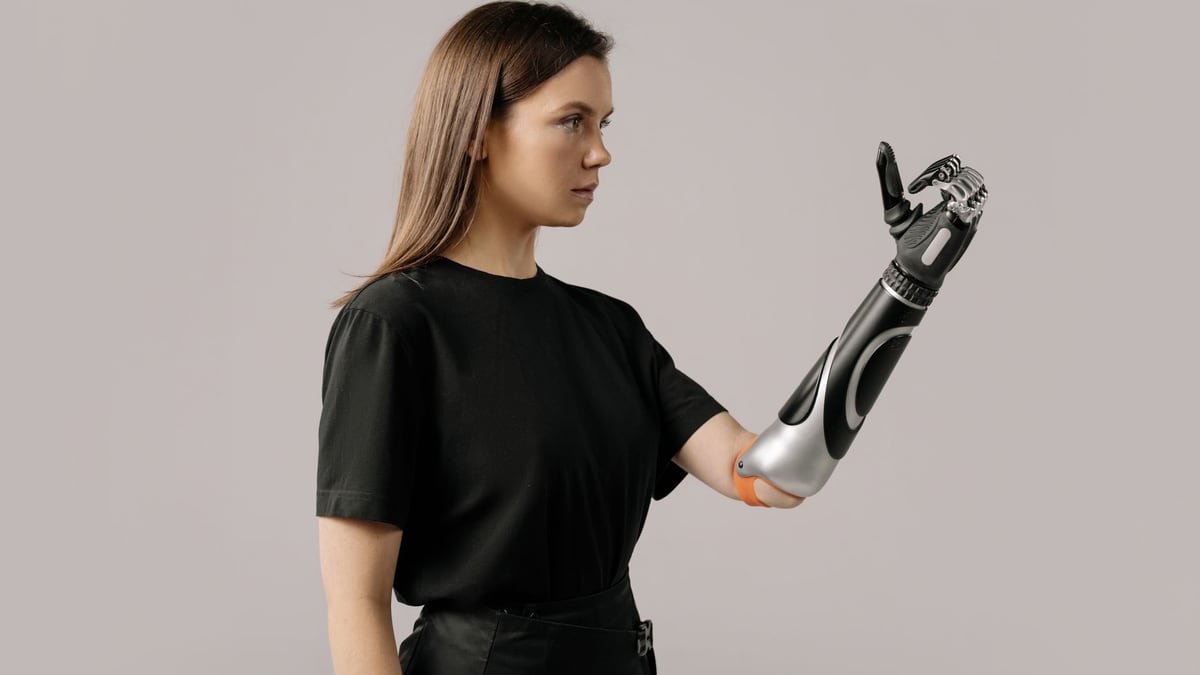
A four-institution Italian research team has published the first tissue-engineered regenerative peripheral nerve interface (RPNI) implanted and connected to a peripheral nerve in a preclinical model. The paper appeared in the open-access journal Bioactive Materials and comes from a collaboration among Sant’Anna School of Advanced Studies, the INAIL Prosthetic Center, the Rizzoli Orthopaedic Institute, and the Italian Institute of Technology.
The result is a methodological step, not a device you can ask about at your next fitting. But the problem it is trying to solve is worth understanding, because it is the same problem every current prosthetic control system runs into eventually.
What current control systems hit
Most powered upper-limb prostheses rely on surface electromyography: sensors on the skin surface read electrical activity from muscles beneath and translate those readings into commands. The approach works, but it has a ceiling. Surface EMG picks up signals from a limited number of muscle sites, making it hard to control devices with several independent functions simultaneously. The signal is also sensitive to sweat, sensor displacement, and fatigue, which is part of why training time is high and rejection rates for powered upper-limb devices remain higher than most people in the field consider acceptable.
Regenerative peripheral nerve interfaces try to go further upstream. The concept is to create a stable biological connection between the peripheral nerve endings in a residual limb and an electrode, using a small muscle graft to amplify the nerve signal before it is read electronically. Earlier RPNI approaches used surgically repositioned muscle tissue. The Italian team’s contribution is building that interface from muscle tissue grown in a lab from stem cells.
What the team built
The researchers started with myoblasts, precursor cells that develop into muscle tissue, and combined them with biomaterials to produce what they call a neomuscle construct. They embedded piezoelectric particles in that construct. Piezoelectric materials generate an electrical charge when they are mechanically stressed, and the researchers used that property in response to external pulsed ultrasound stimulation, a noninvasive technique already used in other biomedical applications.
The combination serves two purposes. Ultrasound stimulation promotes muscle tissue maturation as the construct develops. It also appears to promote nerve tissue regeneration when the construct is connected to a peripheral nerve.
“To promote the maturation of muscle tissue and its integration with nerve tissue, we used piezoelectric particles, materials capable of generating electrical signals when subjected to mechanical stimuli,” said Leonardo Ricotti, PhD, professor at Sant’Anna and head of the Regenerative Technologies Lab. “External stimulation was provided through pulsed ultrasound, a noninvasive technology already used in several biomedical fields, but which we have applied in an innovative way in this study.”
The team describes two firsts: the first documented RPNI created using tissue engineering techniques and then implanted and connected to a peripheral nerve, and the first demonstration that piezoelectric materials combined with ultrasound can promote both muscle maturation and nerve regeneration in the same construct.
What the preclinical result tells you
The study tested the interface in a preclinical nerve-injury model, not in human participants. The researchers confirmed that the construct could connect to a peripheral nerve and that the piezoelectric-ultrasound combination produced the maturation and regeneration effects they were looking for.
What this does not tell you is how the interface will perform in a human residual limb over time, how it handles infection risk, what the surgical procedure looks like at scale, or how the output signal compares to existing EMG or implanted electrode systems in actual use. Those questions belong to the clinical trial phase, which follows preclinical work on a different timeline.
Emanuele Gruppioni, PhD, technical director at the INAIL Prosthetic Center, described the longer goal: “A network of regenerative neural interfaces could provide a stable connection between the nervous system and the prosthetic device. The muscle constructs developed as part of the study could also act as genuine biological amplifiers of nerve signals, enabling increasingly complex movements.”
Paolo Sassu, MD, an orthopedic surgeon at Rizzoli, noted that translating the technique toward clinical practice requires integrating surgery, neuroengineering, and advanced prosthetics, and that his institution is building a dedicated program around that combination.
What this means
If this line of research holds up through human trials, it could change the signal quality and channel count available for prosthetic control. More stable, higher-resolution signals from peripheral nerves would allow prosthetic devices to respond to a wider range of intended movements with less training overhead. That matters most for multi-function upper-limb users, where current control systems impose the sharpest limits.
The team’s published roadmap ends with developing “a dedicated program for bionics and advanced limb reconstruction,” not a trial date. The preclinical result is a cleared methodological bar in a longer research sequence. That is the accurate frame for what was published, and it is also the reason the work is worth watching.
This article covers published research. It is not medical advice. Questions about prosthetic control options, fitting, or surgical procedures should go to your prosthetist and the care team managing your rehabilitation.
Source notebook: This reporting draws on The O&P EDGE: Collaboration Marks Step Toward Prosthetic Control, September 2026 ↗. We link out so you can follow the receipts.