
A new lower-limb amputation guideline is here. Use it as a map, not a verdict.
The VA/DoD’s updated rehabilitation guideline includes patient-facing tools. That can make appointments easier to prepare for, even when care is not through VA.
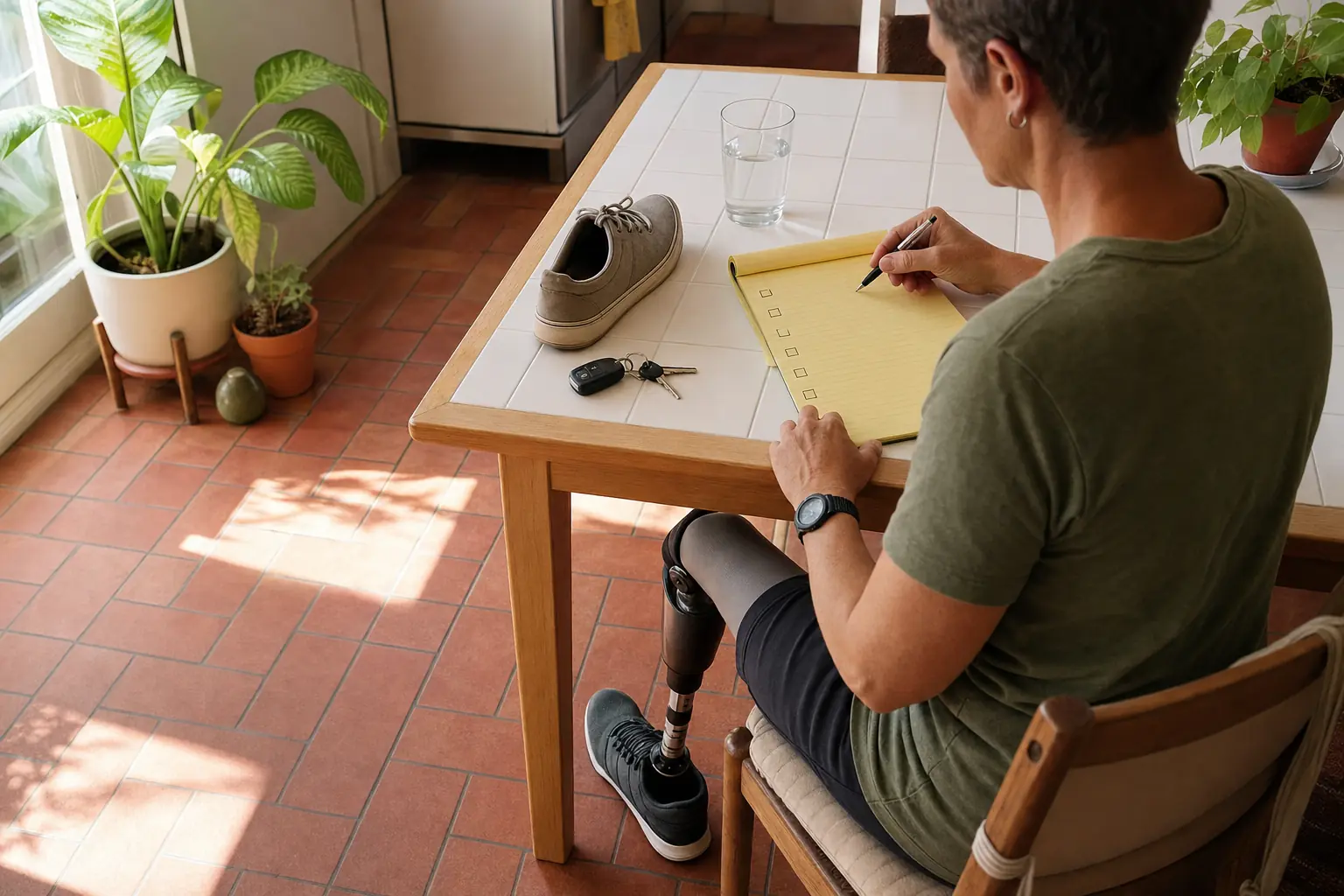
Clinical guidelines are usually written for clinicians, which is fine, except that people still have to live inside the choices those guidelines shape. The VA and Department of Defense recently updated their lower-limb amputation rehabilitation guideline and published patient-facing tools alongside it.
That matters because a decent appointment often starts before the appointment: knowing what you want to ask, what has changed, and what is not working in your ordinary Tuesday life.
What is in it
The guideline is organized around three broad phases: pre-amputation decisions, post-amputation care through rehabilitation, and ongoing primary-care management. It covers both transtibial and transfemoral amputations and addresses common complications alongside typical milestones.
Its companion patient tools address:
- Residual limb care — skin checks, hygiene, edema management, and when to call the clinic
- Prosthetic use and gait — what early prosthetic training involves, how to progress, and what your gait-analysis visits are measuring
- Pain management — distinguishing residual limb pain from phantom limb pain, and what treatment approaches the evidence supports for each
- Activity and living well — returning to physical activity, adaptive sport, and long-term health priorities
- Navigating the care system — what a typical rehab team looks like, what each member contributes, and how primary-care providers fit in after the intensive phase ends
The patient tools are available directly from the VA/DoD health quality page and are written to be readable without clinical training.
It is not a personalized care plan. The guideline itself says it is meant to support clinical judgment, not replace it. That is the right lane for it.
Who this is actually for
The guideline was written primarily for VA and DoD care settings, but it reflects evidence that applies broadly. Non-veteran amputees can use the patient tools to understand what good rehabilitation typically includes—and to notice when something is being skipped.
If your care team does not mention gait analysis, a formal prosthetic-use progression, or pain management options beyond medication, these materials give you a way to ask about them without it feeling like a confrontation. “I read the VA rehabilitation guide and it mentioned X—is that relevant here?” is a reasonable question.
A practical way to use it
Pick one concern. Maybe it is skin trouble, a fit that keeps changing, pain, a return-to-work question, or simply “I do not know what normal is supposed to feel like here.” Read the relevant patient tool and bring three notes to your next visit:
- What you notice.
- When it happens.
- What you need to be able to do.
You do not need to arrive fluent in medical vocabulary. “My leg is angry by 3 p.m. and I cannot finish my shift” is excellent data.
The point
Good resources should widen the conversation, not shrink it into compliance. Use the tools to get more specific with your team and to spot when a question still needs a real answer.
Source notebook: This reporting draws on the VA/DoD lower-limb amputation rehabilitation guideline ↗. We link out so you can follow the receipts.