
Ghana's amputee football players waited thirteen years for their governing body to sort itself out. A court just ended it.
The High Court of Ghana settled a 13-year governance dispute over amputee football, ruling in favor of the National Sports Authority and National Paralympic Committee. What it means for players who lived through the waiting.
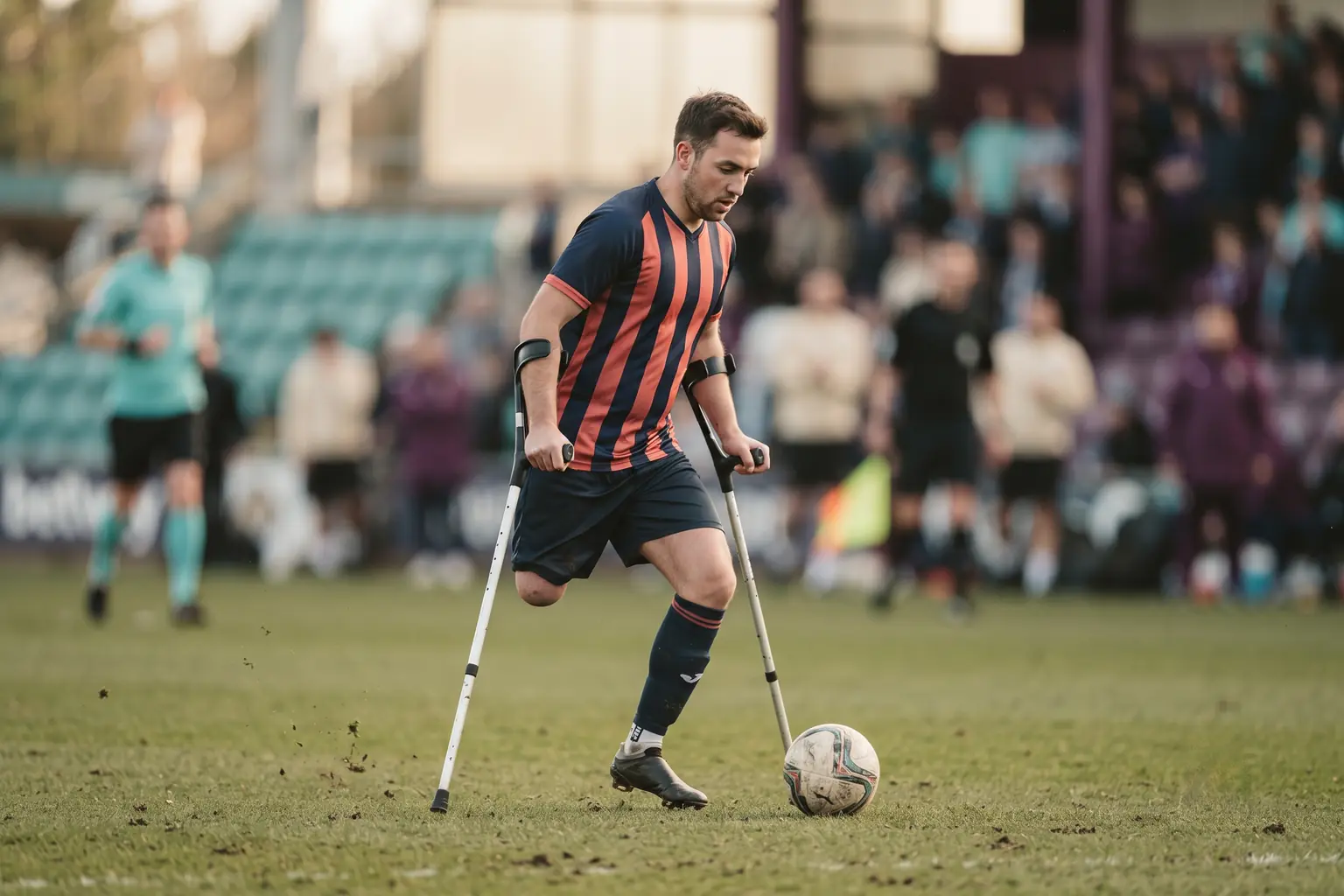
The High Court of Ghana ended a governance dispute that has been running since roughly 2013. The ruling came down in favor of the National Sports Authority (NSA) and the National Paralympic Committee (NPC) Ghana, settling the question of who holds legitimate authority over organized amputee football in the country. Three Ghanaian outlets (Graphic Online, GBC Ghana, and Modern Ghana) covered the ruling the same day.
Thirteen years is a long time to fight over a governing body. The people most affected by that fight were not the institutions. They were the players.
What the dispute was actually about
Sports governance disputes in this part of the world, and honestly, most parts of the world, tend to follow a recognizable shape: two organizations both claim to represent the same sport, athletes get caught between them, and international recognition becomes the thing everyone is really fighting about.
In Ghana’s case, the question was which body had the legitimate authority to govern amputee football. The NSA and NPC sit at the top of Ghana’s official sports structure. Recognition from those bodies is the difference between being a sanctioned national federation and being a parallel organization whose competitions count for nothing upstream: no international federation affiliation, no national team selection that holds, no clear path to the continent or the world.
For players, that ambiguity is corrosive. You can train, compete, win, and still not know whether any of it connects to anything larger.
What amputee football actually is
For anyone outside the sport: amputee football is played seven-a-side. Field players have a single-leg amputation or limb difference and play on forearm crutches, no prosthetic device during the match. The goalkeeper has an upper-limb difference and plays without crutches. It is a physically demanding, fast game, and it has been growing across sub-Saharan Africa for the better part of two decades.
Ghana’s amputee football community has been active within that growth. West Africa has produced a number of competitive national programs, and the Ghana team has featured in continental competition. That competitive standing depends entirely on having a recognized governing body, one that can affiliate with the World Amputee Football Federation and put players on sanctioned national teams.
What the ruling actually settles
The High Court ruling gives the NSA and NPC Ghana the legal authority they were claiming. That means the organizational question is resolved: there is now one body with court-backed standing to govern the sport.
What that does not automatically settle is whether the institutions behave differently than they have. Administrative recognition does not repair fractured relationships between factions, does not immediately rebuild competitive structures that may have atrophied, and does not hand anything back to the players who spent the last thirteen years operating in uncertainty.
But it does close a door that has been open for too long. You cannot build a proper federation, or a proper national team, when the question of who is in charge is still being litigated. Now it is not.
Who gets left out
The question Moxie Calder almost always asks after any institutional settlement: who still doesn’t get counted?
Players who aged out of competitive football during the dispute. Athletes who stopped competing because the infrastructure never stabilized. Younger players who never had access to a properly organized program in the first place, because the governance chaos filtered down.
The ruling is good news. It is just not news that erases the time.
Ghana’s amputee football community now has a cleaner institutional path than it has had in over a decade. The work of figuring out who got left behind during those thirteen years, and what, if anything, is owed to them, is still ahead.
Amputee News covers adaptive sport governance and community news as reported. This article is based on Ghanaian news coverage of the court ruling. Institutional and organizational details will continue to develop as the post-ruling transition unfolds.
Source notebook: This reporting draws on Graphic Online's report on the High Court ruling ↗. We link out so you can follow the receipts.