
The BBC covered a cricketer who returned to the game after a leg amputation. Here is what the story leaves out about disability cricket in England.
A warm BBC piece from Essex this week. It doesn't explain what physical disability cricket in England actually looks like as an organized structure: the ECB programs, who they're designed for, and the gap between county infrastructure and the local club game where most recreational players live.
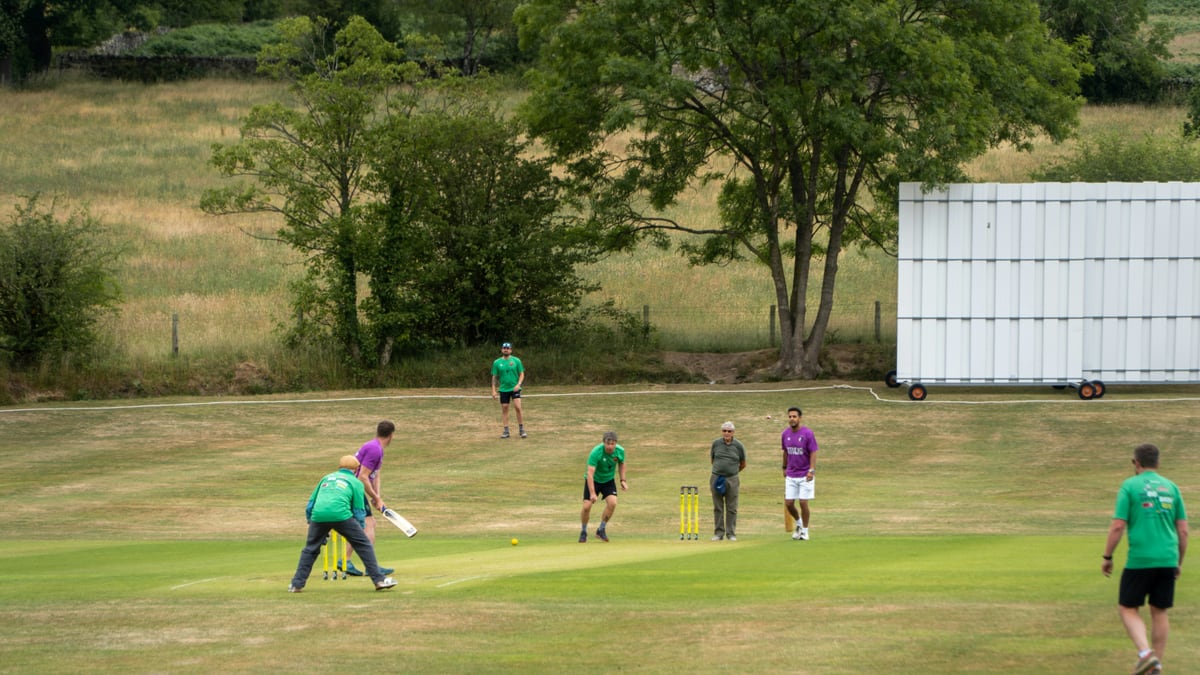
The BBC ran a piece this week about a cricketer in Great Waltham, a village in Essex, who lost his leg and then came back to play for his local club. It is a good story in the sense that the person is real, the club is real, and the return to something you thought you’d lost is worth documenting. It is also the kind of story that ends at the line where it would get complicated.
The line, in this case, is: what does disability cricket in England actually look like? What infrastructure exists? Who is it designed for? And is “return to your local village club” the whole picture, or is there a different structure running alongside it that most people have never heard of?
There is a different structure. It is worth knowing about.
Physical disability cricket is a distinct sport
The England and Wales Cricket Board runs disability cricket programs across several impairment categories: blind and partially sighted cricket, deaf cricket, learning disability cricket, and physical disability cricket. These are not the same program. Physical disability cricket (PDC) is specifically for people with mobility-affecting physical impairments, including amputees, people with cerebral palsy, and others with documented physical disability. It operates under its own playing conditions and its own classification system.
England has a national physical disability cricket team. They compete internationally. The Physical Disability Cricket World Series has featured multiple national teams, and England has played in it. That is not a footnote operation. It is a functioning competitive structure.
Domestically, the ECB runs the Disability Premier League, a T20 competition for physical disability cricket that operates across regional teams. This is the organized competitive pathway below international level. The teams are connected to county cricket boards, the regional arms of the ECB, and entry is through those county structures.
That matters because it means the county cricket board is the relevant institution if you are someone with a physical disability who wants to play cricket in England at a level beyond your local recreational club. Not the club itself, not Cricket England’s generic “get involved” page, but the county disability cricket coordinator, if your county has a functioning one.
The county layer is where it gets uneven
There are eighteen first-class counties in England and Wales, plus various smaller county cricket boards covering recreational cricket across the country. The ECB has pushed disability cricket programming down to that county level. In principle, every county board should have disability cricket pathways. In practice, the depth of those programs varies.
Some county boards have active disability cricket setups with regular training sessions, regional league fixtures, and a clear pathway into the national talent system. Others have nominal programs that exist on paper but do not run regular sessions. The difference is often about whether a county board has a dedicated disability cricket coordinator who is actually working the program, or whether disability cricket is an additional responsibility sitting on a general development officer’s desk alongside seven other priorities.
If you are in Great Waltham and you want to find out what Essex Cricket has to offer someone with a physical disability, the answer is not in a BBC profile. It is in calling Essex Cricket’s community cricket team and asking directly. What you find will depend on what they have built, and what they have built may not be the same as what a neighboring county has built.
The story the local club already tells
The local recreational club is not separate from disability cricket infrastructure. It is just a different layer of it, and the layers do not always know each other well.
What a village cricket club can offer someone who has had an amputation: familiarity, a pitch that already exists, people who know you, modified expectations where those help rather than patronize. What it typically cannot offer: classified competition, sport-specific prosthetic guidance, a peer group of other cricketers navigating the same adaptation, or a pathway into county or national programs.
The cricketer in Great Waltham may want all of those things. He may want none of them. Both are legitimate. The point is not that village club cricket is inadequate. It is that it is one option in a landscape that contains others, and the BBC story did not map the landscape.
The prosthetic question the story also doesn’t raise
A return to cricket after a below-knee amputation involves a set of prosthetic questions that the coverage did not get into, because that is not what feel-good pieces are usually for.
Cricket involves bowling, fielding, batting, and running between wickets, different movement demands that interact with prosthetic fit and component choice in ways that are not obvious. Someone who uses a standard everyday prosthesis may find that works reasonably well for recreational batting and walking the boundary. Running between wickets is a different question. Bowling off a full approach is another. A socket that works well on a flat pavement can behave differently on uneven outfield turf.
This is not a barrier that forecloses cricket. It is a set of practical questions worth asking: to your prosthetist, to a disability cricket coordinator who may have connected other cricketers with relevant clinical guidance, to other physical disability cricketers who have already worked through the same problems. The community infrastructure, if you can find it, carries that practical knowledge.
Sport-specific prosthetic components (designed for running loads and lateral movement rather than daily ambulation) are not covered under standard NHS provision. Whether a sport prosthesis is relevant for village cricket is a case-by-case question. That it is generally out-of-pocket if needed is not.
Finding what exists
If you are in England and have a physical disability and want to play cricket, at any level, in any format:
- ECB disability cricket: The ECB’s website has information on disability cricket pathways and county contacts. The physical disability cricket pathway is specifically for people with qualifying physical impairments.
- County cricket board: The county board for your area is the practical entry point. Ask specifically for their disability cricket coordinator or program lead.
- Disability Premier League: The DPL is the organized domestic competition for physical disability cricket; your county team, if active, is the pathway into it.
- England Physical Disability Cricket: The ECB’s national team has a development pathway; county-level involvement is typically the precursor.
These structures are real. They are not uniformly accessible or consistently funded across every region. Whether the program in your county is active and well-run enough to be useful is a question worth asking rather than assuming.
Amputee News does not provide individualized medical, fitting, or rehabilitation advice. Information about disability cricket programs reflects publicly available ECB and county board documentation and may not reflect current program status or local availability. Contact your county cricket board directly to confirm what programs are currently running in your area. Prosthetic questions related to sport participation should be discussed with your clinical team.
Source notebook: This reporting draws on BBC: Great Waltham cricketer has new lease of life after leg amputation, August 2026 ↗. We link out so you can follow the receipts.