
Adaptive sport after limb loss: the community is real, the equipment costs are real, and your insurance probably isn't covering the gap
Adaptive sport gets covered as an aspirational endpoint. What it actually is, community, fitness, a testing environment for devices, is worth understanding, along with who has a realistic path in and who the current system leaves out.
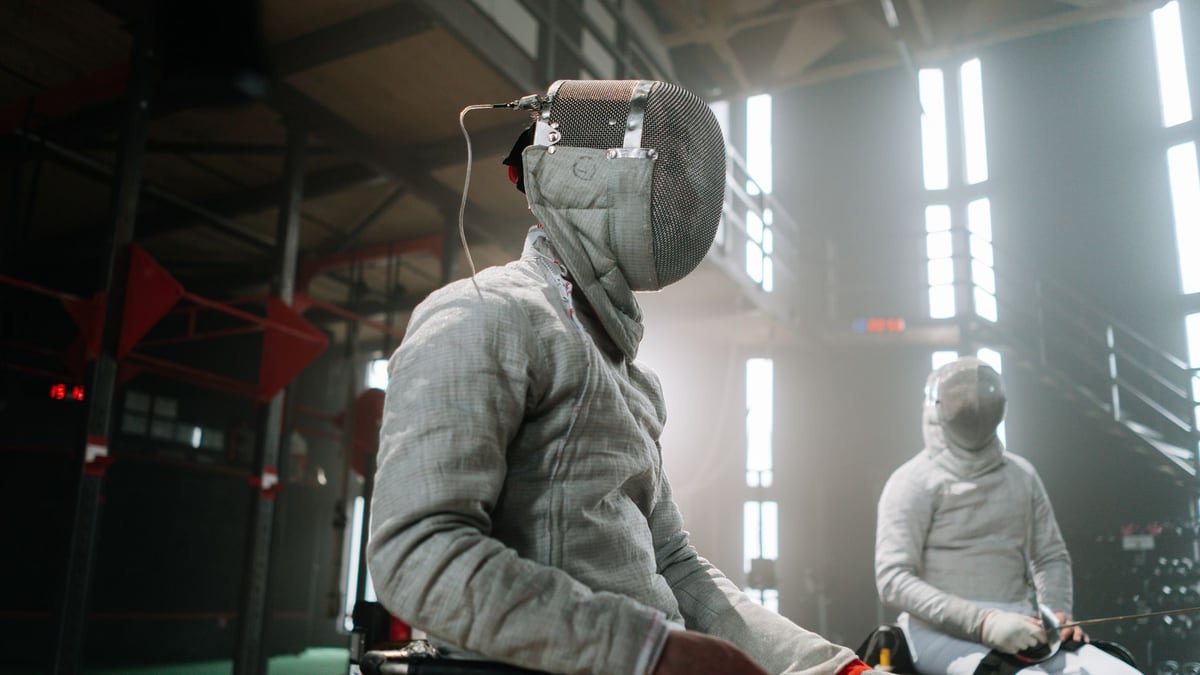
The coverage arc is reliable by now. Athlete loses a limb. Athlete refuses to be defined by it. Athlete competes at an extraordinary level and looks beautiful doing it. Camera pan to someone in the stands crying, usually not the athlete. The piece ends with something about the human spirit.
None of that is wrong about the extraordinary-level part. It is wrong about whom it describes. And it is wrong in a way that matters, because it frames adaptive sport as a destination for people who have already resolved the hard questions, when what it actually is, for most people who find it useful, is a place where the hard questions are still very much present and the equipment is a little better suited to the task.
What adaptive sport offers, when you can get to it, is regular physical activity in a setting where a prosthesis is assumed rather than remarkable, a practical testing environment for components and adjustments, and a community of people who already know the shape of things you’d otherwise have to spend energy explaining. That is not a small thing. That is not a Paralympic ambition. And the path to it is more complicated than the highlight reel implies.
What the system actually contains
There are two primary infrastructure systems for adaptive sport access in the United States, and they don’t serve the same people.
The VA system covers veterans. The Department of Veterans Affairs runs one of the most substantive adaptive sports programs in the country, including the National Veterans Wheelchair Games, National Veterans Summer Sports Clinic, and several regional events. The VA also funds adaptive sports grants to hospitals and community organizations under its Adaptive Sports Grant Program, and Paralympic-track veterans have access to coaching and competitive infrastructure through the U.S. Paralympics partnership. For a veteran with limb loss who is in or near the VA care system, the on-ramp to adaptive sport is real and funded.
The grant system covers everyone else. The Challenged Athletes Foundation (CAF) is the largest private grant-maker for adaptive sport access in the country. Its Access for Athletes grant program has funded equipment and competition entry for tens of thousands of people with physical disabilities since the mid-1990s. A CAF grant can cover a running prosthesis, a hand cycle, a racing wheelchair, a swim prosthetic, or competition fees. Applications are reviewed on a rolling basis; the program is competitive, and grants are not guaranteed, but it is the clearest non-VA pathway to sport-specific equipment funding for most people in the country. For children, the process can be initiated early; for adults, the grant is renewable and usable across sports.
Outside of those two systems, the landscape is local: disability sports clubs, hospital-affiliated adaptive recreation programs, regional Paralympic sport clubs affiliated with U.S. Paralympics, and community organizations that vary by city, state, and the organizing interest of whoever happened to start something there. Some places have substantial infrastructure. Many do not. Whether you have realistic access often depends less on your functional capacity and more on your zip code and whether you happen to be near someone who built something.
The equipment gap
Here is what the coverage narrative almost never includes: a sport-specific prosthesis is not a covered benefit under Medicare, and most commercial insurance plans follow Medicare’s lead.
Medicare’s lower-limb prosthetic coverage is structured around functional classification, the K-level system, and its coverage logic is tied to ambulation and daily-life activity. Even at the highest classification levels (K3 and K4), what Medicare is covering is a prosthesis capable of supporting community and unrestricted ambulation. A running blade, a carbon-fiber sport prosthesis designed for athletic activity and not daily ambulation, is explicitly categorized as recreational or non-functional equipment and is excluded from coverage. The same applies to cycling-specific prosthetics, swim prosthetics, and most other sport-specific devices.
The clinical logic is not irrational: a device optimized for sprinting is not a device optimized for walking to a car. They are different tools for different functions. What the logic produces, in practice, is a situation where the equipment required for adaptive sport participation is typically a separate, out-of-pocket cost for anyone who doesn’t have access to the VA system or a grant program.
Running blades from established manufacturers can cost several thousand dollars. Insurance appeals for sport-specific devices are possible but face significant documentation hurdles: the appeals process requires establishing medical necessity, and recreational sport generally does not clear that bar under current coverage frameworks. Some people have had success with appeals framed around therapeutic benefit or functional rehabilitation, but outcomes vary considerably by plan, region, and the persistence of the person filing.
The Challenged Athletes Foundation grant exists partly because this coverage gap is structural, not accidental.
Who the current system leaves out
The veteran and grant systems together do meaningful work. They also have limits.
Non-veterans with significant access barriers are not covered by VA infrastructure, and CAF grants are competitive and not guaranteed. Someone who needs expensive adaptive equipment, doesn’t qualify for VA services, lives in a rural area without local programming, and cannot absorb the cost out-of-pocket has a genuinely difficult path.
People who don’t identify as athletes, or who don’t want to be in a sports frame at all, are poorly served by a landscape that is almost entirely organized around athletic activity. If what you want is water access or recreational hiking or cycling for its own sake, not competition, not community-building through sport, just the activity, the adaptive sport infrastructure is still useful, but the framing can be alienating. Not every amputee wants a finish line. Some of them just want to go swimming.
Upper-limb amputees navigate a different equipment world from lower-limb amputees, with a smaller selection of sport-specific prosthetic options, different activity profiles, and, in a system largely organized around lower-limb rehabilitation and ambulation, sometimes less visibility in adaptive sport programming.
Children and adolescents have access to youth programs through some disability sports organizations and through CAF’s youth-specific grant pathways, but the landscape is uneven, and much depends on whether a family has the capacity to research and navigate the options.
The community part, specifically
The thing that gets underweighted in the coverage is the ordinary part of adaptive sport: the people you end up next to.
At a level that has nothing to do with competition, adaptive sport settings concentrate people who have managed the same set of practical problems: equipment adjustments, skin breakdown, the question of whether a socket is still fitting correctly, what to do at a public venue where nobody quite knows how to interact with you, how to think about the next functional goal. The information that moves through those communities is not always in a clinician’s notes. It’s someone telling you what worked for them when a liner was doing a specific thing, or what questions actually moved an appeal forward, or which local prosthetist will actually spend time on problem-solving versus getting you out the door.
That information transfer doesn’t require a medal. It happens on the sideline, in the parking lot, at the equipment table before the event. It is one of the more concrete benefits of being in a room with people who have been doing this longer than you have.
Finding what exists near you
If you are looking for a starting point:
- U.S. Paralympics maintains a directory of Paralympic sport clubs by sport and region; these are club-level programs, not elite development tracks, and most welcome recreational participants.
- Challenged Athletes Foundation at challengedathletes.org has the grant application process, grant types, and eligibility information.
- Amputee Coalition maintains resources on adaptive sport and can help connect people to regional programs and peer networks.
- Your O&P clinic may know of local programs; some clinics have relationships with adaptive sport organizations because the equipment questions intersect.
- VA facilities, for eligible veterans, are the starting point for the VA adaptive sports pathway; ask your care team or contact the VA’s National Veterans Sports Programs and Special Events office.
What exists varies significantly by location. “What is available near me” is a real research question, not a search that returns one obvious answer.
Amputee News does not provide individualized medical, legal, insurance, or fitting advice. Information about grant programs, insurance coverage, and VA services reflects general program descriptions and may not match individual eligibility or current program status. Contact the relevant organization directly for current terms and eligibility. Insurance coverage for adaptive equipment varies significantly by plan and situation; consult your plan and a benefits advocate for your specific circumstances.
Source notebook: This reporting draws on Challenged Athletes Foundation, Access for Athletes grant program ↗. We link out so you can follow the receipts.