
Gait analysis and prosthetic evaluation: what it is and when to ask for it
Clinical motion analysis can catch fit and function problems that a visual watch misses. Here is what the evaluation actually involves, when it is worth pursuing, and how to find it.
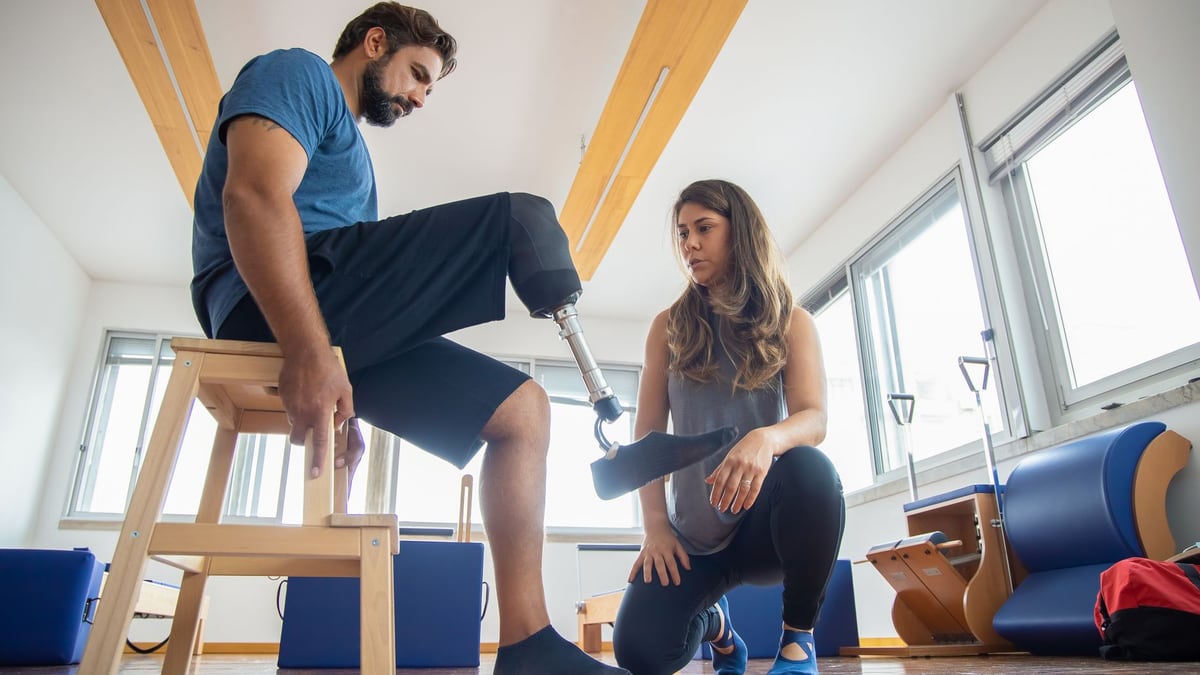
When a prosthetist watches you walk, they are doing what they were trained to do: reading your gait visually, checking for the most common compensation patterns, and making adjustments from what they see. That clinical eye is genuinely skilled. It is also limited. Some problems, particularly subtle differences between prosthetic configurations or early-stage compensation upstream of the affected limb, do not show up clearly unless you measure them.
That is what clinical gait analysis does. It quantifies movement instead of describing it, and it captures data that a visual assessment can miss.
What gait analysis actually measures
A clinical gait lab places motion sensors, reflective markers, or electrode arrays at points across the body, then records how those points move as you walk. Depending on the lab, the setup can also include force plates embedded in the floor to measure ground reaction forces, surface EMG electrodes to record muscle timing and activation, and video footage synchronized to the sensor data.
The result is not a single number. It is a multi-dimensional picture of how your body coordinates movement across a complete gait cycle, from heel contact through push-off and swing.
Research from the University of Tulsa published in October 2026 gives a useful illustration of what this kind of analysis finds. Working with transtibial prosthetic users, researchers ran motion data from across the lower body through a machine-learning model to identify which measurements best distinguished one prosthetic device from another. The model consistently identified movement near the pelvis, close to the body’s center of mass, as one of the strongest indicators. That is not a finding most observers would catch on a walking pass.
This matters for prosthetic users because it means that significant differences in how a device performs can appear not at the foot or ankle level but higher up in the kinetic chain, in how your torso, pelvis, and hip compensate for what the prosthesis does or does not do.
What gait analysis is actually used for
In clinical prosthetics, gait analysis comes up in a few specific situations.
K-level evaluation. Medicare uses functional classification levels (K1 through K4) to determine which prosthetic components are covered. These levels are assigned based on your demonstrated or expected ambulatory potential. A formal gait analysis can provide documented, quantified evidence of your functional capacity, which is sometimes relevant when a K-level assignment is disputed or a component prescription needs justification. This is not universal; many K-level evaluations happen through clinical observation and questionnaires. But when coverage for a higher-level component is at issue, a gait lab referral from a physiatrist or rehab physician can strengthen the clinical record.
Fitting evaluation. When two prosthetic configurations are being compared, or when a user reports that something feels wrong but the prosthetist cannot isolate the cause visually, motion data can identify where in the gait cycle the problem originates. This is more common at major rehabilitation centers and academic medical settings than in standard O&P clinics.
Rehabilitation progress. Some rehab programs use gait analysis at the start and end of intensive rehabilitation to document functional improvement. If you are going through formal inpatient or outpatient prosthetic rehabilitation, ask whether a motion analysis baseline is part of the program.
Research. Universities and medical centers running prosthetic research trials often use gait labs as part of their protocol. Participation in these studies can give users access to detailed analysis they would not otherwise receive.
What to expect if you are referred for a gait lab evaluation
The setup takes longer than the walking. Depending on the lab and the analysis type, placing markers and electrodes and running calibration can take 30 to 60 minutes. The actual walking trials are short: typically a few passes down a walkway or short bouts on a treadmill, repeated across different conditions or configurations.
The evaluation itself is not painful or invasive. The markers are usually adhesive or placed on lightweight frames attached to the body. EMG electrodes, if used, are surface electrodes placed on the skin above muscles of interest.
You will not receive a clinical summary while you are in the lab. The data analysis happens after the session, and the findings come to you through the referring clinician, usually a physiatrist, physiatry resident, or the ordering prosthetist. If you want a copy of the raw report, ask explicitly: you are entitled to your medical records, and a gait lab report is a medical record.
Wear what you normally wear for prosthetic use. Bring any alternate components or socket configurations you want compared. If the reason for the referral is a specific functional complaint, write it down before you go, with details about when it happens and whether it correlates with walking speed, surface, or time of day.
Where to find gait analysis
Gait labs are not at every O&P clinic, but they are not rare either. Locations to check:
Rehabilitation hospitals and academic medical centers. Most major rehab hospitals and university hospital systems have gait labs. These facilities see the broadest range of users and are most likely to have experience specifically with prosthetic users.
VA medical centers. Many VA facilities have either gait labs or partnerships with academic centers that do. If you receive VA prosthetic care, ask your prosthetic care coordinator whether motion analysis is available.
Pediatric hospitals. Gait labs have a long history in pediatric orthopedic care and cerebral palsy treatment. If you have a child with limb difference, a children’s hospital with a gait lab may offer the most experienced clinical team for pediatric prosthetic evaluation.
Research programs. Centers running NIH-funded or military-funded prosthetics research, including groups at Northwestern University, Walter Reed National Military Medical Center, and rehabilitation engineering centers at several universities, use gait analysis routinely. Some accept outside referrals or enroll community participants in trials.
A starting point: ask your prosthetist or physiatrist whether a gait lab referral is appropriate and, if so, which centers in your region they have working relationships with. The referral usually needs to come from a physician; a prosthetist can initiate the conversation and recommend the referral, but the order typically comes from your medical team.
Where this is going
The University of Tulsa research group is working on whether the same movement data collected in a formal lab setting can be gathered through smartphones. Sensors already built into mobile devices, specifically the accelerometers and gyroscopes used for orientation, can capture body movement data during ordinary walking.
If that proves valid in clinical research, it would make this kind of analysis much more accessible: a follow-up evaluation between clinic visits, a way to monitor changes in gait during a socket adjustment trial, or a tool for people in areas without a nearby gait lab. That work is in early development stages, not yet something you can do with an app today. But it is worth knowing that the field is moving in that direction, because in a few years the question of “where do I find a gait lab” may look different.
When gait analysis probably is not what you need
If your prosthetic complaint is a clear socket fit issue (pistoning, pressure sores, volume fluctuation), a gait lab is not the first step. The socket fit problem guide covers the more direct route: document what is happening, when, and how, and bring that to your prosthetist. Gait analysis is more useful when the source of a problem is not obvious, when the issue is upstream in the kinetic chain, or when you need documented functional data for a coverage or classification decision.
If you are trying to understand your K-level assignment, the K-level guide explains how those classifications work and what drives them.
Amputee News does not provide individualized clinical or medical advice. Whether gait analysis is appropriate for your situation depends on your specific functional concerns, clinical history, and what your care team recommends. Coverage for gait analysis varies by insurer, clinical indication, and facility; verify with your provider and insurer before scheduling.