
The VR approach to phantom limb pain: what University of Georgia research is testing
University of Georgia published research on VR technology for retraining the brain after limb loss. What immersive visual feedback adds to established mirror therapy approaches, and where this sits relative to clinical availability.
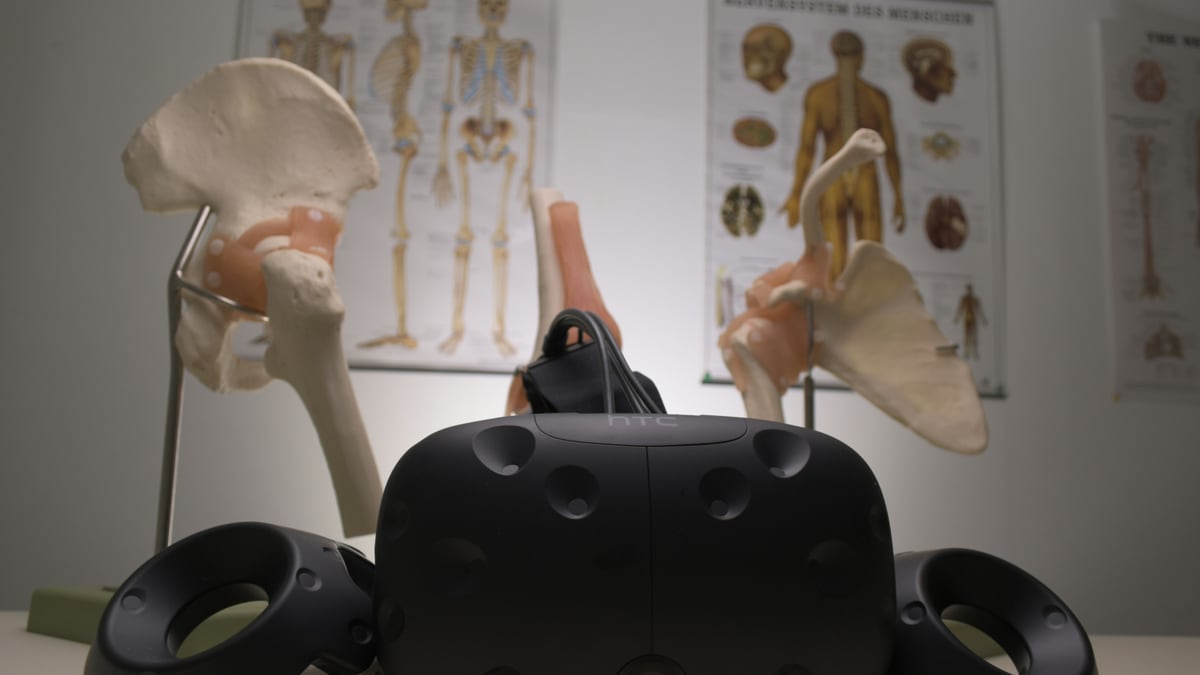
University of Georgia’s Office of Research published a report this week on VR technology for retraining the brain after limb loss. The research targets phantom limb pain, and the specific mechanism it is working with has a longer history than the headline suggests.
Here is what VR adds to that history, what UGA’s work appears to be testing, and where the treatment sits in terms of clinical availability.
Mirror therapy and its ceiling
Phantom limb pain, which affects the majority of people after amputation, has a strong treatment candidate in visual feedback: show the brain a moving image of the missing limb, and the cortical conflict driving the pain signal can ease. Mirror therapy is the established low-tech version. A mirror reflects the intact limb into the visual space where the absent one would be. Moving the intact limb while watching that reflection produces the impression of both limbs moving. For reasons researchers are still mapping precisely, that visual confirmation can reduce pain.
The mechanism relates to a mismatch problem. After amputation, the motor cortex continues generating movement commands for the missing limb. Those commands return no sensory confirmation. The discordance between command and absence is thought to contribute to the pain signal, though it is not the only driver. Medications, central sensitization, and pre-amputation pain history all factor in. Visual feedback offers one way to partially close that loop.
Mirror therapy works for some people, partially, with significant variation across individuals. The setup also has a practical ceiling: maintaining the illusion requires holding a specific position relative to a flat mirror, the effect is fragile, and it demands cognitive effort to sustain. Two-dimensional reflection in a fixed location is a limited substitute for a three-dimensional limb in space.
What VR changes
Immersive VR extends the same underlying logic into a more convincing sensory environment. A headset replaces a mirror. The virtual environment can render a three-dimensional limb in real time, occupying the correct position in the user’s visual field without requiring postural negotiation. Some implementations use electromyography sensors on the residual limb to capture muscle activation and drive the virtual limb directly, tightening the loop between motor intent and visual feedback.
The theoretical advantage is lower perceptual friction. The brain does not need to work as hard to accept the feedback as credible when the environment is immersive and responsive. Whether that translates to consistently better outcomes than mirror therapy is still being established. The evidence base for VR-based phantom limb pain treatment is growing, but it is smaller and less standardized than the mirror therapy literature. Studies have shown pain reductions in controlled settings; patient profiles who respond best, optimal session frequency, and duration of effect past the treatment period are still being characterized.
What University of Georgia is investigating
UGA’s press release describes the research as focused on retraining the brain after limb loss using VR. The “retraining” framing points toward neuroplasticity outcomes: not just session-by-session pain relief, but durable change in how the cortex represents the missing limb. That is a more ambitious target than short-term pain management, and the research design to demonstrate it requires longer follow-up and imaging outcomes alongside pain scores.
The specific trial structure, enrolled patient population, and comparison condition will be in the full paper when it is published. UGA is not the largest prosthetics research hub in the country, but behavioral neuroscience and pain research programs have contributed meaningfully to this field. The size or prestige of an institution does not determine whether a finding is valid.
What is available now
Mirror therapy and graded motor imagery (a structured protocol that moves through limb recognition, imagined movement, and mirror feedback in sequence) are available through physical therapy and occupational therapy at many clinics. Costs are manageable and access is not gated by research enrollment.
The phantom limb pain guide covers the current treatment landscape in more detail. The earlier piece on phantom motor imagery research covers that specific evidence strand for readers who want to go deeper on imagined-movement approaches, which are related to but distinct from the visual feedback work UGA is pursuing.
VR-based treatment is in research settings. Access currently requires trial enrollment or a specialized academic medical center. ClinicalTrials.gov and the Amputee Coalition are the clearest paths to finding active protocols.
What to watch for
The UGA announcement is a research update, not a clinical release. To judge whether it represents meaningful progress, the follow-on indicators are: peer-reviewed publication, whether a commercial development partner or FDA software-as-medical-device pathway is in view, and whether pain reductions are durable at six and twelve months rather than immediately post-treatment only.
For a non-invasive software tool, the regulatory path is shorter than for implanted devices. But reimbursement at scale still requires coverage decisions from Medicare and private payers, and that gap between a promising research result and a reimbursed clinical option can run several years even when findings are solid.
If phantom limb pain is affecting your daily function, a conversation with your rehabilitation physician or care team about visual feedback therapies is a reasonable starting point. Mirror therapy and graded motor imagery are available now through standard clinical channels and do not require a trial slot.
Amputee News does not provide individualized medical or treatment advice. Phantom limb pain management requires evaluation by a clinician familiar with your specific history. ClinicalTrials.gov and the Amputee Coalition are starting points for finding active research programs.
Source notebook: This reporting draws on University of Georgia Office of Research: Easing the pain — The VR technology retraining the brain after limb loss, August 2026 ↗. We link out so you can follow the receipts.