
NAAOP convenes on transitions of care for Medicare amputees: what that conversation is really about
The National Association for the Advancement of Orthotics and Prosthetics held an informational luncheon August 5 on care transitions for Medicare beneficiaries after amputation. The meeting points directly at one of the most persistent gaps in how the system actually works.
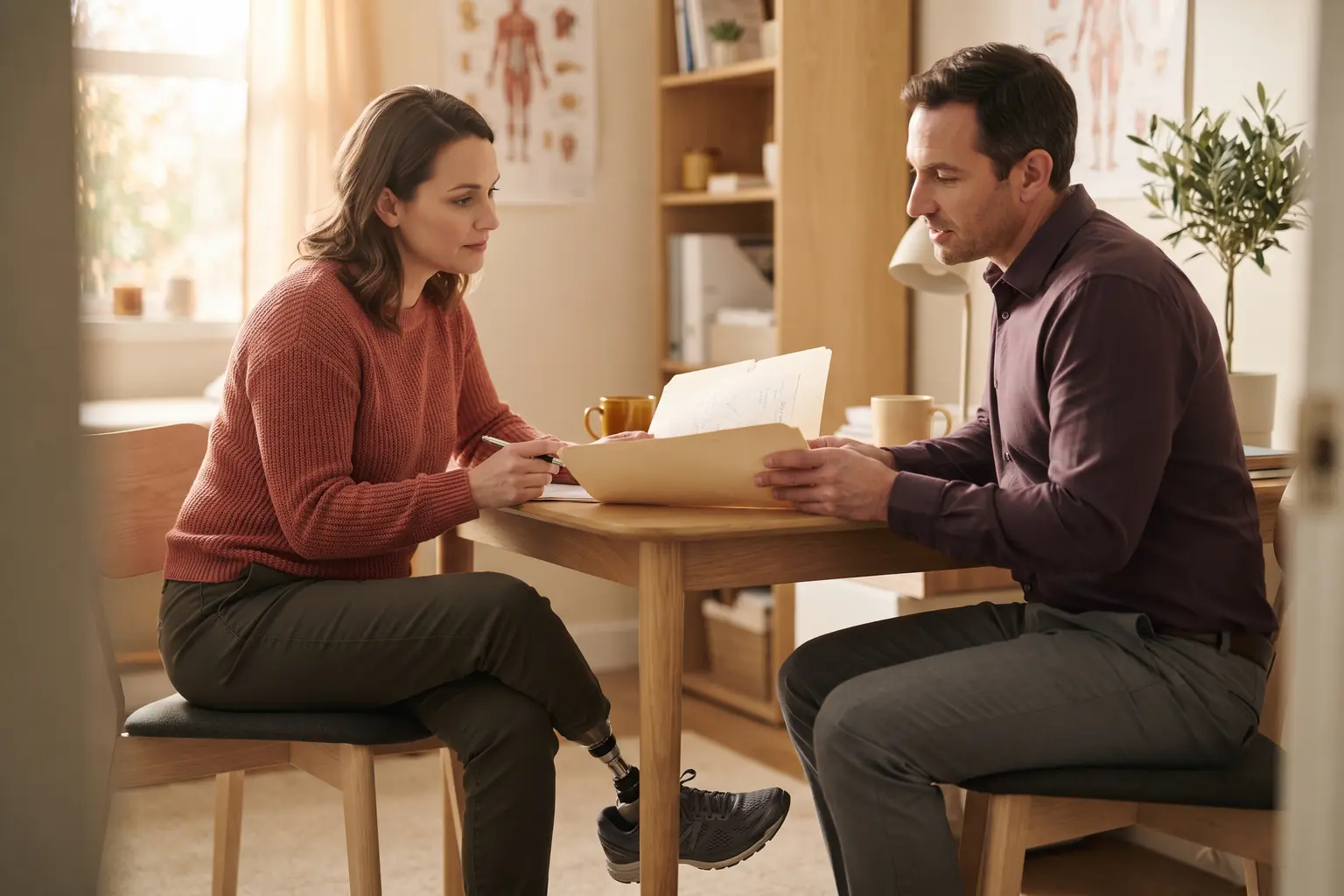
The National Association for the Advancement of Orthotics and Prosthetics (NAAOP) held an informational luncheon on August 5 to examine transitions of care for Medicare beneficiaries who have had an amputation. The session included a review of current literature on the topic, according to reporting by The O&P EDGE.
The meeting itself is not a policy change. But the subject tells you a lot about where the field believes the real problem sits.
What “transitions of care” means in this context
“Transitions of care” is a term from hospital administration that sounds bureaucratic and is actually about something concrete: what happens to a patient between care settings, and whether the right information, coordination, and access follow them.
For someone who has had an amputation, that sequence typically runs something like this:
- Acute hospitalization, covered under Medicare Part A, focused on surgical recovery, wound management, and early rehabilitation
- Post-acute placement, where a patient goes either to a skilled nursing facility, an inpatient rehabilitation facility, a long-term acute care hospital, or home with home health services, a decision made quickly, often under discharge-planning pressure
- Outpatient rehabilitation, where physical and occupational therapy prepares someone for prosthetic evaluation and fitting
- Functional classification assessment, the evaluation that Medicare uses to assign a K-level, which in turn determines what prosthetic components the coverage framework will support
- Prosthetic fitting and follow-up, delivered by an orthotist or prosthetist
- Community reintegration, which can involve additional therapy, device adjustments, peer support, and vocational or adaptive services
Each step is a handoff. Each handoff is a place where things can fall apart.
Where the gaps actually are
The transitions-of-care problem is not primarily a prosthetics problem. It begins with discharge planning.
A hospitalist or discharge planner focused on clearing an acute-care bed operates under significant time pressure. The prosthetic care pathway (its documentation requirements, functional benchmarks, and Medicare billing structure) is specialized knowledge that most hospital discharge teams don’t carry. The result is that the choice of post-acute setting can be made without adequately accounting for which pathway best positions someone for the prosthetic care they may need.
A person placed in a skilled nursing facility for convenience or proximity may have slower access to the kind of outpatient therapy that prepares a residual limb for fitting. A functional assessment conducted before adequate rehabilitation can result in a K-level that doesn’t reflect what a person can realistically achieve. Documentation generated in post-acute settings may not arrive at the O&P clinic in a form that supports the eventual prosthetic claim.
None of this requires anyone to have acted in bad faith. It requires that the people making care decisions in one part of the system don’t have clear line of sight to the constraints operating in another part of the system.
Why NAAOP is the right convener for this conversation
NAAOP represents O&P practices, and O&P practices are downstream of all of this. They receive patients whose transition history has already shaped what they can access, how quickly they can be fitted, and how their eventual Medicare claim will be supported.
An organization that spends a significant amount of its time on Medicare billing policy has practical reasons to care about what happens to the documentation, functional status, and referral records before someone shows up for an evaluation.
That also means NAAOP’s perspective on this is professionally situated, and the meeting’s framing, an informational session on current literature, suggests a gathering and synthesis phase more than a done deal. The useful questions are what the field takes from the literature review, who else is part of the conversation, and whether any of this connects to formal advocacy or policy proposals.
The current access context
This meeting happened in the same week that a new version of Medicare’s lower-limb prosthesis policy article became effective. It follows months of operating under a nationwide CMS moratorium on new DMEPOS supplier enrollment, which we have covered in some detail. Those conditions have compounded existing access pressure in underserved markets.
Transitions-of-care failures don’t affect everyone equally. People without a strong primary care relationship, people in rural areas, and people without health literacy or family support to navigate the system are more likely to fall through the gaps at each handoff. Medicare beneficiaries with amputations, many of whom are older adults managing other chronic conditions, are not a uniform population, and the literature on transitions of care in this group has consistently shown that earlier, more coordinated intervention produces better functional outcomes.
Whether a professional organization’s working session translates into anything that affects that picture is a reasonable question to hold.
What this means if you’re navigating the system now
For people currently working through the care sequence after amputation, the general principle the transitions literature supports is: get O&P into the picture as early as possible, and keep records moving.
Some specific things to ask at or before hospital discharge:
- Who coordinates referrals to prosthetic evaluation, and when does that referral typically happen?
- Which post-acute setting will allow the most direct pathway to outpatient rehabilitation?
- What documentation from this hospitalization will the prosthetics clinic need, and how will it be transferred?
- Is there a case manager, social worker, or patient navigator whose job includes coordinating across settings?
The O&P clinic you eventually work with can sometimes help answer those questions prospectively if contacted before discharge, though that varies by practice and geography.
Transitions of care is also not only a new-amputee issue. Someone returning to an O&P clinic after years of stable prosthetic use, who has had a change in medical status, a hospitalization, or a coverage switch, may encounter the same coordination gaps on a different timeline.
Amputee News does not provide individualized medical, legal, benefits, or insurance advice. Coverage and care decisions depend on individual circumstances, applicable Medicare rules, and the policies of the plans and facilities involved.
Source notebook: This reporting draws on The O&P EDGE: NAAOP Hosts Amputee Transitions of Care Meeting, August 7, 2026 ↗. We link out so you can follow the receipts.