
Hip disarticulation prosthetics: what the design decisions involve
The O&P EDGE's September 2026 practitioner series on hip disarticulation patients reaches its third installment, covering component selection and clinical outcomes. What those decisions mean for patients and families trying to understand what they are facing.
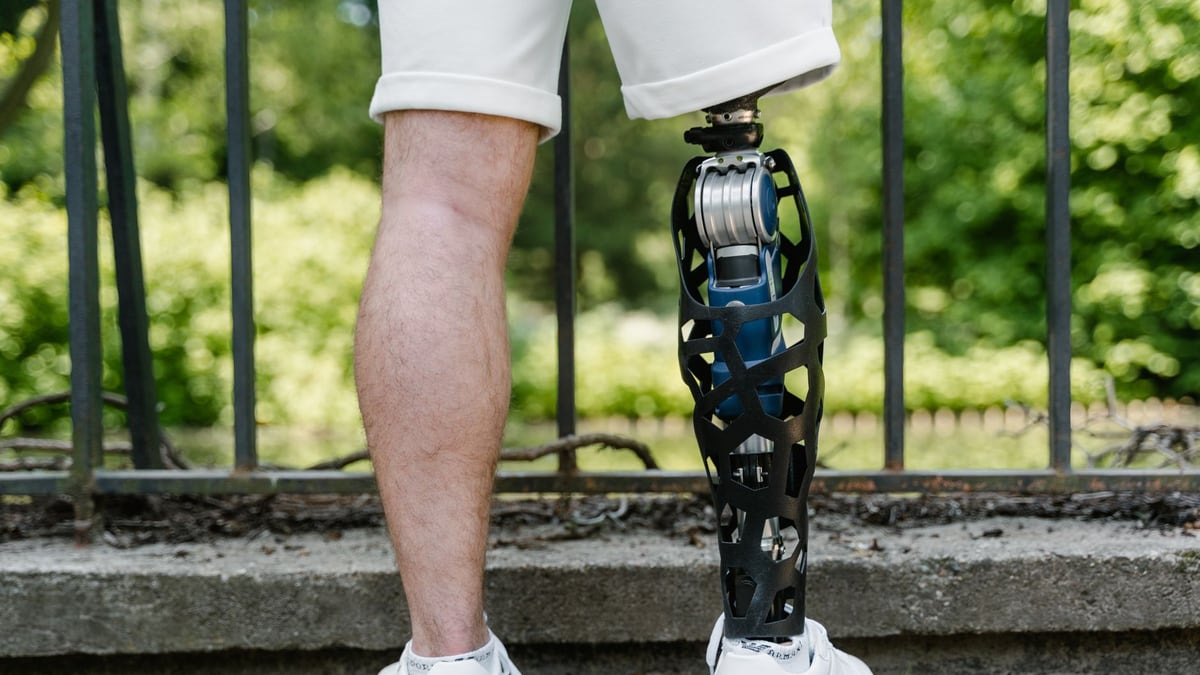
Hip disarticulation is amputation through the hip joint itself. No residual femur remains below the pelvis. That anatomical fact reshapes almost every decision involved in fitting a prosthesis at this level: socket contact points, component selection, energy cost of walking, and realistic outcome expectations.
The O&P EDGE published Part III of a practitioner-focused series on hip disarticulation patients this week. Parts I and II covered the patient population and casting approach. Part III addresses component design and clinical outcomes. The series is written for clinicians. The design questions it addresses, though, matter to patients and families trying to understand what they are facing.
How this level differs from transfemoral amputation
In transfemoral amputation, the residual femur acts as a lever. The person retains hip musculature and uses it to drive the prosthesis through each gait phase. Socket fit is achieved around the femur, and the clinical work involves matching socket geometry to the residual limb while preserving that mechanical connection.
At hip disarticulation, none of that is available. There is no femur to wrap a socket around and no residual hip musculature providing direct drive. The socket must create its entire interface through the pelvis: the ischial tuberosity, the iliac crests, the contralateral anterior superior iliac spine. The person generates forward movement through trunk motion and through the swing mechanics engineered into the prosthetic hip joint. The body is not driving the leg; the leg is designed to follow the body.
This is a substantially different mechanical problem. It accounts for why fitting at this level requires both specific casting technique, the subject of Part II in the series, and a distinct approach to component selection.
What the component system involves
The prosthesis at this level spans three linked parts: a hip joint, a knee, and a foot-ankle system. Each selection affects the others in ways that do not apply at lower amputation levels.
The prosthetic hip joint serves two functions. In stance, it locks under load, preventing unexpected collapse during weight bearing. In swing, it allows flexion and returns energy to move the leg forward. Some designs also allow transverse rotation, which matters for sitting naturally and for navigating turns. The hip joint is the top of the kinetic chain here, so its behavior propagates through every step.
Knee selection follows from hip selection. Because there is no residual musculature above the knee providing control, the knee must handle instability coming through from the hip. Weight is a larger factor than at transfemoral level. The entire prosthesis hangs distal to the hip joint with no direct muscular input above it, so a heavier knee demands more energy to swing. Microprocessor knee systems that adapt to gait speed and terrain can benefit some users at this level. Whether one is appropriate depends on activity goals, body weight, and the person’s capacity to manage a heavier prosthesis overall.
Foot selection affects energy return across the full system. The stiffness category of the foot changes how energy returns at the end of stance and whether that return is useful or destabilizing given what is happening at the knee and hip above it. Getting the foot right is the last fitting decision, but it connects back to all the earlier ones.
What the outcomes data shows
Published data on hip disarticulation prosthetics is thin. The incidence is low enough that large cohort studies are rare, and most of the evidence comes from case series and smaller institutional reviews. What exists shows a wide range in how people use their prosthesis.
A substantial proportion of people with hip disarticulation do not use a prosthesis as their primary daily mobility method. Many use a wheelchair for most activities and use the prosthesis selectively, for specific situations or not at all.
This is not a failure. Walking with a hip disarticulation prosthesis demands significantly more metabolic energy per distance traveled than walking with a transfemoral prosthesis, which is itself substantially more demanding than walking without limb loss. For someone whose cardiovascular capacity, pain levels, or daily functional goals do not favor that expenditure, wheelchair mobility is a rational outcome. It is not giving up on the prosthesis. It is matching the primary mobility tool to the person’s actual situation.
People who tend to achieve higher prosthesis use in published reports share some characteristics: younger age, traumatic rather than vascular etiology, better cardiovascular health, absence of significant comorbidities, and consistent access to clinical follow-up with practitioners experienced at this level. Those factors are worth naming because the energy demands at hip disarticulation make them carry more weight than they would at lower amputation levels.
What this means for patients and families
If you or a family member is being fitted at this level, the O&P EDGE series gives a reasonable picture of where practitioner thinking currently sits on the design side. Part III’s focus on component selection and outcomes makes it one of the more direct clinician-facing accounts of what the available options are and how outcomes vary.
Useful questions to bring to a fitting consultation include: which hip joint designs are under consideration and why; what knee system the prosthetist recommends given the person’s activity goals and physical profile; and what realistic walking distances and terrain look like. If the clinical team raises wheelchair use as a co-primary option, that is worth engaging with rather than dismissing. The outcome data supports it in many cases.
Prosthetists with meaningful experience at hip disarticulation level are not uniformly available. If the nearest clinic has limited experience with it, getting a consultation with a center that fits this level regularly is reasonable before committing to a fitting plan.
This desk covers clinical topics for orientation. Nothing here is medical advice or a treatment recommendation for a specific situation. Prosthetic decisions at this level involve individual factors that require in-person assessment with experienced clinical providers.
Source notebook: This reporting draws on The O&P EDGE: Design and Outcome Considerations for Hip Disarticulation Patients: Part III, September 2026 ↗. We link out so you can follow the receipts.