
State vocational rehabilitation programs: what they fund and how to use them
State VR programs can pay for prosthetic devices, job training, and workplace accommodations when insurance falls short, but the system has rules, a waiting list in some states, and an employment goal attached to every benefit. An orientation to how it works.
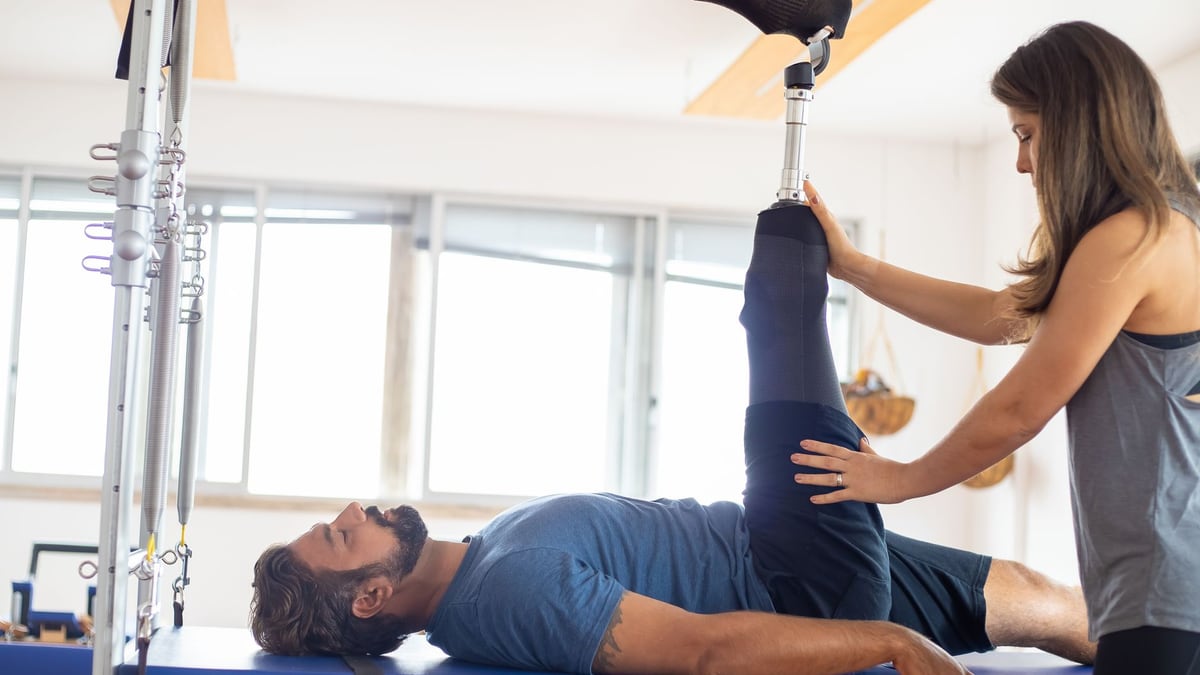
Most coverage of prosthetics funding focuses on Medicare, Medicaid, and commercial insurance, the three systems that cover the majority of devices for people with limb loss. A fourth funding pathway exists, one that is less visible and has a specific eligibility condition attached: you have to be working toward employment, or maintaining the employment you have.
That pathway is state vocational rehabilitation. It is not a fallback for people who have run out of other options. It is a distinct program with its own eligibility rules, its own service categories, and, in states where demand exceeds funding, a wait list. Understanding what it is and what it can realistically do changes the question from “can I afford the device I need” to “have I mapped the full landscape of who might pay for it.”
This guide is an orientation to the VR system for people with limb loss. It is not individual legal, benefits, or financial advice. How any of this applies to a specific situation depends on the state, the circumstances, and what a VR counselor determines after an assessment.
What the program is and where it comes from
State vocational rehabilitation programs are funded jointly by the federal government and the states under Title I of the Rehabilitation Act of 1973, as amended by the Workforce Innovation and Opportunity Act of 2014 (WIOA). The federal agency that administers the funding and oversight is the Rehabilitation Services Administration (RSA), part of the U.S. Department of Education.
Every state and territory has at least one state VR agency. Some states split the program: one agency for people with visual impairments, another for all other disabilities. The state agencies operate with significant local variation in funding levels, wait times, and service cultures, but they share a common federal framework. The RSA publishes a directory of state VR agencies, which is the starting point for finding the office that covers your location.
The program’s design premise is employment. Every service VR provides, from prosthetic devices and job training to education, rehabilitation technology, and workplace modifications, is authorized in the context of helping a person with a disability get to work, return to work, or maintain the job they have. That framing matters in practice: a VR counselor evaluating a request for a prosthesis will want to understand how the device connects to an employment goal. For most people with limb loss who are of working age, that connection is direct and documentable. But it is a connection that has to be articulated, not assumed.
Who qualifies
VR eligibility has two parts. A person must have a physical or mental impairment that results in a substantial impediment to employment, and must require VR services to prepare for, get, retain, or advance in competitive integrated employment. Virtually all significant limb loss meets the first criterion. The second criterion, requiring services, is generally interpreted broadly.
Eligibility does not require that a person currently be unemployed. People who have limb loss and are working but need a device or accommodation to remain in their job are eligible. People who are in school or training programs are eligible. People who have never worked and are entering the workforce for the first time are eligible. Age eligibility extends from transition-aged students (typically 14 and older) through workers of any age, though in practice most VR service populations are adults of working age.
One thing VR does not do: serve people whose disability is so severe that they cannot benefit from VR services and reach employment, even with maximum support. This is a narrow exclusion and rarely applies to limb loss, where prosthetic technology and rehabilitation together typically enable some form of competitive employment for most people of working age.
What VR can pay for
The services available through VR are defined by federal regulation and state policy. For people with limb loss, the most relevant categories are:
Assistive technology and prosthetic devices. This is the category most directly relevant to limb loss. VR agencies can authorize payment for prosthetic devices and related components, including advanced devices with microprocessor components, as part of a plan for employment. The standard is whether the device is necessary to achieve the employment goal outlined in the Individualized Plan for Employment (described below). Device authorization decisions are made by the VR counselor in consultation with clinical documentation; they are not automatic. What is authorized and at what cost threshold varies by state.
Vocational and job training. VR can fund short-term vocational training, apprenticeships, and certificate programs that lead toward employment. This is relevant for people whose limb loss or accompanying conditions require a change in occupation.
Higher education. In cases where a four-year or graduate degree is part of a reasonable employment plan, VR can fund tuition, fees, and related educational costs. This typically requires documentation that the degree is required for the targeted employment goal.
Rehabilitation engineering and workplace modifications. VR can fund assessment and modification of a workplace to enable a person with a disability to do their job, in coordination with, or sometimes in addition to, accommodations an employer is required to provide under the ADA. This is distinct from what the ADA requires of employers and may go further in cases where reasonable accommodation does not fully address functional limitations.
Job placement and supported employment. Counseling, job search assistance, job coaching, and follow-along support for people who need it to maintain employment.
Transportation. In some circumstances, VR can assist with transportation costs related to attending training, medical appointments connected to employment planning, or the workplace itself.
What VR will not fund: general medical treatment unrelated to employment goals, ongoing maintenance of devices after the employment goal is achieved (with exceptions), or services that are the primary responsibility of another funding source. This last point is significant and comes up directly in the context of prosthetics.
VR and insurance: payer of last resort
VR operates as a payer of last resort for services that are already covered by insurance, Medicaid, Medicare, or another funding source. If a person’s insurance plan covers a prosthetic device, VR is not supposed to simply pay for it instead. VR is supposed to determine what insurance will and won’t cover, and then apply VR funding to the gap.
In practice, this means VR can be most useful in three situations:
When insurance denies a device or component outright. If a commercial plan or Medicare denies coverage for a specific device, and the device is necessary for the person to meet their employment goal, VR can potentially fund it. This is not a simple workaround; the VR counselor will want clinical documentation that the device is necessary and employment-connected. But the coverage gap that insurance creates is specifically the space VR was designed to fill for working-age people.
When out-of-pocket costs are prohibitive. If insurance covers a portion but requires significant cost-sharing, VR can sometimes pay the patient’s share. The terms of this depend on state policy and the person’s financial situation.
When the needed device is categorically excluded from the person’s coverage. Some commercial plans and some state Medicaid programs have explicit exclusions for certain prosthetic categories. VR funding can step in where another payer has formally refused rather than just denied on medical necessity grounds.
The interaction between VR and existing coverage is something to work through with a VR counselor. Assuming VR will not help because insurance exists, or assuming VR will pay for everything insurance refuses, are both wrong starting points.
Order of selection: why there might be a wait
Under WIOA, when a state VR agency does not have enough funding to serve everyone who is eligible, it must establish an “order of selection,” a priority system that determines who gets served first. States in order of selection typically create two or three priority categories based on the severity of disability and serve the most severe cases first. People who qualify but fall into a lower priority category may be placed on a wait list until funding becomes available.
Not all states are in order of selection at any given time. Whether your state has a wait list is one of the first questions worth asking when you contact the VR agency. RSA publishes data on which states are in order of selection; state agency websites sometimes note it directly. If a state is not in order of selection, eligible applicants are served as they apply. If it is, the wait can be months.
This is relevant for planning. If there is a device need on the near horizon, such as a replacement prosthesis or a new component for a job that is changing, learning whether your state has a wait list, and where in the priority order your situation would fall, is useful early rather than after a coverage denial.
The Individualized Plan for Employment
Once a person is determined eligible and has met any applicable order-of-selection criteria, the VR process moves to developing an Individualized Plan for Employment (IPE). The IPE is a written agreement between the person and their VR counselor that describes:
- The employment goal: the specific kind of work the person is aiming for
- The services VR will provide to help reach that goal
- The timelines and responsibilities on both sides
- How progress will be measured
The IPE is not something the counselor writes and hands to you. It is developed collaboratively, and the person with the disability has the right to be an active participant in setting the employment goal and choosing how to reach it. If you want a specific prosthetic device because it connects to a specific employment goal, that is the conversation to have when developing the IPE.
People who disagree with decisions their VR counselor makes, whether about eligibility, order of selection, or what the IPE includes, have the right to appeal through the state VR agency’s internal process and, if needed, through a federally funded Client Assistance Program (CAP). Every state has a CAP; the RSA directory of CAP programs lists them by state.
VR and SSDI: what the interaction looks like
For people who are receiving SSDI and also pursuing employment, VR and the Social Security system interact directly. SSA’s Ticket to Work program allows SSDI recipients to assign their “ticket” to a VR agency or an Employment Network, which then receives federal payment for helping the person achieve sustainable employment outcomes. Using the Ticket to Work does not, by itself, reduce or terminate SSDI benefits during the participation period, a protection that encourages people who might otherwise fear losing benefits to attempt work.
VR is not the same as Ticket to Work, but VR agencies are an authorized provider under Ticket to Work. If you are receiving SSDI and want to use VR services, asking the VR counselor specifically about the Ticket to Work interaction is worth doing at the outset, since it affects how the services are structured and how VR is compensated for providing them.
How to start
-
Find your state VR agency. The RSA maintains a state-by-state directory. Most states have regional offices in addition to a central state office; depending on your geography, the regional office may be the primary contact.
-
Call or submit an inquiry. Most state VR agencies have an intake process that begins with a phone call or a written request for services. Some have online intake forms.
-
Gather your documentation. You will need documentation of your disability: medical records, clinical notes from your rehabilitation program, or documentation from your prosthetist. You will also want to have a sense of what your employment situation is: are you returning to a prior job, changing occupations, or entering the workforce for the first time? The clearer you can be about the employment goal, the more useful the initial meeting will be.
-
Ask about order of selection early. If the state has a wait list, knowing your likely priority category, and the approximate wait time, is important for planning.
-
Know your rights. You can bring someone with you to VR meetings. You can request that decisions be put in writing. You can appeal decisions you disagree with. Your state’s Client Assistance Program (CAP) can provide free advocacy if you run into difficulty navigating the system.
What this connects to
State VR programs do not replace insurance, Medicare, or Medicaid; they work alongside them for people of working age who have a disability and are pursuing employment. The clearest use case for someone with limb loss is a coverage gap on a device that is needed to do a job, combined with a counselor who understands how to document the employment connection.
More detail on related systems:
- The SSDI and SSI benefit system, and how it connects to Medicare timing, is covered in SSDI and SSI with limb loss.
- What employers are required to provide under the ADA, and how to request it, is covered in Workplace accommodations and the ADA.
- For insurance denial situations where VR is not relevant, the appeals process is covered in How to appeal a denied prosthetic claim.
This guide is an orientation to publicly documented federal and state program structures. It is not legal, benefits, or financial advice. Eligibility determinations, service authorizations, and funding decisions are made by state VR agencies on a case-by-case basis. For questions specific to your situation, contact your state VR agency or a benefits counselor through a source such as the Work Incentives Planning and Assistance (WIPA) program, which offers free benefits counseling to SSDI and SSI recipients.