
Running blades and activity-specific prostheses: what they are, what they cost, and how people actually get them
A practical guide to activity-specific prosthetic limbs for lower-limb amputees: K-level prerequisites, the insurance reality, grant funding pathways, and what to expect when learning to run on a blade.
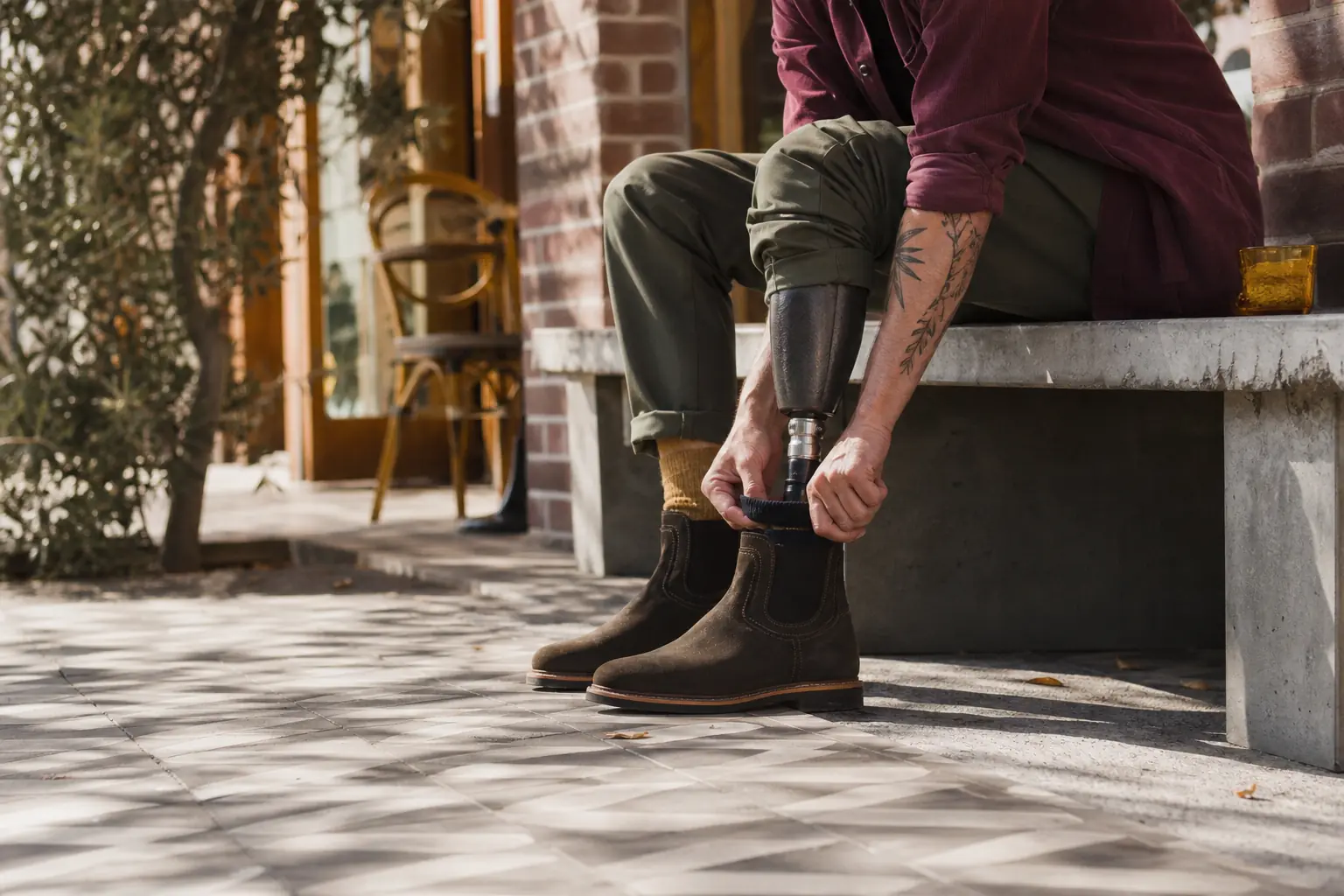
The device you wear for walking and the device that lets you run at anything resembling a run are different things. Not different settings on the same prosthesis: different components, different sockets in many cases, different mechanics, and a completely different insurance conversation.
This guide covers what activity-specific prostheses are, who qualifies under the K-level system, how the insurance fight usually goes, what funding actually exists, and what the learning process looks like once you have a blade and need to figure out what to do with it.
What an activity-specific prosthesis is
A standard prosthetic foot is designed to approximate normal gait: energy return during walking, some lateral motion, stability on varied terrain. A running blade is designed for something else entirely. The curved carbon-fiber structure acts as a spring, storing energy during ground contact and releasing it at toe-off. There is no heel. There is no simulated foot shape. The device is for forward propulsion at speed, not for standing in line or walking through a grocery store.
“Activity-specific prosthesis” covers running blades but also waterproof components, cycling-specific setups, above-knee sport sockets, and other purpose-built devices. What they share: they are designed for a defined activity, they typically cannot fully substitute for a daily-use prosthesis, and they are not what most people receive at initial fitting.
Running blades for lower-limb amputees come in below-knee and above-knee configurations. Below-knee setups attach to an existing socket or require a sport-specific socket. Above-knee configurations are more complex: the blade attaches to a prosthetic pylon and socket system, and many above-knee runners also use a hydraulic or mechanical knee. The device combination changes significantly by level of amputation.
K levels and who qualifies
The Medicare functional classification system assigns lower-limb prosthetic users a K level based on their expected functional capacity. The classifications, briefly:
- K1: household ambulator, limited to flat surfaces
- K2: limited community ambulator, low-level barriers
- K3: community ambulator, variable cadence, most environmental barriers
- K4: expected to exceed basic ambulation, high physical demand, prosthetic stress
Activity-specific devices are generally appropriate at K3 and K4. Running is above the K3 threshold, which is why K3 is typically the minimum documented requirement before an insurer will even review a request for a running blade.
The K level on your documentation matters practically. Someone classified K2 will have difficulty getting a standard microprocessor foot approved, let alone a running blade. K3 opens access to higher-category components for daily use. A running blade, if it is covered at all, typically requires K3 as a baseline with documentation that running is a realistic functional goal for that person.
K levels are assigned by a physician and a prosthetist together, based on functional evaluation. They can be updated as function improves, particularly in the first year or two post-amputation. If your current K level does not reflect your actual functional capacity, talking to your prosthetist about reassessment is worth doing before any insurance authorization conversation.
The insurance situation, stated plainly
Most insurance plans, including Medicare, classify running blades and activity-specific prostheses as “recreational” and deny coverage.
Medicare’s DMEPOS benefit covers prosthetic limbs that replace a lost limb’s function. Medicare’s published guidance has historically treated activity-specific devices as supplemental rather than primary functional devices. An appeal on the basis that running is medically necessary is possible but requires specific documentation: a physician’s letter, the prosthetist’s clinical notes, functional goals documented in the plan of care. Appeals succeed in some cases, particularly when the record clearly establishes that the activity is necessary for health maintenance or vocational function rather than recreation.
Commercial insurers vary. States with prosthetic parity laws require plans to cover prosthetic devices at functional equivalence with the intact limb, but most parity laws do not explicitly mandate activity-specific devices. Coverage has improved in some plans since parity legislation, but “improved” usually means a higher-quality walking foot, not a running blade.
Medicaid varies significantly by state. A few states have more flexible prosthetic benefits; most have tight restrictions.
The VA is the clearest exception. Veterans with service-connected limb loss can often obtain activity-specific prostheses through the VA prosthetics program, particularly if documented participation in adaptive sport is part of the care plan. The VA does not follow Medicare’s functional classification restrictions in the same way. If you are a veteran and have not discussed an activity-specific device with your VA prosthetist, ask directly.
Workers’ compensation can cover activity-specific devices in cases where the activity is relevant to job function or rehabilitation goals. The specific insurer and state matter a great deal here.
When insurance says no: what actually works
The realistic pathway for most people without VA coverage is grant funding.
Challenged Athletes Foundation (CAF) runs grant programs specifically for adaptive sports equipment, funded through race and event fundraising. Grants cover individual equipment purchases including running blades and sport-specific sockets. Applications require documentation of the impairment and a description of how the equipment supports athletic participation. CAF runs competitive cycles with defined application windows; current information is on their website.
A few things worth knowing about CAF grants: they are competitive, the cycles have limited funding, and they tend to favor applicants who are already participating or demonstrably ready to start. “I would like to try running someday” is a weaker application than “I have been working with an adaptive running program for four months and need a blade to continue.” Starting with a loaner, getting assessed by a prosthetist for fit, and building a participation record before applying all improve the application.
The Amputee Coalition maintains a resource list that includes additional equipment funding programs, some of which are smaller or regional. Worth checking as a secondary source.
Some O&P practices have relationships with manufacturer programs or can access trial or loaner components. Ask directly. A practice that regularly fits running blades may have a demonstration device you can trial before committing to a grant application.
Cost context: running blade components range from roughly $5,000 to $15,000 and above before prosthetist fitting fees, depending on the component category, level of amputation, and the socket work required. This is not a purchase to undertake without a knowledgeable fitting team.
Finding a prosthetist who actually does this
Not every prosthetist fits running blades regularly. The components, socket design, and fitting process for running are genuinely different from walking-prosthesis work, and experience matters.
When contacting practices, ask directly: how many running blade fittings have you done in the last year? What components do you work with for running? Do you have any relationship with local adaptive running programs or coaches?
The adaptive running program connection is a useful proxy. Prosthetists who work regularly with adaptive runners tend to have better working knowledge of blade fitting and gait because they see what happens at speed: what works, what fails, what socket adjustments come up repeatedly. A practice that attends or supports local para-running events is a stronger starting point than a general O&P practice that lists sport prosthetics on a website without elaboration.
Some larger O&P chains have clinicians who specialize in activity-specific fitting; ask which clinician within a practice handles sport prosthetics rather than accepting whoever has availability.
What learning to run on a blade looks like
It does not feel like running immediately. The mechanics are different, the balance points are different, and the proprioceptive feedback from a carbon-fiber blade is not what you have internalized from an intact foot or from a walking prosthesis. Some people take weeks to feel comfortable at a jog. Some take months. Both are normal.
The prosthetist relationship during this phase matters more than it does during initial walking prosthetic fitting. Running blade fit is not static: socket fit, blade stiffness, blade length, and alignment all interact with your gait and body weight, and they are adjusted iteratively as you build activity. Plan for multiple follow-up appointments.
Working with an adaptive running program or a prosthetics-knowledgeable coach accelerates the process. The technique cues that matter on a blade (forward trunk lean, hip extension, not landing on the anterior tip) are specific enough that external feedback helps more than solo trial and error.
One thing worth naming: some people try a running blade and conclude that running is not the goal they want to pursue. That is a valid outcome. The device is a tool. Whether it is useful for a specific person’s specific goals is an empirical question, not a test of effort or character.
Other activity-specific options
Running blades get the most attention, but they are one category.
Waterproof components include waterproof sockets, pylons, and in some cases entire prosthetic systems designed for swimming, kayaking, and showering. Some are built for full water immersion; others are designed for light water exposure. Waterproof components generally have better insurance coverage than running blades because the relevant activity, bathing, is classified as a basic ADL rather than recreation.
Cycling setups vary widely: some cyclists use their daily prosthesis, some use a modified socket that interfaces better with a pedal, and some use a dedicated prosthetic configuration. This depends heavily on level of amputation and type of cycling. Many people start with whatever they have and adapt from there.
Above-knee users considering any activity-specific work may encounter sport-specific knees alongside activity-specific feet. This compounds the equipment cost and insurance complexity considerably.
The underlying dynamic is the same across all these categories: the closer the activity maps to basic functional mobility or ADLs, the more likely insurance is to engage. The further it moves toward athletic performance, the more you are probably working from grants and self-pay.
Amputee News does not provide individualized medical, fitting, or insurance advice. K-level classification and prosthetic prescription are determined by your physician and prosthetist based on your specific functional status. Insurance coverage for activity-specific devices varies by plan, state, and documentation; verify with your insurer and work with your prosthetist to build the strongest clinical record if seeking authorization.
Source notebook: This guide draws on Amputee Coalition fact sheets and resources for people with limb loss ↗. We link out so you can follow the receipts.