
After amputation: the clinical pathway from surgery to your first prosthesis
An orientation to what happens after a limb amputation: wound care, residual limb shaping, inpatient rehabilitation, and the factors that affect when and whether a prosthetic fitting happens. For new amputees and their families.
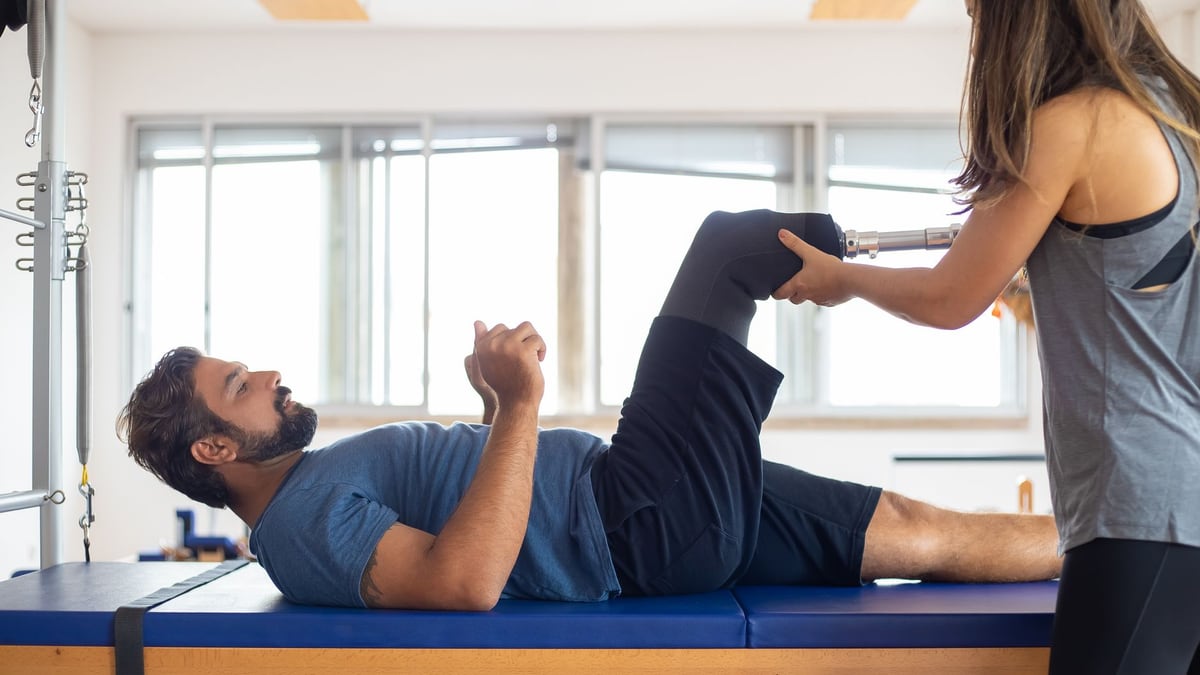
One of the most disorienting things about amputation is that it happens fast and then slows down completely. The surgery takes hours. The recovery takes months. If you are newly through the surgery, or sitting with a family member who is, the question of what happens next can feel like a blank wall. This guide is a map through the clinical pathway, from the immediate post-surgical period through the first prosthetic fitting and early rehabilitation. It covers what tends to happen, who tends to be involved, and what the timeline looks like, with the honest caveat that that timeline varies enormously depending on circumstances the guide cannot know.
This is general orientation. It is not a care plan or a prediction for any specific person’s recovery. The clinical team caring for you is the authority on what applies to your situation.
The immediate post-surgical period
Amputation surgery can be planned or emergent, elective or trauma-related. The post-surgical experience differs significantly depending on which. What is common to most:
Wound closure and initial healing are the first priority. The surgeon closes the residual limb (the remaining portion of the limb) in a way intended to create a surface that can eventually accept a prosthetic socket. This typically involves layering muscle, fascia, and skin over the end of the bone. The shape of the residual limb at this stage is not the shape it will be long-term; swelling and tissue change are still in progress.
Pain management begins in the surgical and post-anesthesia care settings and continues as you move through the hospital. Post-amputation pain is not simple: it can include surgical-site pain, phantom limb sensation or pain (perceived in the absent limb), and residual limb discomfort from the healing tissue. These can coexist and can be difficult to distinguish in the acute period. Communicating clearly about what you are experiencing, where, what kind, how intense, helps the team calibrate the response.
Initial wound care varies by closure technique. Some amputations use a rigid dressing (a plaster or fiberglass post-operative cast over the residual limb) applied immediately after surgery; others use soft dressings with compression wrapping. The rigid post-operative dressing approach is used in some centers because it supports residual limb shaping and reduces edema from the outset, and in some cases allows very early fitting of a temporary prosthetic device, though this depends heavily on the clinical setting, the surgeon’s practice, and your healing status.
Who is on the team
Amputation rehabilitation is not a single-provider event. The team composition varies by setting, but in a hospital or inpatient rehabilitation facility, you are likely to encounter some combination of:
Physiatrist (rehabilitation medicine physician): Often the physician who coordinates rehabilitation in inpatient rehab settings. Manages the overall rehabilitation plan, oversees pain and medical management during rehab, and communicates with the surgical team and prosthetist.
Surgeons: Your surgical team remains involved in wound assessment, especially if healing is complicated or if there are concerns about the residual limb.
Physical therapist: Works on mobility, strength, and functional activity. In the pre-prosthetic phase, this means strengthening the residual limb, maintaining range of motion, conditioning the rest of the body, and beginning to practice mobility with assistive devices (wheelchair, crutches, walker depending on what fits your situation). After a first prosthesis is fitted, the physical therapist guides gait training and functional skill-building with the device.
Occupational therapist: More prominent in upper-limb amputation, where everyday activities such as eating, dressing, and hygiene are directly affected. Also involved in lower-limb cases for activities of daily living, adaptive equipment, and functional goals.
Prosthetist: The clinical professional who will evaluate, design, fabricate, and fit your prosthetic device. In the inpatient period, a prosthetist may or may not visit depending on the hospital’s affiliation with a prosthetics practice and how far along in healing you are. Early conversations about prosthetic goals can happen before you are ready to be fitted.
Social worker or case manager: Helps coordinate discharge planning, insurance authorizations, durable medical equipment, and post-discharge services. Knows which rehabilitation facilities are in your network and what the authorization process looks like for prosthetic care. If you are not already talking to this person, ask to be connected.
Psychologist or counselor: Not present in every inpatient setting, but amputation carries significant psychological adjustment demands. Anxiety, depression, grief, and adjustment disorder are common. Peer support from other amputees is also something many people find valuable, and the Amputee Coalition’s peer visitor program (amputee-coalition.org) can connect you with trained volunteers who have been through the experience.
Residual limb shaping: what happens and why it matters
One of the most important parts of the pre-prosthetic phase, and least talked about, is residual limb shaping. After amputation, the residual limb is swollen, soft, and round. A prosthetic socket needs to fit against a limb that is stable in volume and shape. Getting from the post-surgical state to a fittable state takes time and active effort.
Shrinker socks are elastic compression garments that fit over the residual limb and apply graduated compression to reduce swelling and help shape the tissue into the cylindrical or conical shape that prosthetic sockets are designed to interface with. Shrinkers look like thick, stretchy socks and come in various sizes that progress as your limb volume decreases. They should be worn according to your care team’s instructions, typically for long portions of the day, removed for hygiene and skin checks.
Compression wrapping with an elastic bandage is an alternative or complement to shrinkers, more common in the very early post-surgical period or in settings where shrinkers are not immediately available. Proper wrapping technique matters: a poorly applied wrap can cause complications. Your physical therapist or rehabilitation nurse should teach you and any caregivers who will be helping you.
Exercises throughout this period serve multiple purposes: maintaining strength and flexibility in the residual limb, preventing contractures (joints that stiffen into a fixed position from disuse), conditioning the upper body and intact limb for the mobility demands of prosthetic use, and building cardiovascular fitness. Lower-limb amputation substantially increases the metabolic cost of walking with a prosthesis, and conditioning before fitting makes the early training period less exhausting.
The shaping process takes weeks. For lower-limb amputees, residual limb volume can continue to change significantly for months after amputation, which is part of why early prosthetic fittings often use preparatory or temporary sockets that can be modified or replaced as volume stabilizes.
When does prosthetic fitting happen
This is the question most people want a direct answer to, and the honest answer is: it depends on factors that are genuinely individual. The variables include:
Wound healing status. A prosthetic socket applies pressure to the residual limb. If the wound has not fully healed, pressure from a socket can disrupt closure or cause complications. Wound healing is the non-negotiable precondition for fitting.
Residual limb stability. Significant volume fluctuation makes fitting a stable socket difficult. Most prosthetists wait until the limb has stabilized enough to take a reliable cast or scan. Some use preparatory sockets precisely because early volume changes make a definitive device premature.
Health status. Other medical conditions, particularly vascular disease, diabetes, cardiac conditions, or complications from the amputation, can affect how quickly healing progresses and how well a person can tolerate the rehabilitation demands of early prosthetic use.
Functional goals and candidacy. Not everyone who undergoes amputation will ultimately use a prosthetic device, and the decision involves clinical assessment of whether the benefits outweigh the demands for a specific person. Medicare and many insurers use K-level functional classification (a 0–4 scale of expected ambulatory function) to determine coverage for specific device categories. The guide Understanding K-levels and prosthetic coverage explains what these classifications mean and how they interact with coverage decisions.
Insurance authorization. Prosthetic devices require prior authorization from most insurers, including Medicare. The authorization process takes time, requires documentation from the clinical team, and can involve appeals if coverage is initially denied. This can be a rate-limiting factor independent of clinical readiness.
For lower-limb amputees in reasonably good health whose wounds heal without complications, a first fitting with a preparatory prosthesis often happens somewhere in the four-to-eight-week range after surgery, sometimes earlier in centers using immediate post-surgical fitting approaches, sometimes later depending on the factors above. For upper-limb amputees, timelines depend heavily on the level of amputation and the type of device being considered (body-powered, externally powered, activity-specific).
Do not use these ranges as predictions. Ask your clinical team for their specific assessment of where you are and what the next steps look like.
The first fitting and what follows
The first prosthetic fitting is not the end of the process; it is the beginning of a different phase. A few things to expect:
The preparatory socket. Many prosthetists begin with a temporary or preparatory socket rather than a definitive device. Preparatory sockets are designed to be modified or replaced as the residual limb continues to change in the months following amputation. They let you begin mobility training without committing to a socket design that may not fit well in three months.
Multiple fitting appointments. A prosthetic fitting is not a single visit. Casting or scanning the residual limb, fabricating a socket, checking the fit, making adjustments, and checking again is an iterative process. Expect several appointments before the device feels reasonably comfortable. “Reasonably comfortable” in early fitting does not mean painless: wearing a prosthesis puts new mechanical demands on tissue that has not experienced them before. Some discomfort is expected; significant pain, skin breakdown, or pressure sores are signals to go back to the prosthetist.
Gait training and rehabilitation. Walking with a prosthesis for the first time is nothing like walking without one: the mechanics are different, the muscle recruitment is different, and the brain needs to learn a new movement pattern. Physical therapy through this phase is not optional; it is how the device becomes usable. Gait training for lower-limb users typically covers basic walking, stairs, uneven terrain, falls and recovery, and eventually activities specific to the person’s goals.
Device changes over time. The first prosthesis is not the last. As the residual limb stabilizes, as your function improves, and as your goals evolve, the device will be modified or replaced. Sockets may need adjustment as body weight changes. Components may be upgraded as your functional level changes. Expect prosthetic care to be an ongoing clinical relationship, not a one-time transaction.
Questions worth asking at each stage
In the hospital:
- What does the wound healing process look like, and what signs should I watch for that mean I need to call?
- Who on this team is coordinating my rehabilitation plan and discharge?
- When and how do I get connected to a prosthetist?
- What does my insurance cover for inpatient rehabilitation, and is this the right facility for my goals?
In the pre-prosthetic phase:
- What does my residual limb shaping routine look like, and how do I do it correctly?
- What exercises should I be doing? Are there things I should not be doing?
- When will we have a realistic sense of timing for prosthetic fitting?
- What are my realistic functional goals, and what factors will most affect reaching them?
At first fitting:
- What should I expect in the first weeks of wearing the prosthesis?
- What does skin irritation look like that’s normal adjustment versus something I should call about?
- How many hours a day should I be wearing it initially?
- What is the plan for gait training, and how long is that process typically?
Ongoing:
- How do I know when my socket needs adjustment versus when I need to manage what I’m feeling differently?
- What changes in my life or health might affect my prosthetic fit or function?
- What devices exist beyond what I have now, and are any of them worth evaluating for my goals?
A note on this guide: This is orientation information for adults and families navigating limb loss, based on typical clinical pathways in rehabilitation medicine. Individual timelines, team compositions, and clinical decisions vary significantly based on circumstances this guide cannot know. Use this as background for conversations with your care team, not as a prediction or prescription for your specific situation.
Related guides: How to find and evaluate a prosthetist | What to ask at your first prosthetist appointment | Understanding K-levels and prosthetic coverage | Phantom limb pain | Residual limb pain