
The second amputation conversation is not being had. The research on why it should be.
For people who lose a limb to vascular disease or diabetes, the risk of a subsequent amputation is documented, significant, and consistently underemphasized in clinical practice. Here is what the research shows, who carries the highest risk, and what the gap in follow-up actually costs.
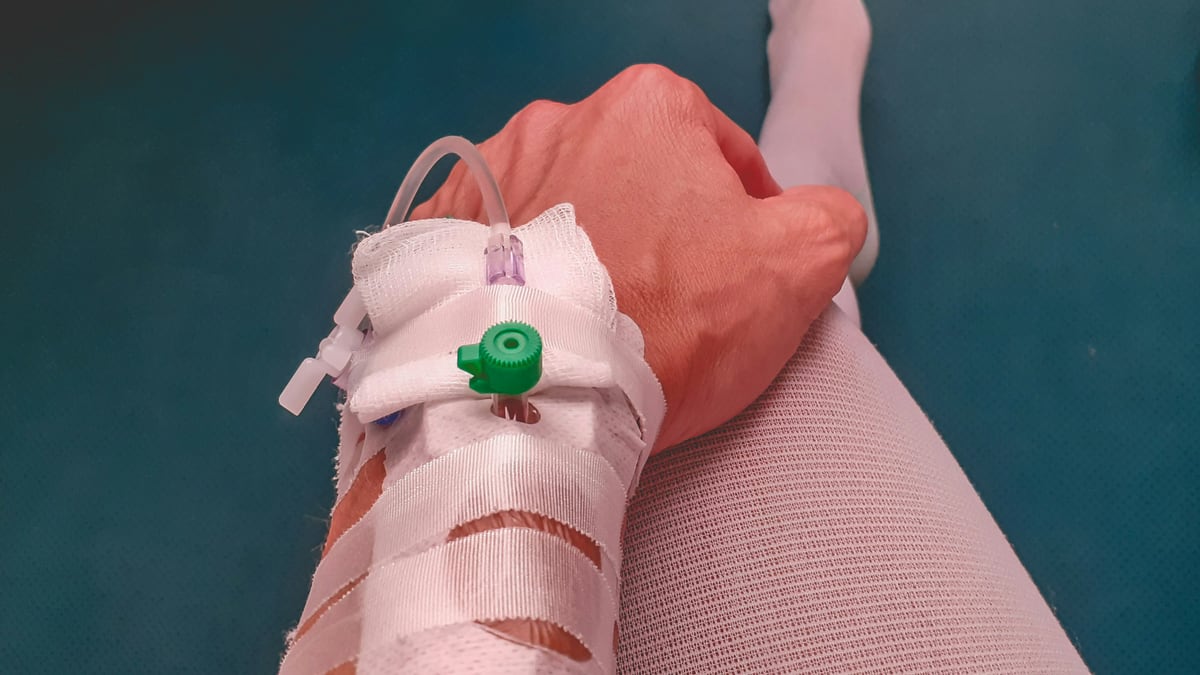
Something important is not being said to a lot of people who lose a limb to vascular disease or diabetes.
Most of them understand, at some point, that the underlying disease did not go away. The peripheral arterial disease that blocked the vessels in the lost leg is still present in the rest of the vascular system. The diabetes that drove the infection that led to the surgery is still affecting the remaining limb. The disease is systemic. The amputation was one consequence of it.
But knowing that as a vague background fact is different from being given the specific, documented information: that for a meaningful proportion of people who lose a limb to vascular or diabetic causes, a second amputation — contralateral, or at a higher level — follows within years. The research on this is consistent across multiple studies and has been for decades. The proactive clinical conversation about it is considerably less consistent.
What the research shows
The majority of limb loss in the United States — well over half of all amputations — is attributable to vascular disease and diabetes, not trauma or cancer. Unlike limb loss from injury or tumor, dysvascular amputation happens in the context of a systemic disease that affects blood vessels throughout the body. The limb that was lost was a manifestation of that disease, not its end point.
Researchers tracking dysvascular amputees through the years following a first major lower-extremity amputation have consistently documented elevated rates of subsequent amputation. Specific rates vary across studies depending on patient populations, how advanced the disease was at first amputation, and whether patients were in active vascular follow-up — but the direction of the finding does not vary. A meaningful share of people who lose one limb to vascular disease lose another.
The progression is not mysterious. In patients with peripheral arterial disease, reduced blood flow affects both limbs, even when one has been amputated. In patients with diabetic foot disease, the microvascular and neuropathic processes that caused one wound to progress to amputation remain active in the other foot. Poorly healed wounds, infections that go untreated because sensation is reduced, inadequate perfusion that prevents healing — the same combination of factors applies to the remaining limb.
What modifies the risk is also documented: glycemic control in diabetic patients, smoking cessation, management of blood pressure and lipid levels, active vascular surveillance of the remaining limb, and consistent access to multidisciplinary wound care when problems develop. These are not small effects. Studies examining patients in intensive vascular follow-up programs versus those who fall out of follow-up show substantially different subsequent amputation rates.
Who carries this risk disproportionately
Vascular and diabetic amputations are not distributed evenly.
Black Americans have substantially higher rates of diabetes-related lower-extremity amputation than white Americans — a disparity documented in CDC surveillance data, attributed to higher rates of poorly controlled diabetes, less consistent access to preventive vascular care, and structural inequities in health-seeking behavior and clinical follow-up. The same populations carry elevated subsequent amputation risk for the same reasons. The disease is more prevalent and less well-managed; the monitoring that would interrupt its progression is less consistently in place.
Rural residents face a parallel problem from a different direction. Vascular surgeons, wound care specialists, and limb preservation programs are concentrated in urban centers. Someone who has to travel significant distances for a vascular appointment — and who does so through a system that does not proactively schedule and coordinate those appointments — is less likely to have the consistent follow-up that changes the trajectory. The distance is not the only barrier; the absence of a clinical team whose explicit job is to track and manage contralateral limb risk is the other side of it.
The people most statistically likely to face a second amputation are, with some regularity, the people least likely to have been given clear information about why the monitoring matters.
What clinical practice typically looks like
Guidelines governing post-amputation care include recommendations for vascular monitoring and contralateral limb assessment. What the guidelines say and what happens in practice are different things.
In the months following a first amputation, clinical attention appropriately focuses on the residual limb: wound healing, shaping, fitting, gait training. This is necessary and important. The clinical team that was most involved during that phase is organized around rehabilitation. Ongoing vascular surveillance — if it happens — is with a different provider in a different system, coordinating across a handoff that is not always smooth.
This is not a problem unique to any facility. It reflects how care in the United States is organized: acute and rehabilitative care form one system; longitudinal chronic disease management is another. The handoff between them is well-documented to fail more often than it works, and patients in the middle of managing a major amputation are not typically in the best position to chase the coordination that nobody is proactively doing.
The result: a lot of dysvascular amputees move through rehabilitation with a clear plan for their prosthetic limb and an unclear plan, or no plan, for the limb they still have.
What this means
The research on subsequent amputation risk describes something that is modifiable. Not for everyone — some people will face a second amputation regardless of how closely their vascular disease is managed. But the rates are meaningfully different between people in active, monitored follow-up and people who are not. That gap is not random noise. It is a consequence of what gets tracked and what does not.
The questions worth asking — of a vascular surgeon, or of a primary care physician if a vascular surgeon is not part of the picture — are specific rather than general: What is the perfusion status of the remaining limb? What does monitoring look like going forward, and who is responsible for initiating it? What changes would move me into a higher or lower risk category? What should I watch for in the remaining limb, and what warrants a same-day call rather than a wait-and-see approach?
These are not prosthetic questions. They are questions about the disease that caused the amputation, which did not resolve when the limb came off.
What this does not mean
None of this tells any specific person what their individual risk is. Research describes populations; people vary. A vascular surgeon or wound care team with access to an individual’s full medical history is the appropriate place to assess personal risk and make recommendations.
What the research does justify is treating a proactive vascular follow-up conversation as something to seek out, not something to wait for someone else to raise. It is not always raised. That gap is documented. It falls disproportionately on people who were already at highest risk for the first amputation.
Asking the question is not an overreach. It is the next useful step.
This article describes documented research patterns in vascular disease and amputation outcomes. It is not individualized medical advice and does not substitute for evaluation and follow-up with a vascular surgeon, wound care specialist, or primary care physician. Risk profiles and appropriate monitoring strategies vary by individual medical history, vascular status, and access to care. Amputee News does not provide individualized medical, clinical, or insurance guidance. For secondary conditions resources, the Amputee Coalition maintains a resource library.
Source notebook: This reporting draws on Amputee Coalition: Secondary Conditions Resources ↗. We link out so you can follow the receipts.