
You have 11 seconds. Here is what the research on physician interruptions says, and what to do with it.
Studies going back four decades show patients are redirected before they finish stating their concerns. For prosthetics appointments, where multiple concurrent issues compete for limited time, the timing math is worth understanding.
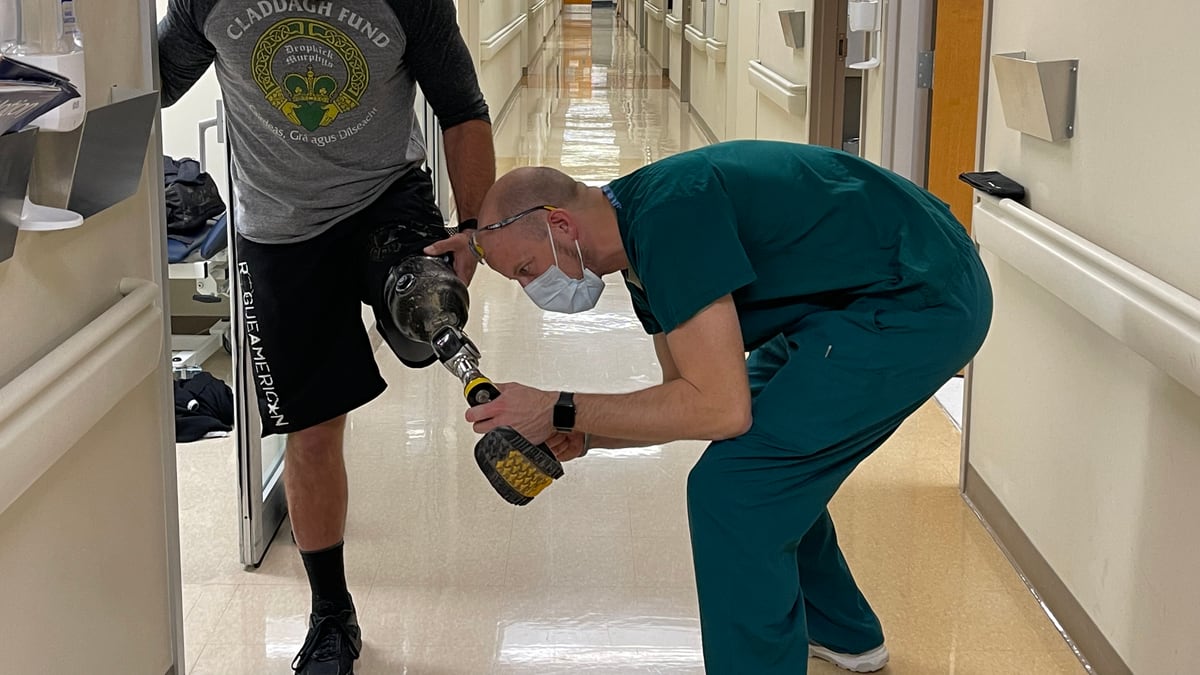
You have three things to say: the socket is slipping on stairs, the skin breakdown on your distal end is new, and your insurance denial letter came last week and you do not understand it. You get redirected on item one. The appointment ends. You covered the stairs. The other two are still inside you.
This is not a character flaw on anyone’s part. It is, however, a documented structural feature of clinical encounters that has been replicated consistently for 40 years.
What the research says
In 1984, physicians Beckman and Frankel recorded outpatient appointments and measured when doctors redirected patients who had just begun to describe their concerns. The median time before interruption: 18 seconds. Fewer than a quarter of patients got to complete their opening statement.
The study got enough attention that it changed how medical education talked about interviewing patients. Then a 1999 follow-up by Marvel and colleagues found the problem had not meaningfully shifted: still only 28 percent of patients completed their opening statement before being redirected. When doctors did let patients finish, those patients needed, on average, 29 seconds. Not a long time.
A 2019 study by Singh Ospina and colleagues in the Journal of General Internal Medicine found the median first interruption now happens at 11 seconds. Forty years of awareness of the problem, and the median is shorter, not longer.
Why prosthetics appointments make this worse
The typical medical appointment has one presenting problem. Prosthetics appointments often carry several that are genuinely interconnected:
- A socket that does not fit well generates skin breakdown, which generates volume fluctuation, which affects socket fit further.
- A suspension issue affects gait pattern, which affects the sound limb, which affects how much you can walk and therefore your functional classification.
- An insurance question about a component affects whether the clinical plan can proceed at all.
These are not separate items from a dropdown list. They are the same problem described at different levels of the system. But in an appointment slot, they look like a stack of topics, and the first one to surface is the one most likely to get addressed.
The O&P EDGE surfaced this problem from the practitioner side in September 2026, in a piece by a clinician who reflects on their own habits as an interrupter. The piece is unusual for acknowledging the behavior clearly. Most appointment advice targets patients, not clinicians, which is where the structural problem lives but also where patients actually have leverage.
What you can do at the front of an appointment
None of this requires confrontation. It requires spending 30 seconds before you walk in.
Write your concerns down and count them. Three things. Four things. A number. When you sit down, say the number before you say the first concern: “I have three things I want to make sure we cover today.” That sentence does something the items themselves cannot: it signals to the clinician that there is a list, before the first item gets full attention.
Put the most time-sensitive item first, not the most obvious one. Socket slippage on stairs sounds acute. Insurance denial with a deadline is actually more time-critical. Think about what happens if you leave this appointment without touching each item. Sort by that.
Ask for a note or a follow-up before you leave. If you only got to item one, say so before you stand up: “I still have the skin issue and the denial letter. Can we schedule a follow-up or can you tell me who I should call?” That is not a complaint. It is a piece of information the clinic needs to do its job.
Bring someone if you can. Not to speak for you. To hold the list while you are managing the clinical part, and to say afterwards what got covered and what did not.
What this does not fix
Appointment-level tactics are not a substitute for appointment-time allocation. If your clinic books 20-minute slots for problems that routinely take 45 minutes, no preparation technique closes that gap. Asking whether your clinic has a mechanism for complex-concern visits, or whether a longer slot can be scheduled before a major component change, is a legitimate clinical question, not a burden you are placing on someone.
The research on interruptions does not conclude that physicians are careless. It concludes that clinical encounters are structured in ways that make completeness hard, and that neither party has enough time to notice in the moment. Knowing that going in is not pessimism. It is calibration.
This piece is general orientation about how medical appointments work, not advice about your specific clinical situation. Questions about your prosthetics care, insurance, or appointments belong with your care team.
Source notebook: This reporting draws on The O&P EDGE: The First Few Seconds — Interruptions That Change the Medical Conversation, September 2026 ↗. We link out so you can follow the receipts.