
The pool lift was confirmed working. It wasn't. What comes after the DOJ declines your ADA complaint.
Sarah Wall, a bilateral amputee, called ahead to confirm a resort's pool lift was functional. It wasn't. Her ADA complaint went unanswered. The escalation path that eventually got a new lift installed runs through state agencies, city coordinators, and corporate offices, not the federal process most people know about.
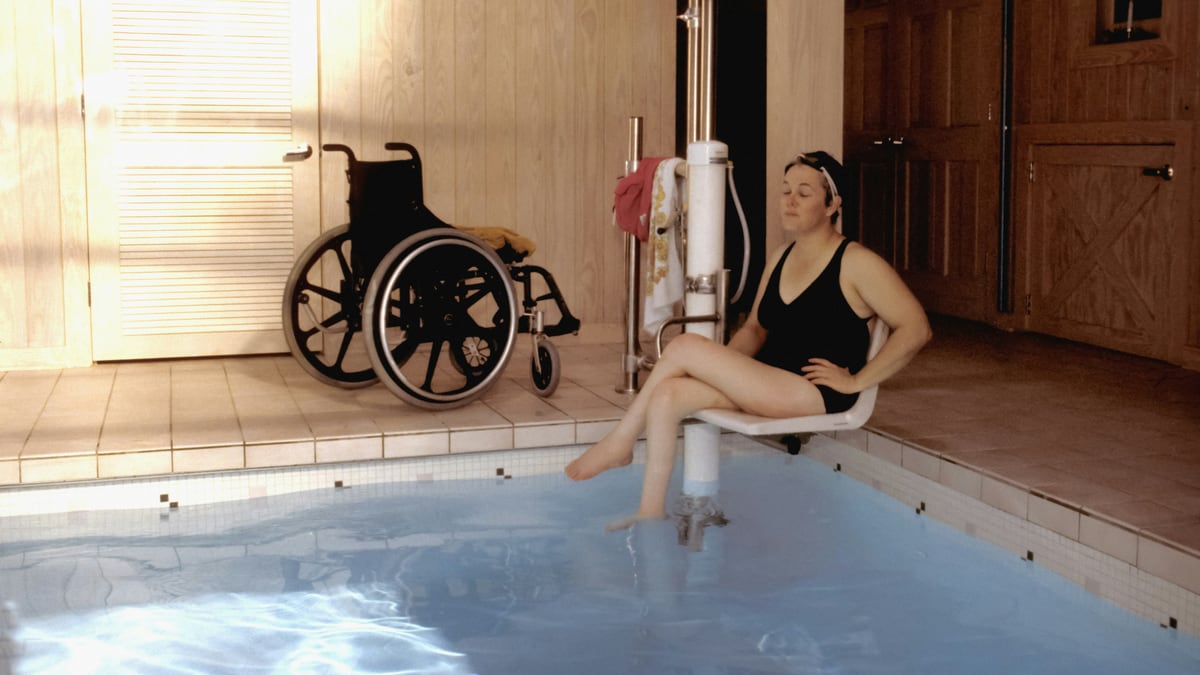
The pool lift at the resort had been confirmed: working, no problem, come on over.
Sarah Wall, a bilateral amputee, had called ahead specifically because she had learned to call ahead. She knew what the ADA required. She knew things got missed. She checked.
The lift wasn’t working.
She emailed aquatics staff. She filed an ADA complaint. Weeks later, she received a form letter: her complaint would not be investigated.
“What is the purpose of your office,” she wrote back, “if you are not receptive to complaints and you don’t take action?”
It is a fair question, and Amplitude’s Kim Ousley put it at the center of a detailed reported piece on Wall published this week. The question is also answerable, if not satisfying: the answer is that federal ADA enforcement on public accommodation complaints works very differently from how most people expect it to.
What the DOJ can and can’t do
Title III of the ADA prohibits discrimination in public accommodations, including hotels, restaurants, and recreational facilities. It requires that pool lifts, ramps, accessible parking, and similar features be maintained in working condition, not just installed.
The Department of Justice enforces Title III. But it enforces through investigations it chooses to open, not through a right to a hearing on every complaint filed. The DOJ receives tens of thousands of ADA complaints each year. Some are resolved through informal negotiations or voluntary compliance. Many are declined without further action.
A form letter saying a complaint will not be investigated is not the end of the law. It is the end of one enforcement channel. Most people stop there because the letter doesn’t say where to go next.
The escalation path that actually moved things
Wall’s experience showed what disability rights practitioners already know: the federal complaint is often the starting point, not the mechanism. After the DOJ declined, she contacted local agencies, city ADA coordinators, and corporate offices, and documented everything.
At a different gym, she made a specific technical argument: access to a therapy pool is not the same as access to a lap pool. The manager understood. Within months, a new lift was installed. She was in the water the next day.
Amplitude’s piece includes a practical list of escalation steps drawn from Wall’s experience, which tracks closely with how disability rights attorneys actually advise people:
- State civil rights agencies often move faster than the DOJ and take cases the federal office declines. Most states have their own public accommodations statutes with separate enforcement mechanisms.
- City and county ADA coordinators exist in most municipalities and can require compliance inspections and repairs.
- Corporate headquarters, for national chains, may respond to documented accessibility failures when local management doesn’t.
- A demand letter, sent without a lawyer, formally requests ADA compliance and starts a paper record.
- Documentation from the start matters: dates, photos, emails, and witness statements support resubmission and escalation.
- Protection and Advocacy organizations exist in every state, are federally funded, and can assist directly with access complaints.
- A dismissed complaint can sometimes be resubmitted with new evidence or documentation of repeated violations.
The through-line in all of this is documentation. The ability to show a pattern of non-compliance changes what state agencies and lawyers can do with a complaint. The time to start documenting is when the lift doesn’t work, not after the second or third visit.
The other system: insurance and surgery
Wall’s access fight didn’t start at a pool. It started with her difficulty walking at all.
After sepsis in late 2019 led to the amputation of both feet and nine fingertips, she spent 72 days in a hospital. No counselor came to talk to her. No social worker. She was fitted for prosthetics after discharge, but her skin was delicate, wounds reopened repeatedly, and it became clear she needed revision surgery.
Her rehab doctor didn’t understand what she was asking for. She found the right surgeon through a call to Walter Reed. Her insurance said no: he was out of network, and the in-network surgeons available couldn’t perform the specific procedure. One in-network surgeon acknowledged he was the right doctor for the job. Insurance still said no.
She waited until she turned 65 and qualified for Medicare. On her 65th birthday, she received the surgery that allowed her to walk.
The pattern Wall ran into is documented and not rare. When the appropriate surgical approach requires an out-of-network provider, in-network requirements can function as an effective denial even when the necessity of the procedure isn’t disputed. Mechanisms for challenging those denials exist: external independent reviews, state insurance commissioner complaints, and appeals processes vary by plan. They require time, documentation, and persistence, and many people do not have all three.
What this means
Wall is seven years out from her amputations and her radar for accessibility problems is sharp. She keeps pushing. But as she told Ousley, it sometimes feels like her job to educate the entire world about rights that should not require individual litigation to enforce.
That job should not be falling on her, or on anyone who wants to get into a pool.
The infrastructure does exist: state civil rights agencies, city ADA coordinators, Protection and Advocacy organizations. What doesn’t exist is a clear map anyone hands you when the first complaint goes nowhere. The escalation path Wall found is worth knowing before you need it.
Source: Amplitude Magazine, “An Amputee’s Fight for Equal Access,” by Kim Ousley (October 2026). This article covers general information about ADA complaint processes. It is not legal advice. For disability rights legal assistance, contact your state’s Protection and Advocacy organization.
Source notebook: This reporting draws on Amplitude Magazine: An Amputee's Fight for Equal Access, Kim Ousley, October 2026 ↗. We link out so you can follow the receipts.