
What is a K-level, and why does it control which prosthetic devices Medicare will cover?
Medicare classifies prosthetic candidates on a K0–K4 functional scale before it will approve a device. Understanding where that number comes from, what it opens and closes, and what to do when it seems wrong is practical information worth having before you need it.
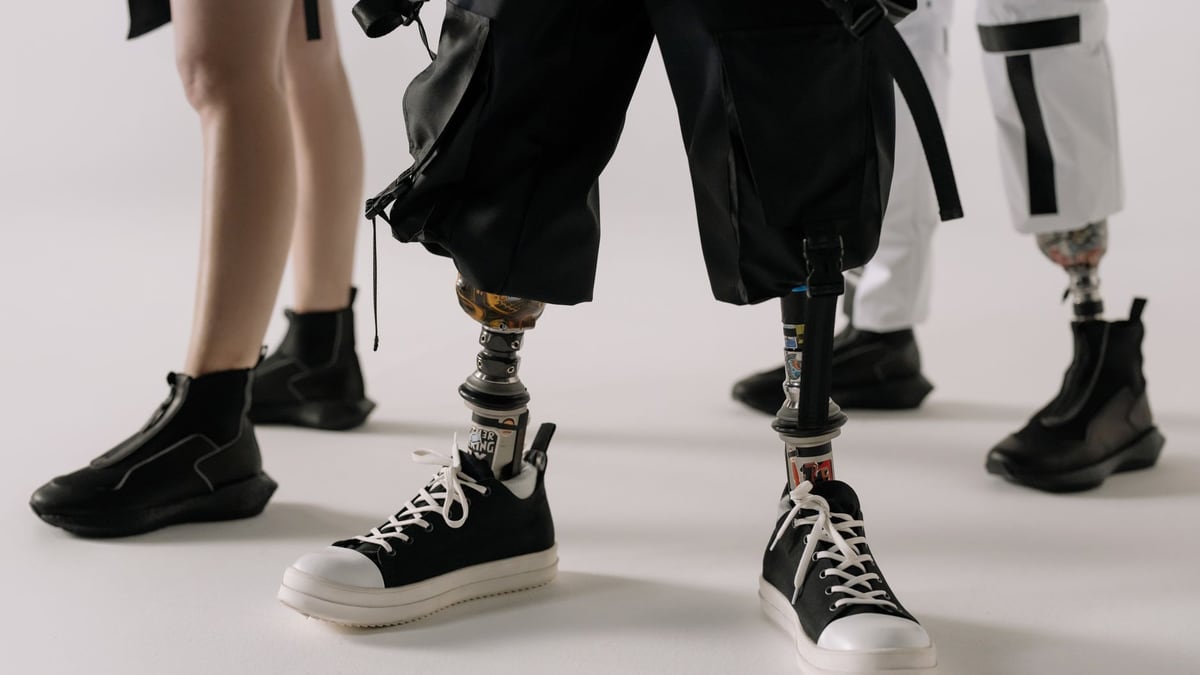
When people hit the word “K-level” for the first time, usually in a denial letter or a conversation with a billing coordinator, it arrives without context. This guide provides that context before the letter arrives.
A K-level is a functional classification assigned to a prosthetic candidate by Medicare’s coverage system. It describes your current or expected ambulatory capacity. The classification determines which categories of devices Medicare will consider medically necessary for you. In practice, the difference between K2 and K3, the two numbers that matter most for most working-age adults, can be the difference between a basic prosthesis and a microprocessor-controlled one.
That is not a subtle distinction. It is worth understanding how the number is determined, who determines it, and what you can do if it does not match your actual or expected function.
The scale
Medicare uses five classifications, K0 through K4, defined in Local Coverage Determination L33944 for Lower Limb Prostheses, the document that governs lower-limb prosthetics coverage under Medicare Part B.
K0: Not a prosthetic candidate. The determination is that the person does not have the potential to safely transfer or ambulate with a prosthesis, and that a device would not meaningfully enhance quality of life or safety. Medicare does not cover a prosthesis at this classification.
K1: Household ambulator. The person can ambulate on level surfaces at a consistent, slow pace and perform basic transfers. The primary context of use is within the home. Medicare covers basic prosthetic components at this level.
K2: Limited community ambulator. The person can traverse some environmental barriers (curbs, uneven surfaces at limited frequency), but primarily uses the prosthesis at a low activity level and variable terrain presents a challenge. Medicare covers moderate-activity devices at this level.
K3: Community ambulator. The person can ambulate with variable cadence and traverse most environmental barriers as part of typical daily life. Medicare covers high-activity devices, including microprocessor-controlled knees and more advanced dynamic response feet, at this level.
K4: High-activity or exceeds basic ambulation. This classification typically applies to active children, athletes, or people whose work or activity demands exceed what K3 describes. The covered device categories are broadly the same as K3, but the functional documentation threshold is higher.
Most adults navigating prosthetic access for the first time land in K2 or K3. K1 applies to people with limited rehabilitation potential. K4 applies to a narrower population. K0 means Medicare will not cover a device, but the clinical picture that produces K0 is usually clear before this conversation starts.
Why K2/K3 is the line that matters most
At K2, a person is typically eligible for a prosthesis with a basic or moderate-activity foot and appropriate socket and suspension system. At K3, they gain access to devices in a higher component tier, including microprocessor-controlled prosthetic knees (for above-knee or transfemoral amputees) and energy-return feet designed for variable cadence and terrain.
The cost difference between device tiers is significant. The functional difference, for someone who lives near the K2/K3 boundary, can be substantial. Microprocessor knees, for example, adjust resistance in real time based on walking speed and terrain, and they can reduce fall risk and improve gait mechanics for people who need variable cadence ambulation. For a K2-classified person, those devices are generally not covered.
The clinical definition of K3, “community ambulator with variable cadence” and the ability to “traverse most environmental barriers,” describes a wide range of real situations. The line between a limited community ambulator and a community ambulator is a clinical judgment, and it is contested more often than any other point in the classification system.
How the classification is determined
K-level assignment is not a single test. It is a documented clinical determination made by the treating physician and typically reviewed by the prosthetist.
The treating physician documents functional potential, present or expected, in the prescription. The key word is potential: for new amputees, the classification reflects the clinician’s assessment of what the person can likely achieve with appropriate rehabilitation, not only what they can do on the day of the visit. Prior functional history is relevant. A person who was walking several miles a day before an amputation, and has no complicating factors that would limit rehabilitation, has different functional potential than someone with significant deconditioning, cardiac limitations, or neurological involvement.
Factors that typically inform the determination:
- Prior functional level: what you were doing before amputation or before the current limb-loss situation
- Current health status: cardiovascular capacity, musculoskeletal health, balance, strength
- Cognitive and safety considerations: ability to manage a prosthesis safely
- Living situation and support: access to rehabilitation, home environment
- Rehabilitation potential: opinion of the treating team about achievable outcomes
- Stated goals: what the person wants to do; this is not always determinative but it is relevant
The prosthetist’s evaluation may document supporting observations. In some cases, a physical therapist’s assessment contributes. The final determination is the physician’s, because it appears in the prescription. But the prosthetist can advocate, provide a functional evaluation, and note observations that support a different classification if the prescription seems inconsistent with the clinical picture.
If your K-level seems wrong
Wrong in which direction matters, though both are worth addressing.
If you were classified lower than your function supports: The practical path is through your O&P clinician. If your prosthetist’s evaluation supports a higher classification than the prescription, they can contact the prescribing physician, provide documentation, and request a revised prescription. Documentation is the currency here: physical therapy notes, a functional evaluation by the prosthetist, records of pre-amputation activity, and any other clinical documentation that supports the functional potential the prescription should reflect.
If a prior authorization request was denied based on K-level (which happens, particularly when K3-level devices are requested and the documentation supports K2 in the insurer’s view), the denial triggers the appeals process. The denial appeals guide covers that process for Medicare claims.
If you were classified higher than your actual function: This is less commonly the presenting problem, but it can mean being fitted with a device that is more complex to manage than your current capacity supports. If a device is routinely failing or going unused because it does not match your actual ambulation level, that is worth raising with your prosthetist directly, not primarily as a billing question, but as a functional fit question.
If you have improved significantly since the original classification: K-level is not necessarily permanent. People’s functional level changes: through rehabilitation, practice, improved health, or changed circumstances. If your function has meaningfully improved since the original classification, a re-evaluation and revised prescription is the appropriate mechanism to have the record reflect that.
What this means in practical terms
The classification system is not designed with the patient’s perspective in mind. It is a documentation and coverage framework. That does not make it unimportant (quite the opposite), but it does mean that navigating it well requires understanding how it works before you are standing in it.
A few things worth having in your records and conversations:
- Know your current K-level classification. If you do not know it, ask your prosthetist or reviewing physician.
- Know whether your classification is consistent with what you were doing before your amputation and what your rehabilitation team thinks you can achieve.
- If you are approaching a device decision that turns on the K2/K3 boundary (a new prescription, an upgrade request, a prior authorization), ask your prosthetist what documentation supports the classification in your record.
- Keep your own functional records: what you can do, how far you walk, what surfaces you traverse, what your limitations are. These observations are clinically useful and they are yours.
The classification determines coverage access. It does not determine what you can actually do. Those two things can and do diverge, and the gap between them is where most of the advocacy happens.
A note on upper-limb prostheses
The K-level system applies specifically to lower-limb prostheses. Upper-limb prosthetics coverage under Medicare operates under a separate local coverage determination and uses different functional criteria. If you are navigating upper-limb coverage, the K-scale does not apply to your situation: the functional documentation requirements are similar in spirit but different in structure. Ask your prosthetist which LCD governs your device category.
Amputee News does not provide individualized Medicare coverage, clinical, or device-fitting advice. Prosthetic coverage determinations depend on your specific diagnosis, functional assessment, documentation, and the coverage policies of your specific plan. For questions about your K-level classification or a coverage decision, speak with your prescribing physician, your prosthetist, or a patient advocate. SHIP (State Health Insurance Assistance Program) counselors can help Medicare beneficiaries navigate coverage questions at no cost. Find your local program at shiphelp.org.