
Supporting someone after limb loss: what helps, what tends to backfire, and what you need too
A practical guide for family members, partners, and close supporters of people after amputation: what the adjustment period looks like from the outside, what kinds of support actually help, and how to recognize when you also need resources.
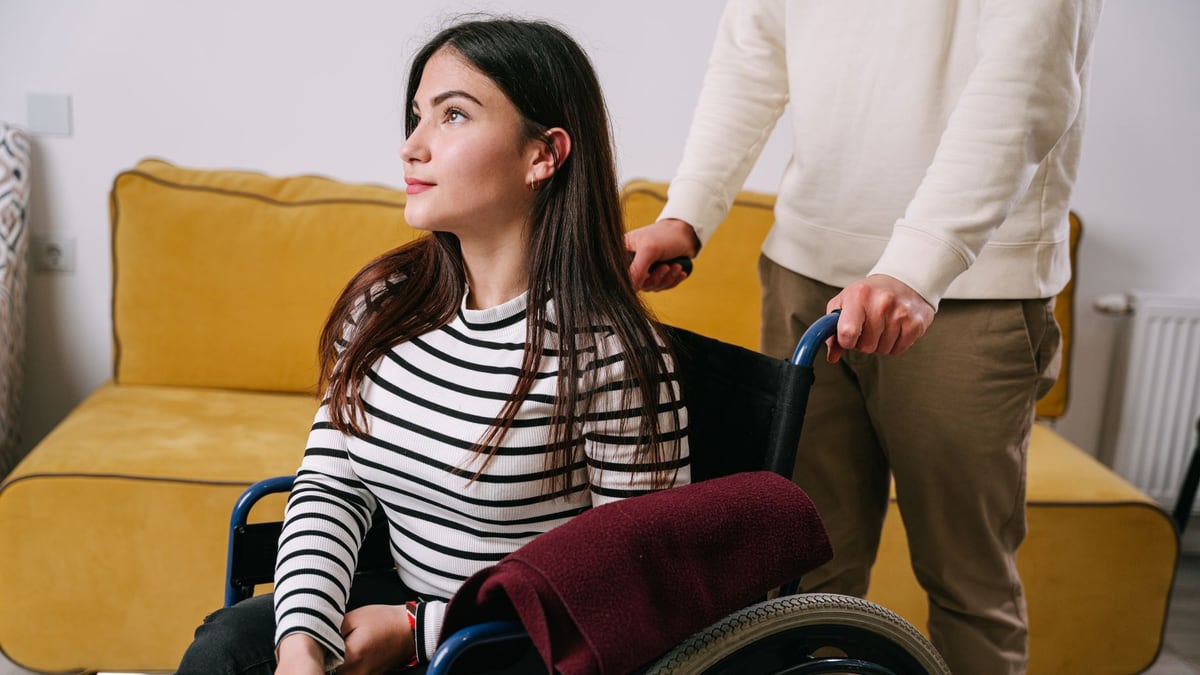
There is a version of this guide that would open by thanking you for your dedication, calling you a hero of the story, and wrapping the whole thing in some language about the gift of caregiving. That version is not useful. More useful: you are a person navigating something that genuinely affects you, that the care system was not particularly designed to acknowledge, and that has its own distinct information needs.
This guide is for family members, partners, adult children, and close supporters of people who have had an amputation or limb difference, people who are not the patient in the clinical system, but whose life has also changed.
What you are actually watching
When someone you love moves through the period after limb loss, the care system produces a lot of motion that is opaque from the outside. There is acute hospitalization, then discharge planning, then post-acute rehabilitation, then a wait for the residual limb to mature enough for fitting, then a prosthetic evaluation, then fitting, then fitting adjustments, then more adjustments. Devices may be modified or replaced as the residual limb changes shape in the first year. Insurance authorizations appear at multiple points in that timeline and can interrupt it.
The pace is slower than most people outside the system expect. The word “prosthesis” tends to conjure a clear, linear image (amputation, then device, then done) that does not match how the process actually works. The gap between when the surgery is over and when someone is using a device for daily function can be several months. The gap between first fitting and a device that is actually working well can be longer still.
What this looks like from where you are standing: a lot of waiting, a lot of uncertainty, a person you care about having experiences you cannot fully access, and probably a recurring urge to make the process move faster or smoother. That urge is reasonable. It is also largely not in your power, which is useful to know early, before it exhausts you trying.
The prosthetic appointment from the outside
Prosthetic fittings are not like other medical appointments. They are technical, iterative, and involve a lot of small adjustments whose significance is not visible to someone standing in the room. They require the person being fit to report subjective experience (where the socket is pressing, what the gait feels like, what has changed since last week) in precise language that often takes time to develop.
This matters for supporters because the role of the companion in that room is genuinely different than it is in, say, a follow-up with a surgeon. A well-meaning companion who asks a lot of questions, answers on behalf of the person being fit, or redirects the appointment toward their own concerns can actually get in the way. The clinical relationship belongs to the person with the limb.
That said, there are things a companion can do well in a prosthetic context:
- Be a second memory for information that comes quickly (ask whether it’s okay to take notes).
- Notice logistics the person might not think of while they’re focused on the fit (do they need a different shoe size for the new device? Does parking at this location work for the next appointment?).
- Be present without performing concern.
The best thing to ask before any appointment is “what would be useful for me to do today?” Not assuming.
What kinds of support tend to help
The research on rehabilitation outcomes after acquired disability, including amputation, consistently finds that social support matters, but how it matters is more specific than it sounds. Support that reinforces the person’s own agency and problem-solving capacity tends to improve rehabilitation outcomes. Support that creates dependency, signals doubt about what they can manage, or takes over tasks they could do themselves tends to undermine rehabilitation progress, even when it comes from genuine care.
In daily life, this is less dramatic than it sounds. It mostly means asking before doing.
Things that tend to be actually useful:
- Managing logistics that exist adjacent to the amputation but don’t require your input on the medical side: meals, transportation, household tasks that have shifted while things are in flux.
- Knowing the names of their key providers so you can be useful in an emergency without starting from scratch.
- Being reliably available for company without making your presence conditional on how the other person is doing on a given day.
- Asking what kind of support they want before providing it. This sounds obvious and most people skip it.
Things that tend to backfire:
- Expressions of concern framed as doubt about their capacity. “Should you really be doing that?” lands differently than it’s usually intended, even when the concern is legitimate.
- Comparison stories. Telling someone about a friend or relative who “was walking by six weeks” or “adjusted so well” introduces a timeline and an implicit benchmark that probably does not apply. Amputation level, cause, age, comorbidities, device access, and rehabilitation goals vary too much for the comparison to be useful.
- Treating every piece of news as either inspiration or tragedy. If something difficult happened today, it doesn’t necessarily need to be reframed as a lesson. If something went well, it doesn’t need to signal that everything is fine now. Both reflexes press the person into a story that isn’t theirs.
- Performing worry. Sustained visible concern (checking in multiple times a day, scanning for signs that something is wrong, narrating what you observe) can communicate that you see the person as fragile. This is usually inaccurate and is generally not what someone in an active rehabilitation process needs from the people around them.
Your own adjustment
This part gets left out of most guides and most conversations, so let’s be clear about it: the experience of supporting someone through limb loss affects you. The research on caregivers and close family members across serious illness and acquired disability consistently documents elevated rates of anxiety, disrupted sleep, and what the clinical literature terms secondary traumatic stress: the effect of sustained proximity to someone else’s acute experience.
Naming this is not a competition for who is having a harder time. It is acknowledging a parallel process. You are also adjusting to a changed situation. That adjustment also doesn’t have a clean arc or a predictable timeline.
Some things that come up for family members and partners:
Grief that feels strange to name. When the person who had the amputation is working through their own adjustment, it can feel inappropriate to mention that you are also grieving something: an anticipated future, a previous version of shared life, something that is genuinely different now. That discomfort makes sense. The grief is still real.
Uncertainty about your role. Relationships change in acute and post-acute medical contexts in ways that don’t always revert cleanly. A partner who becomes also a logistics coordinator, an adult child who has moved into a parent’s medical decisions, a sibling who is now the main point of contact with the care team: these shifts can feel unclear and sometimes irreversible. Figuring out what the relationship looks like on the other side of the immediate crisis is its own task.
Ongoing fear. If the cause of the amputation raises continuing questions, such as ongoing cancer treatment, vascular disease that is being managed rather than cured, or a condition that affects the other limb, the fear about what comes next doesn’t disappear when the acute phase does. This is a legitimate and distinct concern from the amputation itself.
Not knowing when to put your own needs forward. There is no good general answer to this except that waiting until you are depleted to name what you need tends to make the eventual conversation harder.
When to say something
There is a difference between a hard stretch and a period where you are genuinely worried. Things worth bringing to a clinical team member or raising directly with the person you are supporting:
- Withdrawal from the rehabilitation process: missed appointments, refusal to engage with prosthetic fitting, stopping physical therapy without explanation.
- Statements that express hopelessness about the future or a sustained absence of interest in things that used to matter.
- Increased alcohol or substance use since the amputation.
- Anything that sounds like suicidal ideation, even obliquely stated.
Naming a concern is not the same as being alarmist. If something feels urgent, it is reasonable to say so, to the person directly, and if necessary to a member of their care team. Most care teams want to know when a family member has a specific worry. A message to the clinical coordinator is not overstepping.
For yourself: if you are regularly not sleeping, if anxiety about the situation is affecting your ability to work or be present in other relationships, if you have found yourself pulling away from your own life to be available for this one, those are also things worth bringing to your own provider, not the patient’s.
What exists for family members specifically
The Amputee Coalition’s Limb Loss Resource Center includes content specifically for family members, not only for people with limb loss. Their Peer Visitor Program connects people, and in some cases family members, with trained volunteers who have firsthand experience with limb loss. The Amputee Coalition also operates a National Limb Loss Resource Center helpline at 1-888-267-5669.
If you are a family member or caregiver who is struggling, talking to your own therapist or physician (not the person’s care team, but someone who is there for you) is a reasonable step and not a sign that you are failing at support. General caregiver support groups, separate from condition-specific communities, also exist and have documented benefit for people in this kind of sustained support role.
One more thing worth saying directly: you are not required to be doing fine in order to be useful. The two things are not as connected as the role can make them seem.
This guide is for general orientation. It is not a substitute for individualized mental health or medical care, for you or the person you are supporting. If you or someone in your household is in crisis, contact the 988 Suicide & Crisis Lifeline by calling or texting 988.