
Keeping skin intact: the guide to residual limb care nobody hands you at discharge
Skin breakdown is one of the most common reasons people stop using a prosthesis. Here is the daily routine that interrupts the cycle before it gets expensive.
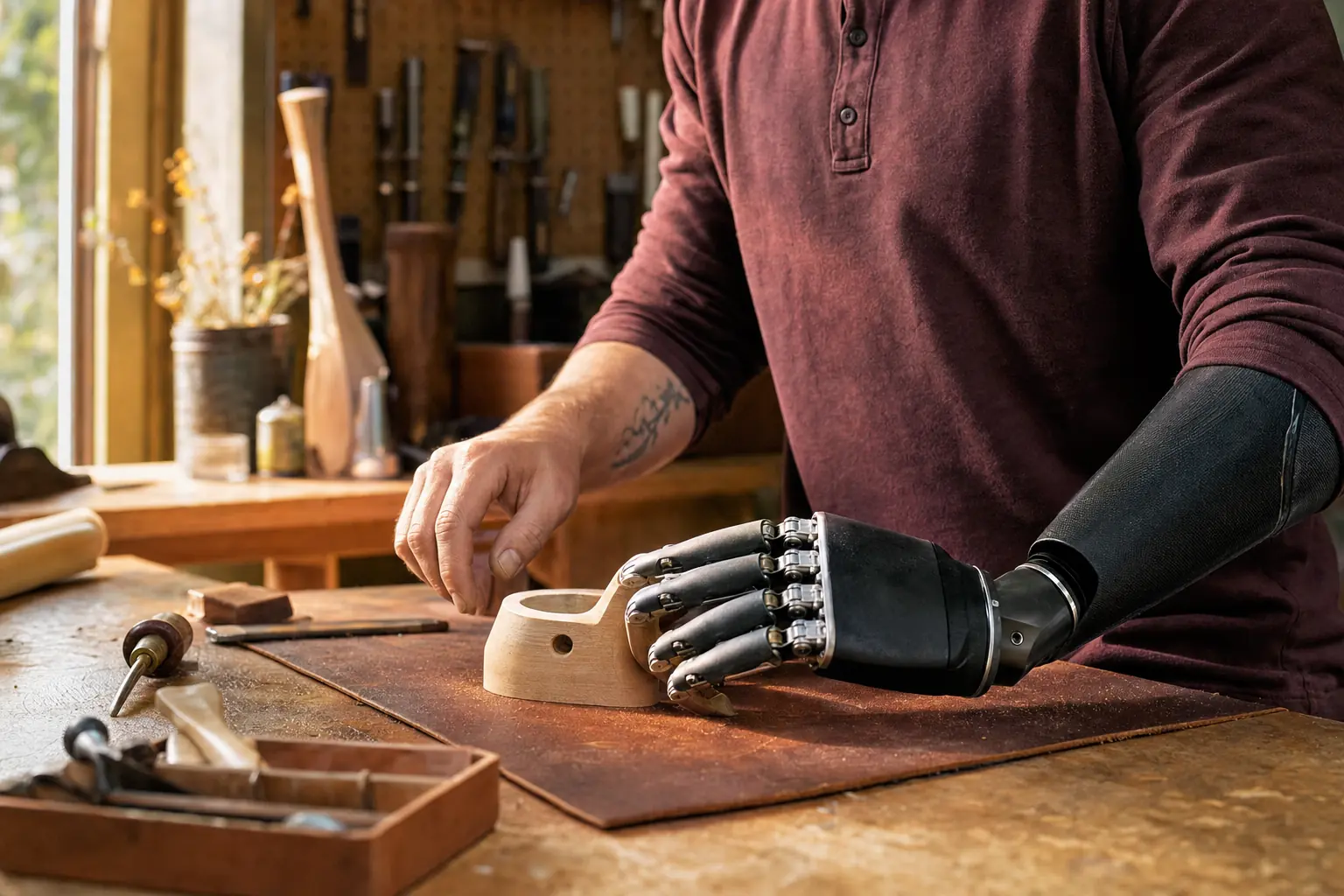
Nobody hands you a skin-care protocol at discharge. You get a socket, a liner, a lot of information about the device, and possibly a laminated sheet about shrinker socks. Then, several weeks later, you discover that the thing underneath the socket is where most of the actual daily work happens.
Skin breakdown is one of the most common reasons people stop using a prosthesis, or lose weeks of wear time to wound healing. It is also one of the most preventable problems — given consistent attention and reasonable materials. Neither of those things requires a lot of money or time, but they do require actually doing them.
This is not a dramatic topic. It is a hygiene topic. That is why it matters.
Why residual limb skin is different
The skin on a residual limb is doing something it was not designed for. If you use a lower-limb prosthesis, that skin is bearing load — distributed through a liner and socket — across tissue that may include scar tissue, reconstructed anatomy, and areas with altered nerve sensation. It may not send pain signals as clearly as skin elsewhere on the body. By the time something hurts, the problem may have been developing longer than you realized.
On top of that, a prosthetic socket is a warm, enclosed environment. Heat, moisture, and friction are the three conditions most likely to cause maceration, folliculitis, abrasions, pressure sores, and contact dermatitis. They are all present, every time you wear the device.
The daily routine exists to interrupt that cycle before it becomes something that needs a wound-care referral.
The liner: the main event
If you use a silicone, urethane, or similar roll-on liner, that liner is the primary contact surface with your skin and the primary place where sweat, bacteria, and shed skin cells accumulate. Most skin problems that look like a socket problem start here.
Daily cleaning — the minimum:
- Roll the liner off and turn it inside out.
- Wash with mild, unscented soap and warm (not hot) water. Work it gently.
- Rinse thoroughly. Soap residue left in the liner is itself an irritant.
- Air dry, or pat dry with a clean cloth. Do not wring a silicone liner. Do not use heat.
- Let it dry completely before rolling it back on. A liner that goes on slightly damp stays damp against your skin all day.
What to avoid:
Rubbing alcohol and acetone degrade liner materials, especially silicone — over time, they cause the material to break down and lose its properties. Strong scented soaps, fabric products, and anything labeled “antibacterial” but not intended for direct skin contact can cause contact dermatitis. If you are not sure what is safe for your specific liner material, ask your prosthetist. This is a normal question and they have a specific answer.
What to watch for over time:
Look at the liner during cleaning. Cracks, thin spots, and persistent odor that cleaning does not clear are signs the liner is aging out. Most silicone liners have a manufacturer-recommended lifespan — often expressed in months of daily use — though how you care for it and how hard you use it both affect that window significantly. A liner that is visibly degraded is worth replacing; worn-out liners are a skin problem waiting to happen.
The socket
Sweat and skin cells accumulate in the socket even with a liner. The socket cleaning routine depends on what it is made of:
- Laminated carbon fiber, polypropylene, and similar hard sockets: can typically be wiped down with a damp cloth and mild soap, then dried thoroughly. Avoid pooling water in valve openings.
- Suspension sleeves and soft auxiliary components: follow the manufacturer’s guidance. Most can be cleaned similarly to liners.
Your prosthetist can tell you what they recommend for your specific setup. Cleaning the socket once a week is a reasonable floor; daily is better if you sweat heavily or work in a physically demanding environment.
The limb itself
Once the liner is off, look at the skin. This is the step most people skip, especially once wearing becomes routine. Do it anyway.
What to look for:
- Redness that stays. Some skin reddening from loading and suction is normal and clears in 15–20 minutes after you remove the device. Redness that lasts longer, or that reappears in the same spot consistently, is telling you something about fit or pressure distribution. Note where it is and tell your prosthetist.
- Skin breaks, open areas, or blisters. These need attention before you put the device back on. An open area inside a warm, loaded socket does not stay stable.
- Folliculitis. Small red bumps at hair follicles are common on residual limbs due to friction and the occluded environment. Mild cases often respond to better hygiene. Recurrent or spreading folliculitis should go to your care team; it occasionally needs topical or oral treatment.
- Discoloration or unusual texture. Skin that is developing unusual thickness, color changes, or altered texture — especially over bony areas — can indicate chronic pressure or circulation issues. Worth flagging.
- Odor that does not clear. Some level of odor is expected. A change in baseline odor, or odor that thorough cleaning does not resolve, can indicate bacterial overgrowth or breakdown underneath.
Washing the limb:
Daily washing with mild soap and water, thorough rinsing, and complete drying before donning the liner. Pay attention to skin folds and scar tissue — moisture that sits in a fold stays there. Dry thoroughly, including folds.
Moisturizers and emollients can help with dry skin, but the timing and product matter. Anything applied right before donning the liner can affect suspension or adhesion. Most prosthetists have a specific recommendation for their liner systems. Ask what works with yours, because what is fine with one liner material is actively unhelpful with another.
When something is wrong
Minor, recurring irritation in one spot: Document where it is — a photo is genuinely useful — and note what activity preceded it. Bring it to your next appointment. Recurring irritation in the same location is usually a fit issue or a suspension issue, not a skin issue, and your prosthetist can address it. Do not try to solve it by applying topical products to the irritated spot and continuing to compress it.
Open skin, blistering, or suspected infection: Do not wear the device on broken or infected skin without explicit guidance from your care team. Contact your prosthetist and/or physician. Even a small open area inside a loaded socket can progress quickly under the conditions a socket creates.
Persistent or spreading folliculitis: A dermatologist who has experience with prosthetic-related skin issues is more useful here than one who has not seen this before; the mechanisms are different from regular folliculitis. Your O&P clinic can sometimes refer or advise. Chlorhexidine gluconate washes (the type used for surgical skin prep, at concentrations your care team specifies) are sometimes recommended for recurrent folliculitis — on a provider’s recommendation, not as a starting experiment.
The climate variable
Heat and humidity accelerate everything. If you live somewhere hot, do physically demanding work, or exercise heavily in the device:
- A liner rinse mid-day may become necessary rather than optional.
- Moisture-wicking prosthetic socks or sheath materials between liner and socket can help in setups that accommodate them.
- More frequent skin checks are warranted.
- If folliculitis is a recurring problem, the hygiene routine may need a second pass.
Cold climates create a different variable: dry air can cause skin to crack, particularly over scar tissue. Moisturizing on a schedule (not immediately before donning) becomes more important.
Products: what actually matters
The short list of what matters:
- Mild, unscented soap for liner cleaning. Gentle dish soap, castile soap, or products specifically made for prosthetic liner care are all defensible. Scented, antibacterial, or astringent products are where problems start.
- Clean cloths. Not paper towels (too abrasive), not the same cloth you use for other purposes.
- Soap and water for the limb. The fancy prosthetic-care product market exists and some of it is genuinely useful. Most of the work is done by consistent use of what you already have.
- Whatever moisturizer your prosthetist recommends for your liner type. Not a category where improvising is rewarding.
What to avoid: anything with alcohol or acetone on silicone liners, anything strongly fragranced on the skin, any topical antibiotic applied under a loaded socket without a care team’s sign-off.
What “consistent” actually means
The clinically useful version of this routine takes about five minutes in the morning and two at night. It is not involved. The part that goes wrong is not the technique — it is doing it three days a week instead of seven and hoping that is close enough.
A lot of the trouble with skin breakdown is that it starts small and invisible, and by the time it is visible it has a head start. The routine does not prevent every problem. It shrinks the number of times a small problem becomes a big one.
Amputee News provides general information only. Questions about skin care specific to your prosthesis, your skin condition, wound care, or clinical treatment should go to your prosthetist, physician, or dermatologist.