
Pediatric prosthetics: what parents need to know before the first fitting and after
Children outgrow components, need a different kind of clinical expertise than adults, and navigate funding systems that were mostly designed for someone else. A practical orientation for families in the first year and beyond.
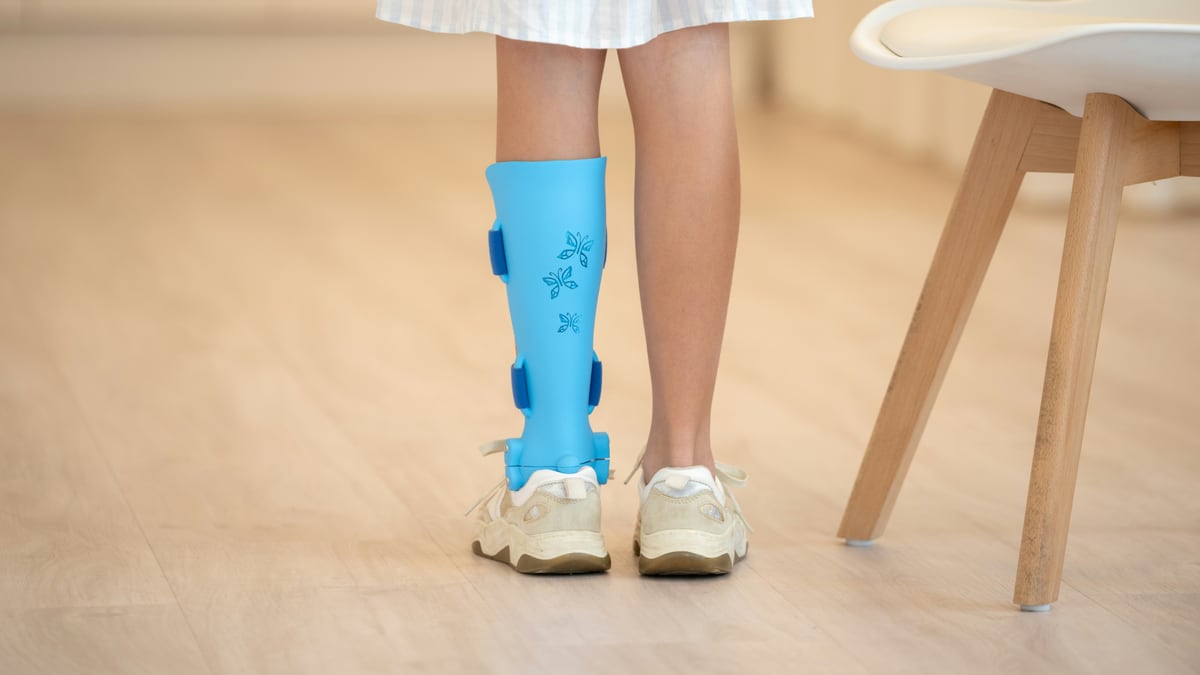
The adult prosthetics system was designed around adults. The funding mechanisms, the clinical training pipelines, the insurance authorization logic: essentially all of it was built assuming a patient who stopped growing. When a child needs a prosthesis, families often discover this mismatch in the first billing cycle and spend the next several years navigating around it.
This guide covers what the system actually looks like, where the leverage points are, and what questions to ask before someone makes a decision for your child that is harder to undo later.
Finding a clinic with real pediatric experience
“We see children” is not the same as “we have deep pediatric O&P expertise.”
A prosthetist who fits twenty adults a month and one child every few months has genuine limits when it comes to pediatric socket geometry, pediatric component selection, the developmental progression from passive to active devices, and the particular bureaucratic experience of fighting a growth-related insurance denial. This is not a criticism of general O&P clinicians; pediatric volume is low in most geographic areas. It is a description of what specialized experience actually looks like and why it matters.
What to look for:
- Children’s hospital O&P departments attached to major pediatric medical centers see high volume of pediatric cases and typically coordinate with orthopedics, physical therapy, and occupational therapy in the same system. If one is within reach, it is usually the right starting point.
- Amputee Coalition’s provider search (amputee-coalition.org) can help identify practices, and the Amputee Coalition’s peer visitor network can connect families with others who’ve navigated the same geographic area.
- Ask the clinic directly: “How many pediatric patients do you see per month, and what’s your process for growth-related replacements?” The quality of that answer tells you something.
- Ask who handles insurance appeals when a growth-related replacement is denied. If the answer is vague, that’s useful information too.
The funding stack for children: how it differs from adult coverage
Private insurance
Private insurance plans vary enormously in how they handle pediatric prosthetic replacement. Many have no explicit protocol for growth-related replacement and will apply the same “useful life” rules they apply to adults, often requiring 3-5 years before they’ll fund a replacement device regardless of the reason. A child who outgrows a socket in eight months is going to bump into this.
Get your plan’s prosthetic benefit document in writing before the first fitting. Ask specifically: what is the replacement schedule, and is there a process for growth-related replacement that differs from the standard useful life rule? Get the answer in writing. The answer the authorization representative gives you verbally may differ from what the denial letter says later.
Medicaid and CHIP
Medicaid and CHIP (Children’s Health Insurance Program) cover children from birth, and their prosthetic coverage is often broader than Medicare’s. Children’s Medicaid does not use the K-level functional classification system that Medicare uses for adult lower limb devices; it operates on medical necessity standards that are generally more flexible for children. Coverage rules vary by state, so “Medicaid covers it” is a starting point, not an answer.
Some states have supplemental programs or carve-outs for durable medical equipment for children that are worth asking the Medicaid coordinator about specifically.
The Katie Beckett (TEFRA) waiver
For families who do not qualify for standard Medicaid based on income, the Katie Beckett option (formally the Tax Equity and Fiscal Responsibility Act waiver) allows children with significant disabilities or medical needs to qualify for Medicaid based on the child’s circumstances alone, not family income. The child must meet functional and medical criteria, and availability is state-administered, which means waitlists exist in some states.
If your child’s limb loss or limb difference is significant enough to require ongoing medical management and your private insurance coverage is inadequate, it is worth asking a children’s hospital social worker or Medicaid coordinator specifically about this option. Many families don’t hear about it unless they ask.
State-specific programs
Some states have additional programs: disability services for children, state-funded prosthetics pools, or nonprofit funds administered through children’s health departments. A children’s hospital social worker is the fastest way to find what exists in your state, since they generally know the local landscape better than a web search.
Early Intervention (ages 0–3)
The federal Individuals with Disabilities Education Act (IDEA) Part C requires states to provide early intervention services to infants and toddlers with developmental delays or disabilities from birth through age two. These services (physical therapy, occupational therapy, speech therapy, specialized instruction) are provided through a program called Early Intervention (EI) in most states.
Early Intervention does not directly provide prosthetics, but it does provide the therapists who help a child learn to use a device and integrate it into their motor development. If your child is under three and has limb difference or limb loss, an Early Intervention referral, usually through your state’s health department or your pediatrician, should happen as soon as possible. Waiting is rarely the right call.
School: IDEA and Section 504
Once a child enters the school system, two federal frameworks create rights to accommodation and services:
IDEA (Individuals with Disabilities Education Act) applies to children whose disability affects their educational performance. It creates a right to an Individualized Education Program (IEP), a formal plan developed by the school team, parents, and relevant specialists. For a child with limb difference, this might include physical therapy during the school day, adaptive physical education, assistive technology access, and environmental modifications. An IEP is legally binding on the school.
Section 504 (of the Rehabilitation Act) applies more broadly: a child doesn’t need to have an educational impact to receive 504 accommodations. A 504 plan can address things like accessible bathroom facilities, modified activity requirements, and extra time for device management during the day. A 504 is somewhat easier to obtain than an IEP but has less service-provision attached.
For most children with limb difference, the right plan depends on whether and how the disability affects learning. The school’s special education coordinator handles these evaluations. Parents can request one in writing, and that written request starts a legally defined timeline the school must meet.
What prosthetics-specific accommodations might look like: time allowances for donning and doffing a device, a private space to manage residual limb care, a backup plan for hot days when wearing is uncomfortable, and a staff member who knows what to do if the device breaks or causes a skin problem during the school day.
The replacement cycle: plan for it in advance
Children in active growth phases may need new sockets every 6 to 18 months, depending on their age and how quickly they’re growing. Adolescent growth spurts can compress that timeline further.
The replacement authorization process, whichever payer you’re dealing with, does not typically anticipate this. Plan for it the way you’d plan for a known recurring expense: document every fitting appointment, keep the clinical notes, photograph skin condition and socket fit when concerns arise, and build a file that supports a future medical necessity argument before you need one.
When your prosthetist tells you a replacement is needed, ask for their clinical notes documenting the fit failure or growth change. You want that documentation created contemporaneously, not reconstructed from memory when you’re in the middle of an appeal.
The 3D-printing question
For upper limb difference specifically, volunteer-fabricated 3D-printed devices, through networks like e-NABLE, have provided real functional options for children at low or no cost. The devices are not FDA-cleared medical products. The quality and fit support varies by volunteer. They are a legitimate option for some children in some use cases, and not the right fit for others.
The honest version: these devices work best as supplemental functional tools for play and light daily activities in children with upper limb difference who want a grip option. They are not a substitute for clinical prosthetic care. Lower limb devices are not the 3D-printing story: weight-bearing pediatric lower limb prosthetics require clinical fitting and components that printed materials haven’t reliably replaced.
If you’re evaluating a 3D-printed option, ask: who will monitor fit as your child grows, what’s the process for adjustment, and does your child’s clinical team have experience integrating volunteer-fabricated devices into an overall plan?
Records: what to keep
The pediatric prosthetics paper trail matters. Keep:
- All clinical fitting notes
- Every denial letter and every appeal response
- Prior authorization approvals (they sometimes have expiration dates)
- Photographs of socket fit problems, skin reactions, and growth-related changes with dates
- Contact information for the insurance coordinator your prosthetist uses (they do this paperwork routinely; you should know who they are)
- A log of when each device was delivered and when a fit problem first appeared
This is not excessive. It is the documentation that converts a subjective “it doesn’t fit” into a medical necessity case.
Peer support and community
The Amputee Coalition (amputee-coalition.org) has youth programs, a summer camp (the Paddy Rossbach Youth Camp), and a peer visitor program that can connect your family with others who have navigated what you’re navigating. These connections tend to be more useful than a search results page when you have a specific question about a specific situation.
Children and teenagers who grew up with limb difference or limb loss exist in numbers that make it possible to find community, online, at camps, and through hospital-based support groups. The access varies by geography, but the Amputee Coalition and hospital social workers can point you toward what’s active near you.
Amputee News does not provide individualized medical, legal, insurance, or device-fitting advice. Information in this guide describes general systems and options; the right path for a specific child depends on their clinical situation, geography, payer, and other factors that require a qualified clinician and, where relevant, an insurance or benefits specialist. If you are facing a coverage denial, a children’s hospital social worker or a patient advocate with prosthetics experience is a better resource than this guide alone.